What Are Social Insects? Lessons From Ants, Bees and Termites
Contrary to popular belief, not all insects are solitary creatures. In fact, some of them are quite social.
An ant finds a dropped cracker and returns with reinforcements. A honey bee comes home and performs a dance containing directions. (Seriously, it’s a thing.) Thousands of termites construct enormous nests without anyone handing out blueprints.
So, how do such small insects accomplish such gigantic feats?
Social insects communicate, divide responsibilities and complete small tasks that support a much larger group. Their colonies show how cooperation can produce results no individual insect could accomplish alone.
Apparently, you don’t need email, Slack or a project manager to run a sophisticated organization.
What Are Social Insects?
Social insects live together and cooperate in ways that help their group or colony survive.
But simply gathering in one place doesn’t make insects social. Some solitary bees build individual nests close together without sharing responsibility for raising young. Truly social insects rely on ongoing interactions with other group members.
Examples include:
Ants
Termites
Honey bees and some other bee species
Certain wasps
Think of the difference between strangers waiting at the same bus stop and people sharing a home. Proximity alone doesn’t create a society. If it did, every crowded airport terminal would qualify as one.
What Is Eusociality?
Eusociality is the most complex form of social organization found in insects and certain other animals.
Cooperative brood care — Colony members help care for offspring that are not their own.
Reproductive division of labor — Certain individuals reproduce while others perform tasks that support the colony.
Overlapping generations — Multiple adult generations live and work together within the colony.
Ants, termites, honey bees and certain wasps are familiar eusocial insects.
What Can Ants, Bees and Termites Teach Us About Group Behavior?
These insects show how communication, specialized roles and many small actions can produce remarkably complex results.
Ants: Communication and Collective Problem-Solving
Ant colonies don’t rely on one leader directing every worker. Instead, ants respond to nearby conditions, chemical signals and their nestmates’ behavior.
Pheromones can signal danger and mark trails leading to food. Leafcutter ants take cooperation further by collecting vegetation to cultivate fungus that helps feed the colony. These shared signals and repeated local actions help ants locate resources, adapt and respond to threats — even without each ant understanding the colony’s complete plan.
Ants somehow mastered agriculture, traffic management and team communication. Meanwhile, the rest of us are still trying to figure out which group chat has the dinner plans.
Queens, drones and workers have different roles. Worker bees care for young, build comb, process food, ventilate the hive, defend the colony or forage. Their responsibilities often change as they age, and duties can shift when the colony needs extra help with a task.
Foraging bees also use the waggle dance to communicate the direction and distance of a food source.
Honey bee colonies work because responsibilities are specialized but not rigid. Information keeps moving and workers adjust as the colony’s needs change.
Termites: Construction and Environmental Engineering
Termites have a terrible reputation among homeowners. They quietly turn houses into snacks, one piece of wood at a time. But reputations aside, termite colonies are impressive examples of eusocial cooperation.
Workers gather food, care for young and build or repair the nest, while soldiers help defend the colony and reproductive termites produce offspring. In some species, thousands of workers also contribute to mound systems with tunnels that support airflow and gas exchange.
No single termite understands the entire design. Instead, each one responds to local conditions and builds on the work already around it. The result is a complex structure created through division of labor and collective effort, which is exactly what makes eusocial colonies so effective.
Study the Science of Insects Online
Social insects show that tiny creatures can form surprisingly advanced societies. Once you start paying attention, an ant trail is no longer just a line of ants. Even a termite mound becomes evidence of an entire colony communicating, building and surviving together.
The University of Florida’s online Master of Science in Entomology gives you the chance to keep asking those kinds of questions and study the science behind them.
The 30-credit, non-thesis program is entirely online, so you can deepen your understanding of insects around your existing job and schedule. You’ll build a broad foundation in entomology and choose one of four specialization options — such as medical entomology or beekeeping — based on the insects, environments and real-world challenges that interest you most.
Contrary to popular belief, not all insects are solitary creatures. In fact, some of them are quite social. An ant finds a dropped cracker and returns with reinforcements. A honey bee comes home and performs a dance containing directions. (Seriously, it’s a thing.) Thousands of termites construct enormous nests without anyone handing out blueprints. So,…
Living in Florida, I’m all too familiar with mosquitoes. They’re practically an unofficial state mascot. But lately, I’ve been paying a lot more attention to them. In 2026, Hillsborough County became the center of Florida’s largest dengue fever outbreak in decades. For me, the outbreak hit especially close to home when a neighbor told me…
Zombies. Mind control. Creatures that burst out of other creatures. Horror writers have spent centuries dreaming up increasingly disturbing ways to keep us awake at night. Meanwhile, insects have been casually doing all of the above in forests, gardens and possibly somewhere uncomfortably close to your house. From wasps that walk cockroaches to their doom…
Living in Florida, I’m all too familiar with mosquitoes. They’re practically an unofficial state mascot. But lately, I’ve been paying a lot more attention to them.
In 2026, Hillsborough County became the center of Florida’s largest dengue fever outbreak in decades. For me, the outbreak hit especially close to home when a neighbor told me her husband had contracted dengue. About two weeks later, she and her daughter were diagnosed with it, too.
Three people in the same household, all dealing with an illness spread mainly through mosquito bites. Suddenly, those mosquitoes buzzing around the backyard felt way more than just annoying.
Recent research from the University of Florida revealed surprising findings about the mosquitoes living in residential yards, so there’s good reason to take a closer look at these tiny disease carriers.
What Is Dengue Fever and How Does It Spread?
Dengue fever is a viral illness spread mainly through the bite of an infected Aedes mosquito. It’s common in tropical and subtropical regions, but locally acquired infections can also occur in Florida and other parts of the United States. Dengue generally doesn’t spread directly from person to person. Instead, mosquitoes carry the virus from one person to the next. In rare cases, dengue can be transmitted through blood transfusions or from a pregnant person to their fetus.
What Are the Symptoms of Dengue Fever?
Symptoms often include high fever, severe headaches, muscle and joint pain, nausea and rash. Some people experience mild symptoms or none at all, while others develop severe dengue, which can be life-threatening.
A mosquito bites someone who has dengue virus circulating in their blood.
The mosquito becomes infected, and the virus develops inside its body.
After an incubation period, the mosquito can transmit the virus to another person through a bite.
That newly infected person may develop symptoms several days later.
That’s how local transmission happens: Mosquitoes bite infected people and later spread the virus to others nearby. And because these mosquitoes often live close to humans, that transmission cycle can play out within a single neighborhood or a single household.
How Did Dengue Fever Get to Florida?
While dengue usually arrives with a traveler, the mosquitoes capable of transmitting dengue were already here. The virus enters the picture when someone gets infected while traveling in an area where dengue is circulating, such as parts of the Caribbean or Central and South America, and returns to Florida while the virus is still in their blood.
If a local Aedes mosquito bites that person, it can pick up the virus and later pass it to someone else. And just like that, a travel-related case turns into a locally acquired one.
This isn’t entirely new, either. Florida had dengue outbreaks as far back as the 1800s and early 1900s. Locally acquired cases reappeared in Key West in 2009 after decades without reported local transmission.
Which Mosquitoes Spread Dengue Fever?
Two mosquito species are primarily responsible for transmitting dengue: Aedes aegyptiand Aedes albopictus. Both species are found in Florida, and both are well adapted to living near people.
How Can You Tell Aedes aegypti and Aedes albopictus Apart?
Aedes aegypti, sometimes called the yellow fever mosquito, is the primary dengue vector and the main species associated with Florida’s current outbreak. It has distinctive white markings on its legs and body and frequently feeds on humans.
Aedes albopictus, commonly known as the Asian tiger mosquito, has black-and-white markings and can also transmit dengue, though it plays a smaller role in spreading the virus.
Why Are Aedes Mosquitoes Hard to Control?
These mosquitoes share a few habits that make them particularly challenging to control:
They breed in small amounts of standing water. Flowerpot saucers, buckets, discarded containers and even bottle caps can provide suitable breeding sites.
They live near people. Residential yards and neighborhoods offer plenty of places to feed and reproduce.
They bite during the day. Unlike some mosquito species associated with nighttime biting, Aedes mosquitoes are often active during daylight hours. (Which is just lovely for those of us taking our kids to the playground at 10 a.m.)
They can be difficult to notice. A mosquito doesn’t need to announce its arrival with an obnoxious buzzing sound to bite you.
And as UF researchers recently discovered, the relationship between the mosquitoes in our backyards and the people they’re biting is more complicated than you might think.
What Did UF Researchers Discover About Mosquitoes in Residential Yards?
A recent study from the University of Florida’s Institute of Food and Agricultural Sciences (UF/IFAS) found that Aedes aegypti mosquitoes were more common than researchers expected in residential yards in Indian River County, Florida. It also suggests that people’s outdoor habits may say more about their bite risk than the number of mosquitoes in their yard.
How Did the Bite Diary Study Work?
Researchers at UF’s Florida Medical Entomology Laboratory in Vero Beach originally expected to find more Aedes albopictus mosquitoes because of the area’s vegetation and suburban environment. Instead, they found a surprising number of Aedes aegypti, the primary mosquito responsible for dengue transmission.
The researchers wanted to answer a simple question: Where and when are people actually getting bitten?
Participants used a smartphone app called Bite Diary to log reported mosquito bites and outdoor activities over four days. Researchers also collected mosquitoes from residential yards to compare the two sets of data.
The study included 83 participants, and researchers collected 3,788 female mosquitoes representing several species from 78 residential yards.
What Did the Study Find?
One particularly interesting finding? The number of mosquitoes collected in a yard didn’t necessarily match the number of bites residents reported.
Instead, people who spent more time outdoors in the evening reported greater mosquito exposure. Everyday activities, including gardening and walking the dog, provided opportunities for mosquito bites.
The findings suggest that understanding mosquito-borne disease risk requires more than simply counting mosquitoes. Entomologists also need to understand where, when and how people encounter them.
One important distinction: Finding mosquitoes capable of transmitting dengue doesn’t necessarily mean they’re carrying the virus. The study didn’t establish that dengue was circulating in Indian River County.
Mosquito Bite Prevention: How Can You Protect Yourself From Dengue Transmission?
You can’t eliminate every mosquito from your neighborhood. (Floridians everywhere would certainly appreciate it if you could.) But there are several practical ways to reduce mosquito bites and breeding opportunities around your home.
Use EPA-registered mosquito repellent Products containing DEET, picaridin, IR3535 or other EPA-registered active ingredients can help prevent bites. Always follow label instructions, particularly for children.
Empty standing water regularly Check flowerpots, buckets, toys, birdbaths and other outdoor containers where mosquitoes might lay eggs.
Wear protective clothing Loose-fitting long sleeves and pants can provide additional protection when you spend time outdoors.
Maintain window and door screens Keeping mosquitoes outside can reduce exposure inside your home.
Be mindful of outdoor activities Aedes mosquitoes can bite during the day, so protection matters even when the sun is out.
One important dengue prevention note for parents: The Centers for Disease Control and Prevention (CDC) advises against using repellents containing oil of lemon eucalyptus (OLE) or para-menthane-diol (PMD) on children younger than 3.
If you develop symptoms consistent with dengue, particularly during a local outbreak, contact a healthcare professional.
Why Is Entomology Important for Preventing Mosquito-Borne Diseases?
Entomology, the study of insects, helps public health officials learn which mosquitoes spread disease, where they live and when they bite. That knowledge shapes mosquito control programs, outbreak response and the prevention advice you hear during a local outbreak like the one in Hillsborough County. Entomology researchers can help communities better understand their risk and find more effective ways to prevent mosquito-borne diseases.
Think about how much goes into understanding something as small as a mosquito. Where does it live? When does it bite? What makes one species more likely to spread disease than another? These are the kinds of questions entomologists work to answer. And as UF’s recent research shows, sometimes the answers are more surprising than you’d expect.
If this kind of work interests you, the University of Florida’s online entomology programs offer opportunities to study insect biology, pest management and the role insects play in public health. You can earn a master’s degree or graduate certificate with a medical entomology specialization from anywhere.
Because the better we understand the mosquitoes sharing our backyards, the better equipped we are to protect the people spending time in them.
Living in Florida, I’m all too familiar with mosquitoes. They’re practically an unofficial state mascot. But lately, I’ve been paying a lot more attention to them. In 2026, Hillsborough County became the center of Florida’s largest dengue fever outbreak in decades. For me, the outbreak hit especially close to home when a neighbor told me…
Ticks are tiny. The problems they cause? Not so much. These tiny arachnids — about the size of an apple seed — spread more vector-borne diseases than almost any other insect. Lyme disease alone is diagnosed and treated in roughly 476,000 Americans each year, according to the U.S. Centers for Disease Control and Prevention (CDC). And recently, emergency room…
A squirming larva that screws itself deeper into living flesh as it feeds? Yeah, a screwworm sound like something a horror writer invented after a very bad camping trip. Unfortunately, they’re real. Even more unfortunately, they’re flies. The New World Screwworm (NWS) is a parasitic fly whose larvae (maggots) can infest wounds and feed on…
Zombies. Mind control. Creatures that burst out of other creatures.
Horror writers have spent centuries dreaming up increasingly disturbing ways to keep us awake at night. Meanwhile, insects have been casually doing all of the above in forests, gardens and possibly somewhere uncomfortably close to your house.
From wasps that walk cockroaches to their doom to flies that use severed ant heads as nurseries, these creepy insects have survival strategies that sound far too horrifying to be real. Unfortunately for their victims (and anyone hoping to sleep tonight), they are.
Here’s a look at seven of nature’s most unsettling survival strategies — no special effects required.
#1 Zombie Ants Lose Control of Their Own Bodies
Zombie ants begin as ordinary ants infected by a fungus from the Ophiocordyceps genus. Once inside, the fungus spreads throughout the ant’s body and manipulates its behavior.
The infected ant leaves its colony, climbs onto vegetation and locks its jaws into place with a final “death grip.” After the ant dies, the fungus grows a stalk from base of the ant’s head and releases spores that can infect more ants below.
The zombie ant fungus doesn’t need the ant to survive. It just needs the ant to reach a high enough location before becoming a tiny lawn sprinkler for fungal spores.
After an infected ant dies, the fungus grows from the base of its head and releases spores that can infect other ants.
#2 Emerald Jewel Wasps Turn Cockroaches Into the Walking Dead
The emerald jewel wasp doesn’t kill or completely paralyze the cockroach it attacks. Instead, it delivers precise stings into the cockroach’s nervous system, suppressing its instinct to escape.
The wasp then grabs the cockroach by an antenna and leads it into a burrow, where it lays an egg on the cockroach’s body. The cockroach can still walk. It just doesn’t try to run away.
Being eaten by wasp larvae is already a rough way to go. Being calmly escorted to the location first feels unnecessarily personal.
#3 Parasitoid Wasps Turn Caterpillars Into Bodyguards
Wasps from the Glyptapanteles genus lay their eggs inside caterpillars, giving the developing larvae a safe place to grow. Well, safe for the larvae. (The caterpillar clearly wasn’t consulted.)
The larvae eventually emerge from the caterpillar and form pupae nearby. Somehow, the caterpillar survives this experience long enough to take on one final job. Researchers found that parasitized caterpillars remain near the wasp pupae and violently swing their heads at approaching predators.
In summary, the caterpillar becomes an unpaid incubator and then private security.
#4 Zombie Cicadas Keep Looking for Love
The fungus Massospora cicadina infects periodical cicadas and replaces part of their abdomens with a plug of fungal spores.
That would be enough horror for most creatures. The cicadas, however, remain active and continue attempting to mate, spreading the fungus as they go. Some infected males even produce wing-flick signals normally associated with receptive females, attracting more cicadas and creating additional opportunities for transmission.
#5 Assassin Bugs Wear Their Victims
Time to introduce you to the body snatchers. Acanthaspis petax, a species of assassin bug, starts by piercing its prey with its straw-like proboscis. It injects saliva that liquefies the prey’s insides, then sucks them out.
Afterward, the assassin bug turns the leftover exoskeletons — usually ants — into unstylish (and slightly cannibalistic) protective outerwear. And if you’re wondering, it can carry up to 20 exoskeletons on top of its back.
#6 Ant-Decapitating Flies Live Up to Their Name
I know it’s hard to picture the creature that battles — and wins — against the mighty fire ant. But leave it to the humble fly to get the job done.
A female fly lays an egg inside a worker ant. The larva develops within its host before moving into the ant’s head. Eventually, the head detaches and becomes a protected place for the developing fly to pupate. An adult fly later emerges from what is, quite literally, the ant’s empty head capsule.
#7 Human Bot Flies Grow Beneath the Skin
If you’ve made it this far without feeling itchy, congratulations. That streak ends here.
A female human bot fly attaches her eggs to a mosquito or another blood-feeding insect. When that carrier lands on a person or other warm-blooded host, the larvae hatch and enter through the bite wound or a hair follicle.
The larvae then develop beneath the skin, where they feed and breathe through a small opening until they’re ready to emerge. Human bot flies are primarily found in parts of Central and South America, but cases can occur in travelers.
Suddenly, I feel like the corpse backpack doesn’t seem quite so bad.
Explore the Stranger Side of Entomology
Once you know zombie cicadas, cockroach-controlling wasps and ant-decapitating flies exist, the ordinary bugs in your backyard can start to feel a little underwhelming (and way less creepy-crawly).
The University of Florida’s online Master of Science in Entomology gives you the opportunity to explore insect biology, behavior and pest management in greater depth. The 30-credit, non-thesis program offers specializations in:
The entire program is available online, so you can fit coursework around your busy life and keep a very reasonable amount of distance from insects that live beneath human skin.
Contrary to popular belief, not all insects are solitary creatures. In fact, some of them are quite social. An ant finds a dropped cracker and returns with reinforcements. A honey bee comes home and performs a dance containing directions. (Seriously, it’s a thing.) Thousands of termites construct enormous nests without anyone handing out blueprints. So,…
Living in Florida, I’m all too familiar with mosquitoes. They’re practically an unofficial state mascot. But lately, I’ve been paying a lot more attention to them. In 2026, Hillsborough County became the center of Florida’s largest dengue fever outbreak in decades. For me, the outbreak hit especially close to home when a neighbor told me…
Zombies. Mind control. Creatures that burst out of other creatures. Horror writers have spent centuries dreaming up increasingly disturbing ways to keep us awake at night. Meanwhile, insects have been casually doing all of the above in forests, gardens and possibly somewhere uncomfortably close to your house. From wasps that walk cockroaches to their doom…
Agriculture has a workforce most people never see (and no, it’s not just agronomists or agricultural engineers).
It’s insects.
Quietly and consistently — without paychecks or benefits — insects pollinate crops, control pest populations and help food systems function.
Understanding their role goes beyond appreciation. It’s a reminder that biodiversity in agriculture depends on more than what we plant in the field.
Pollination: The Work That Keeps Food Systems Moving
Pollination is one of the clearest ways insects support biodiversity in agriculture. Bees often get the most praise (for good reason), but they’re far from the only pollinators at work. Many other insects contribute to pollination every day, including:
Hoverflies
Butterflies
Moths
Beetles
Wasps
As these insects move pollen from plant to plant, they make reproduction possible, shaping everything from crop yields to food quality and plant diversity.
Plant populations would become less genetically diverse
Food systems would be more vulnerable to environmental stress
Beneficial Insects: Pest Control Without the Chemicals
Pollination isn’t the only way insects support biodiversity in agriculture. Crops also attract other insects — the ones that you don’t want to see munching on leaves, stems and roots. Left unchecked, those pests can quickly damage or destroy plants before they ever flower.
Thankfully, predatory and parasitic insects help keep pest populations in check. These beneficial insects in agriculture feed on species that damage crops.
By keeping pest populations under control, these biological controls (or natural pest control methods) help farmers reduce reliance on chemical pesticides while still protecting crop health. Rather than eliminating pests entirely, they create a balance between predators and prey, preventing any single species from overwhelming the system.
Over time, this natural form of pest control allows plants and insects to coexist more easily, supporting stable agricultural ecosystems.
Why Biodiversity Depends on Insect Diversity
Biodiversity in agriculture depends on insect diversity because different insects do different jobs, and no single species can do all of them.
Different insects:
Pollinate different plants
Are active at different times of day or season
Respond differently to heat, drought and other environmental stressors
Insect diversity adds durability to agriculture. When one population declines, others can step in to support pollination or pest control. It’s a delicate balance, but an essential one.
Where Agricultural Entomology Fits In
Agricultural entomologystudies how insects interact with crops, ecosystems and food production systems. But this field isn’t just about identifying species or tracking life cycles. It connects insect biology to real-world outcomes, including:
Crop productivity, like how pollinator behavior affects yields or how pests limit plant growth
Environmental sustainability, including strategies that reduce pesticide use by relying on natural pest control
Economic decision-making, like weighing the costs of chemical pesticides against long-term ecosystem health
By studying insects in agriculture, researchers and professionals can see how small biological interactions (like a decline in pollinators or a surge in a single pest species) scale into system-wide effects that impact food production and resource use.
Understanding ecological trade-offs can also inform decisions about land use, conservation practices and long-term agricultural planning.
How Do Insects Impact the Economy?
Insects impact the economy by supporting crop production, reducing agricultural costs and helping food systems function more efficiently.
These six-legged workers may be small, but their economic impact is anything but. In the United States, insect pollination contributes more than $34 billion in economic value to crops each year. That’s a sizeable reminder that pollinators aren’t just ecological helpers — they’re economic drivers, too.
Key Takeaways
Insects are essential to biodiversity in agriculture.
Pollination and pest control are ecosystem services driven by insects.
Beneficial insects in agriculture reduce reliance on chemical pesticides.
Agricultural entomology connects insect science to food systems and management.
Ready to Study the Systems Behind Agriculture?
If you’re interested in entomology and how insects shape modern agriculture, the University of Florida offers fully online graduate programs designed to fit a range of career goals — and support a healthy work-life balance.
With multiple areas of specialization, you can tailor your studies to match your interests within the field. UF’s online entomology program specializations include:
Medical Entomology
Landscape Pest Management
Urban Pest Management
Beekeeping
Whether you want to pursue an online master’s degree — with coursework split between core entomology and a focused specialization — or explore a specific area through an online graduate certificate, there’s flexibility to shape your path.
Spiders get a bad rap. Horror movies depict them as monsters. Memes instruct anyone who’s seen a spider to “kill it with fire.” And urban legends warn of spider-infested cacti. But look past the extra eyes and legs and you’ll see beneficial arachnids that keep your plants healthy, reduce the need for pesticides, balance ecosystems…
Every neighborhood has that one yard: lush lawn, trimmed hedges, wraparound porch. It’s the envy of everyone who drives past, but you know something? Pollinators hate it. Bees, butterflies, birds and other pollinators are essential for biodiversity and pollinating the crops that feed us. But to do their job, they need shelter and reliable food sources. Your yard could…
Spotted lanternflies are destroying crops across the Eastern U.S. These invasive pests have slashed grape harvests by up to 90% and stunted maple tree growth by half. Since arriving in Pennsylvania in 2014, they’ve spread rapidly — and they’re getting harder to kill. The good news? Scientists are fighting back with promising new weapons: parasitic wasps, bug-killing fungi and strategic habitat removal. These biological control methods could…
Insects can’t be trained — at least not in the way you’re thinking of. No pats on the head for fetching a tiny ball or flying to a certain spot on command.
But research on hoverflies is challenging what entomologists thought they knew about insect learning.
These small, bee-mimicking insects are helping researchers understand how visual information shapes decision-making in animals with very small brains. Rather than being trained, hoverflies adjust their behavior in response to what they see and the conditions around them.
In this article, we’ll explore:
What scientists mean by “insect learning”
How hoverflies use visual information to guide behavior
What researchers can (and can’t) conclude from hoverfly studies
Associative learning: a sensory cue that becomes linked to a reward
Short-term memory: information that’s retained for minutes to hours
Behavioral adjustment: choices that become more efficient with experience
And hoverflies? They’re becoming an increasingly useful subject for entomologists. While they aren’t classic models for reward-based learning, hoverflies help researchers explore how visual information and repeated experience shape behavior in a very small nervous system.
What Makes Hoverflies Useful for Studying Insect Learning?
In entomology, “training” isn’t about teaching insects to perform tasks. It’s about understanding how an insect’s experience and sensory information influence behavior.
Also known as flower flies (family Syrphidae), hoverflies are often mistaken for bees because of their similar coloring and frequent visits to flowers. Unlike bees, they don’t sting, but they do spend much of their adult lives moving between blooms in search of nectar and pollen.
So why are hoverflies especially useful for studying learning and decision-making in insects? From a research standpoint, they offer:
Clear, observable foraging behavior that can be tracked in both lab and field settings
Strong visual processing abilities that enable visual choice experiments
Repeated decision-making in natural environments, which allows patterns to emerge over time
These traits become especially apparent during daily foraging.
How Hoverflies Decide Where to Land
During the day, adult hoverflies move from flower to flower while searching for food. Much like bees, this process is guided by what they see rather than by a fixed route.
As hoverflies fly, they respond to visual information such as color, shape and motion. When conditions change, they adjust their flight paths and landing choices instead of following the same pattern every time.
For example, a hoverfly approaching a cluster of flowers may change course if another insect moves into view or if the visual contrast of the flowers shifts.
What Scientists Learn From Studying Hoverfly Behavior
Instead of training hoverflies the way you’d train a dog, scientists track how insects respond to visual cues across repeated encounters. (Unfortunately for the hoverflies, no one’s handing out treats for good behavior.)
In controlled studies, hoverflies are presented with artificial flowers that differ in features like color or shape. Rather than rewarding one choice over another, scientists track which flowers the insects approach or land on repeatedly across multiple encounters.
Over time, patterns begin to form. Some hoverflies show consistent preferences for certain visual cues, such as particular colors. This suggests that their choices are shaped by visual experience rather than chance.
These studies show that hoverflies can:
Distinguish between different colors, shapes and patterns
Show consistent visual preferences across repeated encounters
Adjust their behavior when visual conditions change
What researchers have not clearly demonstrated is classic reward-based learning, where an insect is taught to associate a specific cue with a sugar reward and remember it over time. In other words, hoverflies aren’t learning tricks for treats.
Instead, the evidence points to flexible decision-making guided by visual information in the moment. That flexibility allows hoverflies to respond effectively to changing environments without needing formal training.
Why Does Insect Learning Matter?
Insect learning has practical implications beyond the lab. Understanding how insects learn helps researchers:
Predict pollinator behavior as environments and food sources change
Design habitats that support pollination by using cues that insects respond to
Understand how insects adapt to change as habitats become smaller or fragmented
These insights about insect learning matter for anyone working in agriculture or conservation — fields where understanding pollinator behavior has never mattered more.
Key Takeaways
Insects can learn from experience, but learning often looks like subtle changes in behavior rather than trained responses.
Hoverflies aren’t trained in the traditional sense, but their behavior reveals how visual information shapes decision-making.
Research shows hoverflies rely on visual cues like color and shape, making consistent, non-random choices when foraging.
Studying hoverfly behavior helps entomologists understand how insects respond to changes in natural and agricultural systems.
Interested in Insect Behavior and Entomology?
Whether you’re drawn to pollinator health, pest management or understanding how insects respond to a changing world, UF’s entirely online entomology graduate programs give you a flexible framework for graduate-level study.
These online programs are designed for professionals who want to study insect behavior in one of four specializations.Learn from anywhere, study on your schedule and build expertise that connects research to real-world impact.
Contrary to popular belief, not all insects are solitary creatures. In fact, some of them are quite social. An ant finds a dropped cracker and returns with reinforcements. A honey bee comes home and performs a dance containing directions. (Seriously, it’s a thing.) Thousands of termites construct enormous nests without anyone handing out blueprints. So,…
Living in Florida, I’m all too familiar with mosquitoes. They’re practically an unofficial state mascot. But lately, I’ve been paying a lot more attention to them. In 2026, Hillsborough County became the center of Florida’s largest dengue fever outbreak in decades. For me, the outbreak hit especially close to home when a neighbor told me…
Zombies. Mind control. Creatures that burst out of other creatures. Horror writers have spent centuries dreaming up increasingly disturbing ways to keep us awake at night. Meanwhile, insects have been casually doing all of the above in forests, gardens and possibly somewhere uncomfortably close to your house. From wasps that walk cockroaches to their doom…
Disaster preparedness planning usually focuses on evacuation routes, emergency supply kits and shelter plans. Insects rarely make the list.
But after a hurricane or flood, insect populations aren’t waiting for communities to catch up.
Mosquito numbers spike. New breeding sites appear overnight. Disease risks increase. That’s why entomology plays a crucial role in emergency management planning.
By monitoring insect populations and identifying potential disease vectors, public health entomologists help officials anticipate risks and respond more quickly when disasters strike.
How Post-Disaster Conditions Affect Insect Populations
Insects respond quickly to environmental change. Standing water, debris and damaged infrastructure can alter insect populations dramatically — sometimes in a matter of days.
After a disaster, several environmental shifts often occur:
Standing water accumulation Flooding and storm runoff create ideal mosquito breeding sites.
Debris and waste buildup Storm damage can attract flies and other nuisance insects.
Disrupted pest control programs Local mosquito control operations may pause during emergencies.
Wildlife displacement Changes in animal movement can alter how insect-borne diseases circulate.
These changes don’t automatically lead to disease outbreaks. But they can increase the likelihood that disease-carrying insects become more common in affected areas. Monitoring these shifts helps emergency planners stay ahead of potential risks.
How Officials Monitor Insect Risks After a Disaster
Tracking insect populations is a key part of public health preparedness after a disaster.
After a major storm or flooding event, public health teams often increase monitoring efforts to understand whether mosquitoes and other disease-carrying insects are multiplying, spreading or appearing in new areas.
These programs typically involve several steps:
Mosquito trapping Scientists deploy traps to measure population size and activity.
Species identification Entomologists determine which mosquito species are present, since disease risk varies by species.
Pathogen testing Collected insects may be tested for diseases such as West Nile virus or dengue.
Breeding site mapping Standing water and other habitats are documented to guide control efforts.
Data sharing Findings are communicated to local health departments and emergency planners.
This information helps officials decide whether mosquito control interventions are necessary and where they’ll have the greatest impact.
In many cases, surveillance data allows communities to respond early rather than reacting after disease transmission increases. That kind of early response depends on the expertise of one key figure: the public health entomologist.
The Role of a Public Health Entomologist
A public health entomologiststudies insects that affect human health and works closely with government agencies during emergency management planning and disaster response. Their work often blends field research, laboratory analysis and collaboration with public health teams.
During disaster preparedness planning and recovery efforts, a public health entomologist contributes in several ways:
Population monitoring
Tracking how mosquito or tick populations change after environmental disruption
Risk assessment
Determining whether insect population shifts could increase disease transmission
Control strategy guidance
Advising agencies on targeted mosquito management methods
Surveillance coordination
Working with local mosquito control districts to collect and analyze data
Public communication
Helping communities understand how to reduce insect exposure after disasters
By translating insect data into practical recommendations, these scientists help emergency teams make faster, more informed decisions.
Real-World Example: Mosquito Surges After Hurricanes
Hurricane Irma offers a strong real-world example of why entomology matters in disaster preparedness planning. In a 2024 study on mosquito populations in Miami-Dade County, researchers found mosquito numbers increased sharply after the storm.
In the weeks that followed, researchers captured roughly seven to eight times more mosquitoes than they did during baseline periods before and after the hurricane. The increase happened quickly, with mosquito numbers rising within about a week as post-storm conditions created new breeding opportunities.
This kind of data lets public health teams move beyond guesswork. With vector surveillance in place, officials can track post-disaster increases in mosquito populations, identify which species are present and determine where targeted control efforts are most needed.
Study Disaster-Related Entomology at the University of Florida
If you’re interested in how insects influence public health, disaster preparedness and environmental systems, the University of Florida’s online entomology graduate programs offer a flexible way to build that expertise.
You can choose between:
Master’s degree: 30-credit online graduate program designed for deeper specialization
Graduate certificate: 15-credit option for professionals looking to gain targeted expertise
Both options allow students to specialize in areas such as:
Medical entomology
Landscape pest management
Urban pest management
Beekeeping
The programs are 100% online, allowing you to find a work-life balance that works for your schedule. Interested in learning more? Check out our Careers in Entomology page to learn what you can do with an entomology degree.
Living in Florida, I’m all too familiar with mosquitoes. They’re practically an unofficial state mascot. But lately, I’ve been paying a lot more attention to them. In 2026, Hillsborough County became the center of Florida’s largest dengue fever outbreak in decades. For me, the outbreak hit especially close to home when a neighbor told me…
Ticks are tiny. The problems they cause? Not so much. These tiny arachnids — about the size of an apple seed — spread more vector-borne diseases than almost any other insect. Lyme disease alone is diagnosed and treated in roughly 476,000 Americans each year, according to the U.S. Centers for Disease Control and Prevention (CDC). And recently, emergency room…
A squirming larva that screws itself deeper into living flesh as it feeds? Yeah, a screwworm sound like something a horror writer invented after a very bad camping trip. Unfortunately, they’re real. Even more unfortunately, they’re flies. The New World Screwworm (NWS) is a parasitic fly whose larvae (maggots) can infest wounds and feed on…
Ants may be only a few millimeters tall, but they’re basically running nature’s infrastructure right under our feet. They improve soil, spread seeds, control pests and recycle nutrients — all without anyone asking them to.
There are around 20 quadrillion ants on Earth: about 2.5 million for every human. Ants first appeared 140 to 168 million years ago alongside the first flowering plants — and long before humans. They’ve been shaping ecosystems ever since.
In this article, we’ll explore the ecological importance of ants, including:
Why ants are important
How they shape our environment
How we can help keep ants thriving
Meet Earth’s Busiest Ecosystem Engineers
An ecosystem engineer is any organism that shapes its environment in ways other species depend on. Ants do this at a staggering scale. As they tunnel through soil, they:
Help water and oxygen reach plant roots
Move nutrients through the ground
Transport seeds
Break down waste
You can see their impact in small moments, too. Sugar cubes, trash, dropped food? No problem. Ants are like tiny logistics teams that dismantle the waste and haul it home piece by piece. You may even spot a scout ant arriving before the rest of the colony, its antennae twitching as it lays a pheromone trail for the team.
The Role of Ants in Our Environment
Many of us spot an ant and immediately think to call pest control, but ants do far more than invade pantries. They make up a considerable portion of Earth’s biomass and live on every continent except Antarctica.
Here are some of the most important ways ants help the environment:
#1 Improving Soil Structure
Ants perform similar functions in the soil as earthworms, and they’re no less important. They dig tunnels and build nests, which loosens the soil. This allows water and oxygen to reach plant roots more easily, so plants grow stronger.
#2 Recycling Nutrients
Ants are natural recyclers. They collect plant material and organic waste, break it down and move it through the soil, returning nutrients back into the ecosystem in the process.
Leafcutter ants, for example, carve out pieces of leaves, carry them back to their colonies and feed them to the fungus they cultivate in their nests. It’s no wonder they’ve mastered this system. These small-but-mighty ants began farming 50 million years ago — long before humans.
#3 Seed Spreading
Many plant species rely on ants to move their seeds. Harvester ants, for example, prefer fat-rich seeds, like those from poppy or chia plants. They carry these seeds underground, eat part of them and then leave the rest in the nutrient-rich soil, helping new plants grow. This process is called myrmecochory.
#4 Natural Pest Control
Ants are fierce insect hunters. Army ants can even perform massive, coordinated raids and consume hundreds of thousands of prey animals a day. These miniature snipers are decimating one insect after another, and it’s all happening beneath your feet.
Healthy ant populations keep pest populations in check, which can reduce the need for chemical pesticides. That makes ants a natural ally for farmers who want to protect their crops through sustainable agriculture.
#5 Shaping Our Environment
Ants are the clean-up crew of our ecosystems. This is especially true in tropical rainforests, where they remove half of all organic material from the forest floor. Their digging influences water drainage and erosion — and over time, how our land forms.
#6 Supporting Wildlife
Birds, reptiles, amphibians and other animals all depend on ants as a food source. Remove them from the equation, and entire food chains start to unravel.
Ants also form a symbiosis with other insects, such as aphids. In exchange for the honeydew that aphids produce, ants act as aggressive bodyguards and protect them from predators like wasps and ladybugs.
How Ant Colonies Make All This Possible
So, how do ant communities do all this with such efficiency? They’re highly social insects with complex, well-structured societies.
Divided Labor
Colonies assign roles to queens, workers and sometimes soldiers. Workers also specialize in tasks like foraging, nest building or caring for the young. This makes the colony highly efficient.
Chemical Communication
Remember the scout ant? Ants lay “pheromone trails” on the ground,which allows thousands of them to coordinate foraging routes and waste-removal systems without a central commander. It’s like an optimized supply chain.
Fun fact: An ant can lift up to 50 times its body weight and withstand forces up to 5,000 times its own weight.
Which Ant Is This? How to Tell Common Ant Species Apart
There are more than 20,000 ant species worldwide, but a handful show up most often in homes, yards and gardens. Knowing which ant you’re dealing with can help you respond to them — and protect them — more effectively.
Here are some of the ant species you’ll encounter most commonly:
Type of Ant 🐜
Where They’re Found 📍
How They Look 🐜
What To Know ⚠️
Carpenter ants
Wood, damp structures
Large, black/red
They can damage wood structures, but they help break down decaying wood.
Harvester ants
Dry soil, yards, sandy areas
Medium-large, red/brown
Their sting is painful, but their colonies disperse seeds and improve soil.
Fire ants
Lawns, fields, disturbed soil
Small, reddish, aggressive
They’re notorious for swarming and painful stings, but they help control pests like ticks and chiggers.
Sugar ants
Indoors
Tiny, brown or black
Though annoying, these are harmless ants that help clean up organic debris (like sugar).
Crazy ants
Around homes, electronics and yards
Small, long legs, erratic movement
They’re hard to control and can infest electronics, but they can also reduce fire ant populations.
Leafcutter ants
Forests, gardens
Medium, usually carry leaf pieces
They can damage plants but play a key role in ecosystem balance through fungus farming.
How to Protect Ants in Your Yard and Home
Ants do a lot of good for the environment, and protecting these tiny engineers can be simple:
Limit broad-spectrum pesticides. These can harm beneficial species alongside the “pest” ants you’re targeting.
Use natural deterrents indoors.Chalk, cinnamon and vinegar can deter ants without harsh chemicals.
Leave parts of your yardwild. Undisturbed soil and leaf litter give ants the space they need to nest and forage.
Avoid disturbing ant mounds. Those small hills are active colonies doing important work underground.
The Big Picture
Ants may be tiny, but they quietly protect and reshape the world beneath our feet by:
Improving soil
Spreading seeds
Keeping ecosystems in balance
So, the next time you see a trail of ants, try not to disturb them. They’re a glimpse into an ancient system that’s been working long before us and will continue long after.
Where Tiny Engineers Inspire Big Careers
The study of ants is called myrmecology, but the broader study of insects is known as entomology. At the University of Florida, you can turn your curiosity about ants into something much more through UF’s nationally top-ranked, fully online entomology programs.
Deepen your expertise with a master’s degree or build skills quickly with a graduate certificate. UF’s flexible, 100% online format lets you study from anywhere and on your own schedule. Along the way, you’ll explore how ants and other insects shape the systems that support life, and how you can help protect them.
Contrary to popular belief, not all insects are solitary creatures. In fact, some of them are quite social. An ant finds a dropped cracker and returns with reinforcements. A honey bee comes home and performs a dance containing directions. (Seriously, it’s a thing.) Thousands of termites construct enormous nests without anyone handing out blueprints. So,…
Living in Florida, I’m all too familiar with mosquitoes. They’re practically an unofficial state mascot. But lately, I’ve been paying a lot more attention to them. In 2026, Hillsborough County became the center of Florida’s largest dengue fever outbreak in decades. For me, the outbreak hit especially close to home when a neighbor told me…
Zombies. Mind control. Creatures that burst out of other creatures. Horror writers have spent centuries dreaming up increasingly disturbing ways to keep us awake at night. Meanwhile, insects have been casually doing all of the above in forests, gardens and possibly somewhere uncomfortably close to your house. From wasps that walk cockroaches to their doom…
Don’t let their tiny sizes fool you: Insects are the heavy lifters of our planet. With an estimated five to ten million species worldwide, insects make up more than half of all known life on Earth. They’re also the most diverse animals on the planet, varying widely in shape, behavior and function.
This diversity is critical because different species of insects handle different jobs. Some pollinate specific plants. Others break down certain materials. When one species disappears, the work it did often doesn’t get done, creating gaps that ripple through entire ecosystems.
So what is insect biodiversity, and why is it so important? Let’s take a closer look.
What Are Insects?
Insects belong to a group of animals called arthropods, defined by a few key features:
A hard exoskeleton
A three-part body made up of a head, thorax and abdomen
Three pairs of jointed legs
Antennae used to sense their environment
They’re also the only invertebrates capable of flight. This superpower allows them to thrive in nearly every corner of the world, and it’s made them astonishingly diverse.
What Is Insect Biodiversity?
Insect biodiversity refers to the variety of insect species on Earth, how they differ from one another and the roles they play in ecosystems. There are an estimated five to 10 million species across approximately 30 insect orders, although the exact number is debated.
Just five of these orders make up about 80% of the entire insect population:
True bugs, such as cicadas, leafhoppers and bed bugs
Even within these five dominant orders, the variety is remarkable — from tiny ants to massive beetles.
Why Does Insect Biodiversity Matter?
Insect biodiversity is essential because insects support food production, ecosystem stability and natural balance. For example, more than 300 different crops that we consume are pollinated by insects. And one in every three bites of food you eat depends on their hard work.
When insect populations are thriving and varied, entire systems stay balanced. But when populations decline or certain species disappear, the effects cascade — affecting everything from crop yields to wildlife populations.
Healthy insect populations contribute to:
Stable food systems
Resilient ecosystems
Agricultural productivity
Long-term environmental balance
When it comes to beneficial insects, honey bees often get the spotlight, but they’re just one piece of a much larger ecosystem. Insect biodiversity — and insect ecology, the way insects interact with plants and animals — is essential to keeping ecosystems healthy and functioning.
Here’s why:
1. Insects Support Food Webs
Insects are high in protein, reproduce quickly and are sustainable to raise. They create only small amounts of carbon dioxide, making them an increasingly popular food source. By 2030, experts expect human consumption of insects to grow significantly.
Insects nourish countless species, including mammals, reptiles, amphibians and fish.
In fact:
96% of birds in North America feed insects to their young
Over 2 billion people across the world incorporate insects into their diets.
More than 2,000 insects, in both adult and immature forms are edible, including:
Beetles
Caterpillars
Ants
Grasshoppers
Insects are a primary food source for many animals. When they decline, we decline — and entire food chains get disrupted.
2. Insects Pollinate Plants
Picture this: You’re out in nature. Around you, butterflies flock to bright flowers and bees hum in a hive nearby. Behind that peaceful scene, there’s critical work happening: work that produces much of our food.
Bees, butterflies and moths are examples of pollinators. They move pollen between the male and female parts of plants for reproduction, which produces crops. Crops pollinated by bees account for 75%of the fruits, nuts and vegetables grown in the U.S. Without them, plant reproduction and food production would suffer, and we’d see higher food prices and less variety at the grocery store.
Different pollinators work with different plants. Some flowers can only be pollinated by specific bee species. This specialization means we need diverse pollinator populations to maintain diverse plant life.
3. Insects Recycle Nutrients
Insects like dung beetles are decomposers: nature’s cleanup crew. They break down organic matter and recycle nutrients back into the soil.
Other examples of decomposers include:
Termites
Millipedes
Ants
These insects help break down organic matter, such as fallen leaves, dead plants and animal waste. This process returns nutrients to the soil, which supports healthy plant growth and maintains soil quality.
Different decomposers break down different materials. Termites handle wood, for example, and dung beetles handle waste. Losing even one species means certain materials don’t get recycled efficiently. Without healthy insect populations, entire ecosystems can begin to break down — often faster than people expect.
What Threatens Insect Biodiversity?
Despite their importance, insect declines have reached alarming levels. Nearly 40% of insect species are in decline, and about one third are considered endangered. Scientists point to several major causes:
Habitat loss Urban development, deforestation and agricultural expansion reduce or fragment the habitats insects need to survive. The Xerxes blue butterfly, the first of many species to be recorded extinct, died out over 80 years ago due to habitat destruction.
Climate change Changesin temperature and weather patterns also shift insect populations and behavior. This can disrupt insect life cycles, migration patterns and food availability.
Pesticide use Chemical pesticides target pests but can also harm beneficial insects, including pollinators like honeybees.
Pollution Air, water and soil pollution can negatively affect insect health and reproduction, even at low levels.
Competitive displacement When invasive species are introduced by humans, they can quickly outcompete native species. The Asian tiger mosquito, for example, has spread across the U.S. and displaced many native mosquito species.
How Entomologists Protect Insect Biodiversity
Entomologists study and protect insect populations by monitoring changes in ecosystems and identifying threats to biodiversity. Their work focuses on:
Through field studies, population monitoring, genetic engineering and data analysis, scientists track insect declines and develop strategies to protect ecosystems.
Wondering how you can do your part? Even small changes, like planting pollinator-friendly gardens or supporting conservation initiatives, can make a difference.
The Big Picture
Insect biodiversity represents one of the most important and least visible foundations of life on Earth. These small organisms perform enormous ecological tasks every day, often without our awareness or recognition.
In this article, we learned:
Insects keep ecosystems running (quietly). They pollinate crops, recycle nutrients and support our food webs.
Biodiversity means balance. Healthy insect populations keep ecosystems stable and food systems running.
Insects are under threat. Insect populations are declining worldwide.
Protection starts with knowledge. Entomologists help protect insects and the planet we depend on.
Learning about insect biodiversity helps us protect the systems we all rely on.
So, the next time an insect crosses your path, remember: It has an important job to do.
Explore The Fascinating World of Insects At UF
If you find yourself endlessly curious about bugs, ecosystems and the web of life they support, why not take that curiosity further?
From insect behavior to conservation and pest management, UF’s online programs let you explore the field while learning from leading experts. If the insects around you spark curiosity, UF might be the perfect place to start.
Contrary to popular belief, not all insects are solitary creatures. In fact, some of them are quite social. An ant finds a dropped cracker and returns with reinforcements. A honey bee comes home and performs a dance containing directions. (Seriously, it’s a thing.) Thousands of termites construct enormous nests without anyone handing out blueprints. So,…
Living in Florida, I’m all too familiar with mosquitoes. They’re practically an unofficial state mascot. But lately, I’ve been paying a lot more attention to them. In 2026, Hillsborough County became the center of Florida’s largest dengue fever outbreak in decades. For me, the outbreak hit especially close to home when a neighbor told me…
Zombies. Mind control. Creatures that burst out of other creatures. Horror writers have spent centuries dreaming up increasingly disturbing ways to keep us awake at night. Meanwhile, insects have been casually doing all of the above in forests, gardens and possibly somewhere uncomfortably close to your house. From wasps that walk cockroaches to their doom…
The on-screen text that opens 2007’s “Bee Movie” — a cult classic — nods to an old, persistent myth: the idea that bees shouldn’t be able to fly. It states:
“According to all known laws of aviation, there is no way a bee should be able to fly. Its wings are too small to get its fat little body off the ground. The bee, of course, flies anyway. Because bees don’t care what humans think is impossible.”
Entertaining? Absolutely. Scientifically accurate? Not even close. Bees, like other insects with wings, don’t defy the laws of aviation or physics; they exploit them.
Why, then, do so many people think that bees shouldn’t be able to fly? Let’s unpack that myth and explore the complex forces that help insects take to the skies.
The “Miracle” of Flight
To understand how insects fly, we first need to look at birds and bats — the only other animals capable of true, powered flight.
Birds and bats achieve lift, in part, using cambered wings: curved wings that guide air to move faster over the top, reducing pressure and creating lift. Airplanes use this same basic design principle to get off the ground.
Insect wings, however, are more like flat plates than curved airplane wings. So, how can insects flyif they can’t take advantage of these same smooth, fixed-wing aerodynamics?
Insect Flight Deemed “Impossible”
This question really tripped up early entomologists, who believed insect wings must behave like a miniature version of a plane’s fixed airfoils. In the 1930s, French entomologist Antoine Magnan applied the laws of air resistance to insects and deemed their flight “impossible.” (This is the likely origin of the myth that bees defy the laws of physics.)
The truth: Insects have had roughly 400 million years to fine-tune flight, giving them time to evolve strategies that bats, birds and even airplanes simply don’t use.
How Do Insects Fly?
Simply put, insects fly by flapping their wings. When an insect sweeps its wings back and forth, it accelerates air downward, and by Newton’s third law of motion (every action has an equal and opposite reaction), that downward push on the air creates an upward force called lift.
How Bees Fly With Small Wings
With relatively small wings and heavy bodies, bees are a great example of efficient insect flight. Here’s how they do it:
Rapid wing strokes Bees flap in short, rapid strokes that accelerate air downward at high speed.
Wing rotation At the end of each stroke, bees rotate their wings to create a sharp angle into the airflow.
“Mini-hurricanes” This rotation generates a leading-edge vortex: a swirling pocket of low-pressure air over the wing that lowers the pressure above it and significantly boosts lift.
This type of flight is energy-intensive, which helps explain why bees are constantly foraging for high-energy nectar.
The Secret: Tiny Helicopters Flying on Tiny Hurricanes
So how do small insect wings produce such strong forces?
Because the leading-edge vortex stays attached for much of the stroke, it acts like a lift amplifier, helping insects stay airborne on wings that might otherwise seem too small.
Early researchers like Magnan struggled with insect flight because they believed that insect wings behaved like the fixed wings of an airplane, where high angles of attack usually cause a stall. In reality, flying insects are more like tiny helicopters … flying on tiny hurricanes.
How Insect Muscles Help Them Fly
As you might expect, all this wing-flapping takes some serious muscle. Insects generally need at least 12 to 16% of their body mass in flight muscle just to get off the ground. In high-performance fliers, flight muscles can make up 55 to 65% of total body mass: more than half their entire body weight. The more flight muscle an insect has, the stronger, longer or more agile its flight becomes.
Maintaining that muscle is costly, though. Some insects can partially break down their flight muscles when they no longer need to fly, redirecting energy and resources to other needs in response to environmental conditions like population density or food availability.
Key Takeaways
Here are a few key facts about insect flight to keep in mind:
Is it true that bees shouldn’t be able to fly? No, that’s a myth. While 1930s-era calculations (which treated insect wings like the fixed, rigid wings of an airplane) suggested they couldn’t stay airborne, we now understand that bees flap their wings to create lift, allowing them to fly perfectly well within the laws of physics.
How do bees fly with such small wings? Bees compensate for their small wing size with speed and rotation. They flap their wings in very short, rapid strokes. More importantly, they rotate their wings during each stroke to create a leading-edge vortex: a swirling pocket of low-pressure air that acts like a “lift amplifier” to keep them aloft.
How much of an insect’s body is made of muscle? Flight is incredibly energy intensive. Most insects require at least 12% to 16% of their body mass to be flight muscle just to get off the ground. In high-performance fliers, these muscles can make up a staggering 55% to 65% of their total body mass.
What Entomologists Study Today
Not long ago, mysteries like “how bees fly” seemed unsolvable with the tools scientists had. Today, entomologists use high-speed video, robotic wings and sophisticated computer models to peel back the curtain on how insects operate in the air and on the ground.
Entomologists are a lot like you. They love anything with six or more legs and spend their time learning all about insects and other arthropods. The difference is that they get paid for it.
What’s separating you from them? A formal entomology education.
The University of Florida offers 100% online entomology programs designed to help enthusiasts like you turn a love of insects into a rewarding career. Our online medical entomology master’s degree and graduate certificate programs provide key skills needed to pursue careers in public health, research, academia and other medical-entomology-related areas.
Interested? Explore our 100% online entomology programs to see everything they can offer you, then submit your application when you’re ready. Who knows what you’ll discover once you take flight.
Contrary to popular belief, not all insects are solitary creatures. In fact, some of them are quite social. An ant finds a dropped cracker and returns with reinforcements. A honey bee comes home and performs a dance containing directions. (Seriously, it’s a thing.) Thousands of termites construct enormous nests without anyone handing out blueprints. So,…
Living in Florida, I’m all too familiar with mosquitoes. They’re practically an unofficial state mascot. But lately, I’ve been paying a lot more attention to them. In 2026, Hillsborough County became the center of Florida’s largest dengue fever outbreak in decades. For me, the outbreak hit especially close to home when a neighbor told me…
Zombies. Mind control. Creatures that burst out of other creatures. Horror writers have spent centuries dreaming up increasingly disturbing ways to keep us awake at night. Meanwhile, insects have been casually doing all of the above in forests, gardens and possibly somewhere uncomfortably close to your house. From wasps that walk cockroaches to their doom…
If you think winter means an icy backyard empty of critters, think again — at least when it comes to insects. Many disappear, but that doesn’t mean they’ve vanished. Some hunker down in hiding, some slow their metabolism and a few even thrive in the cold. Understanding what happens to insects in winter isn’t just interesting. It can help gardeners, homeowners and curious science lovers protect their homes from insects looking to move indoors this winter.
Today, we’re taking a closer look at:
Cold-weather insects
Insects’ winter survival strategies
How to protect your home from pests during the chilly months
Do Insects Like Cold Weather?
Short answer: Most don’t. Insects are ectothermic, meaning they rely on external temperatures to regulate their body heat. When the mercury drops, their metabolism slows.
But cold weather doesn’t always mean death. Many insects have adapted clever strategies to survive. Some dig into the soil, others take shelter under bark and a few species enter a form of dormancy called diapause, or the insect equivalent of hibernation.
So yes, insects can survive cold weather — but they usually prefer to stay out of the frost.
What Kind of Bugs Live in the Cold?
Some species actually thrive when temperatures drop. These insects have unique physiological adaptations that let them tolerate freezing or near-freezing conditions:
Snow fleas (Hypogastrura nivicola) survive on snow surfaces thanks to antifreeze proteins in their bodies. They can stay active at temperatures just above freezing.
Arctic woolly bear moths (Gynaephora groenlandica) spend most of their lives as caterpillars, taking up to 14 years to mature. During the winter, they freeze completely solid. Come spring, they thaw and carry on as if they weren’t just insect popsicles.
Ants and beeshuddle in large colonies or hives, generating warmth collectively. In extreme cold, they scale back activities like foraging and brood care, relying on stored food to survive.
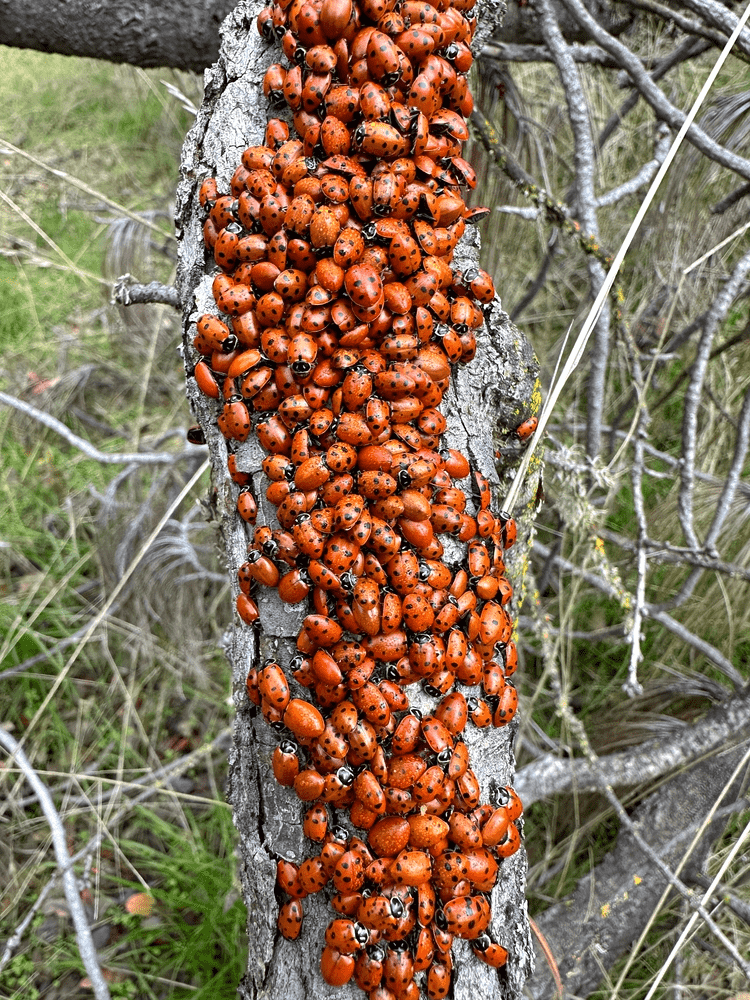
Ladybugs seek shelter in crevices or indoors. They cluster to conserve heat, and while their polka dot exteriors are adorable, seeing dozens huddled together can be quite a surprise.
These strategies illustrate how evolution equips even tiny creatures for survival against harsh winters.
4 Types of Common Winter Pests
Not all winter insects are welcome indoors. In fact, most aren’t. But these four pests really exploit the cold to seek warmth, food and shelter:
Rodent-associated insects: Fleas and carpet beetles often hitch a ride when mice move indoors. Once inside, they can bite, damage fabrics or contaminate food.
Spiders and silverfish: These critters are frequently found in basements, closets and attics. They thrive in dark, damp spaces and may leave webs, damage paper or simply startle you when spotted (possibly the most grievous offense of all).
Cockroaches: Certain species stay active even in cooler indoor climates. They’re hardy, reproduce quickly, are difficult to kill and can carry allergens or bacteria.
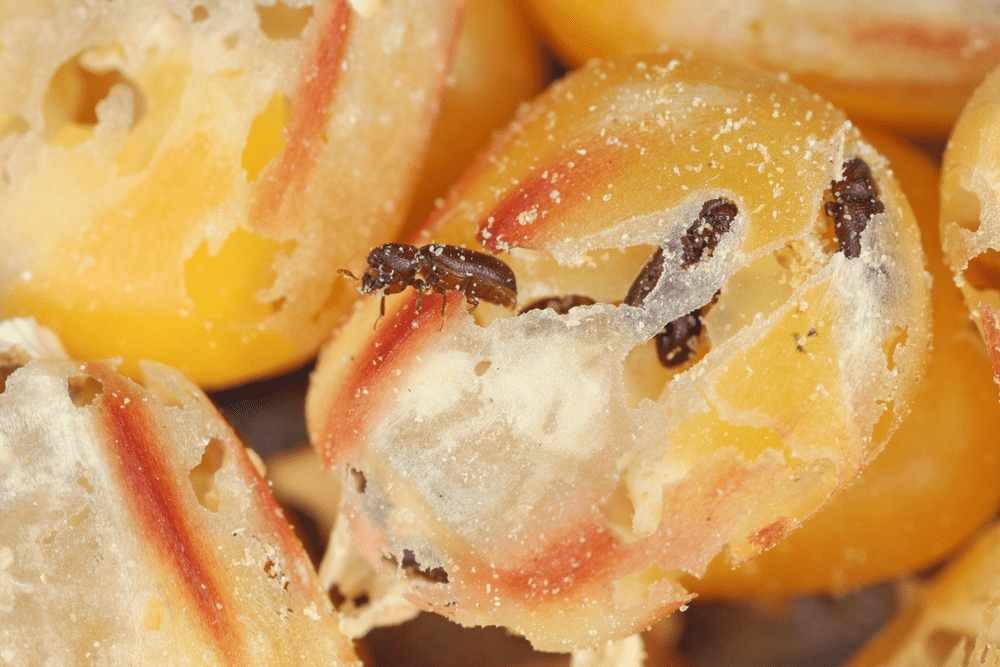
Pantry pests: Moths, weevils and grain beetles may invade stored food when temperatures drop outside, taking advantage of cozy indoor pantries.
Even though these bugs aren’t visible in the snowy garden, they may find your home to be the perfect cozy winter retreat.
Protecting Your Home from Winter Pests
Keeping bugs out during winter is mostly about removing shelter and food opportunities:
Seal cracks and gaps Check windows, doors and foundation cracks to prevent entry. Use safe barriers like weather stripping, door sweeps and window screens.
Store firewood properly Keep it away from walls; stacked wood can harbor beetles and spiders.
Clean regularly Vacuum and wipe down surfaces to remove crumbs, pet food or insect eggs.
Check indoor plants Soil can be a hiding spot for some insects, like snow fleas.
Do Insects Hibernate?
Technically, most insects don’t hibernate like mammals (sorry — they’re not participating in long cave naps like big, fuzzy bears). Instead, they enter diapause, a state of suspended development with slowed metabolism.
During diapause, insects:
Store energy as fat in their bodies
Produce antifreeze chemicals to prevent tissue damage
Seek protected environments like soil, leaf litter or bark
Some bugs, like ladybugs, stay partially active, taking advantage of brief warm periods to feed or move indoors. Others, such as mosquitoes, die off, leaving eggs or larvae that will emerge in spring.
Winter Insects FAQ
Looking for a quick recap? Here are all the details on what really goes on with insects during those cold winter months:
What happens to insects in the winter? Some die off, leaving only eggs or larvae to emerge in spring. Others shelter in soil, leaf litter, bark or indoor crevices, while some remain active in warm microclimates.
How do bugs survive the winter? Most insects don’t truly hibernate. Instead, they enter diapause, slowing development and metabolism. They store energy in fat, produce antifreeze chemicals to protect tissues and seek out protected environments.
Are cold-weather insects dangerous? Most are harmless, but indoor winter pests like spiders or cockroaches can be nuisances.
Explore the Science Behind Insects (and Turn It Into a Career)
Curious about the science behind insect adaptation and survival (and pest management strategies on a larger scale)? The University of Florida, proudly ranked #1 in entomology and nematology worldwide, offers four distinct online entomology graduate programs:
Medical Entomology Study the biology and control of disease-carrying insects, preparing for careers in public health or research.
Beekeeping Explore the science and management of honey bees, pollination and hive health.
Urban Pest Management Learn strategies to manage pests in cities and residential areas, focusing on environmentally responsible solutions.
Landscape Pest Management Gain expertise in identifying and controlling pests that threaten turf, ornamental plants and landscapes.
Depending on your goals, you can pursue a graduate certificate or a master’s degree online in your chosen specialty. You’ll deepen your knowledge in insect biology, ecology and management, gaining the skills to tackle real-world challenges.
Align your passions with the right program and get ready to make an impact wherever your curiosity and skills take you.
Contrary to popular belief, not all insects are solitary creatures. In fact, some of them are quite social. An ant finds a dropped cracker and returns with reinforcements. A honey bee comes home and performs a dance containing directions. (Seriously, it’s a thing.) Thousands of termites construct enormous nests without anyone handing out blueprints. So,…
Living in Florida, I’m all too familiar with mosquitoes. They’re practically an unofficial state mascot. But lately, I’ve been paying a lot more attention to them. In 2026, Hillsborough County became the center of Florida’s largest dengue fever outbreak in decades. For me, the outbreak hit especially close to home when a neighbor told me…
Zombies. Mind control. Creatures that burst out of other creatures. Horror writers have spent centuries dreaming up increasingly disturbing ways to keep us awake at night. Meanwhile, insects have been casually doing all of the above in forests, gardens and possibly somewhere uncomfortably close to your house. From wasps that walk cockroaches to their doom…