Every neighborhood has that one yard: lush lawn, trimmed hedges, wraparound porch. It’s the envy of everyone who drives past, but you know something?
Pollinators hate it.
Bees, butterflies, birds and other pollinators are essential for biodiversity and pollinating the crops that feed us. But to do their job, they need shelter and reliable food sources. Your yard could be the perfect pit stop for these critters.
Here are seven ways to make your fall yard more pollinator friendly. And the best part? You won’t have to do much work.
1. Resist the Urge to Pick up Leaves
Leaves aren’t litter. One of the biggest myths about fall cleanup is that you have to rake every last leaf.
Leaf litter acts as a slow-release fertilizer and creates a habitat for wildlife, including overwintering bumble bee queens, ground-nesting bees and many moth and butterfly larvae. A layer of fallen leaves helps insulate insects and other invertebrates from winter cold, allowing them to complete their life cycles.
Your city or HOA may prefer a spotless lawn, but if you can leave some areas a little wild, visiting pollinators will benefit from a safe place to ride out the colder months.
Bonus Tip: Give Composting a Try
Hear us out: Why spend hours raking and bagging leaves when they break down on their own (and feed your soil in the process)? Bagging them up and hauling them away just means buying fertilizer later to replace what you threw out.
If you plan to pick up leaves, try this instead: Rake them under shrubs and trees, move them to a back corner of the yard or add them to a compost pile where invertebrates like nematodes can help turn them into nutrient-rich soil.
2. Plant Fall-Blooming Native Flowers
Planning out your next nursery run? Focus on native blooms that local pollinators evolved with and recognize as reliable food sources.
Here in Florida, pollinators appreciate:
Shrubs and small trees like firebush, wild coffee and saw palmetto, which offer nectar, pollen and fruit
Wildflowers like black-eyed Susan, blue mistflower and white milkweed, which support a range of bees and butterflies, including migrating monarchs
Vines like coral honeysuckle, corky-stemmed passionflower and maypop, which attract hummingbirds and butterflies and provide larval host plants for some species
Aim for a mix of species that bloom from early spring into late fall, so there’s always something in flower. Many ornamentals shut down by late summer, but migrating monarchs and late-season bees still need nectar when they pass through in fall.
When possible, avoid highly modified hybrid flowers, especially those with “double” blooms. They may look impressive, but extra petals can block access to pollen and nectar or reduce how much of each the plant produces, making them less useful to pollinators.
3. Organize Native Plants into Clumps
Once you’ve chosen your native plants for pollinators, resist the urge to plant perfect rows.
Bees, butterflies and other pollinating insects often find and use flowers more efficiently when they’re planted in groups of three to five or more of the same species. Clumps create bigger visual “targets” and allow pollinators to forage with less energy spent flying between scattered blooms.
4. Provide Shelter for Bees
Believe it or not, most bee species are solitary; they live without a hive or queen. Many nest in the ground, while others use hollow stems and wood burrows.
To support ground-nesting bees, leave a small patch of bare or lightly mulched soil in a sunny, well-drained spot. Avoid constantly tilling or heavily compacting this area so nests can remain undisturbed.
If you want to go further, you can build a simple bee box with drilled wood blocks or bundled, untreated plant stems. Just be sure to clean or replace nest materials regularly to prevent disease buildup.
5. Avoid Pesticides
Most broad-spectrum pesticides don’t distinguish between crop pests and beneficial insects like bees and butterflies. Reducing or eliminating pesticide use is one of the most direct ways you can help pollinators in your yard.
Hand-pulling weeds, mulching and using targeted, non-chemical methods go a long way. If you have to use pesticides, choose the least-toxic option available, follow the label and apply in the evening or at night when bees and many other pollinators are less active.
6. Provide Sources of Food for Birds
Birds are important — and often overlooked — pollinators and seed dispersers, especially hummingbirds and certain songbirds.
To make your yard bird friendly in fall and winter:
Avoid cutting back all stems and seed heads. Seed heads provide vital food for migrating and overwintering birds.
Keep some fruiting shrubs and trees, like firebush or beautyberry, which provide berries later in the season.
Want to take it a step further? Set up a bird feeder or a hummingbird feeder with sugar-water nectar mixed at roughly four parts water to one part white sugar (without dyes or honey, which can promote mold). You’ll support pollinators and enjoy some backyard birdwatching at the same time.
7. Create a Pit Stop for Bees and Butterflies
Even with abundant flowers, bees and butterflies may need extra water and minerals, especially in hot, dry periods.
You can help by creating:
A “salt lick” or mineral puddling area. Many butterflies and some bees gather at damp soil or mud to access sodium and other essential minerals. Create a shallow damp area in your yard and mix in a small amount of sea salt or wood ash.
A shallow water source. A small birdbath or dish filled with water and a layer of pebbles or marbles gives insects a place to land and drink without drowning. Refresh the water regularly to keep it clean and discourage mosquitoes.
These small details can make your yard a reliable refueling station along a pollinator’s route.
Make a Career Out of Helping Pollinators
Nurturing a pollinator-friendly yard might feel like a small act, but those habitats add up across neighborhoods. As insect populations face pressure from habitat loss, climate change and other stressors, local efforts like yours play a meaningful role in conservation.
If you love pollinators, especially insects, you can turn your passion into a career in entomology. Potential paths include:
These roles may seem out of reach, but with your interest and the right education, they’re more achievable than you think.
Study Entomology Online at UF
The University of Florida offers online entomology master’s degree and graduate certificate programs that’ll help you pursue careers in beekeeping, medical entomology and more. UF’s graduate programs are 100% online, so you can study from home while you look out at your own pollinator-friendly yard.
Want to explore next steps? Visit our Programs page to view our program offerings or take a look at our Careers in Entomology page to see how entomologists are protecting pollinators and ecosystems around the world.
Every neighborhood has that one yard: lush lawn, trimmed hedges, wraparound porch. It’s the envy of everyone who drives past, but you know something? Pollinators hate it. Bees, butterflies, birds and other pollinators are essential for biodiversity and pollinating the crops that feed us. But to do their job, they need shelter and reliable food sources. Your yard could…
Spotted lanternflies are destroying crops across the Eastern U.S. These invasive pests have slashed grape harvests by up to 90% and stunted maple tree growth by half. Since arriving in Pennsylvania in 2014, they’ve spread rapidly — and they’re getting harder to kill. The good news? Scientists are fighting back with promising new weapons: parasitic wasps, bug-killing fungi and strategic habitat removal. These biological control methods could…
“Conservation isn’t just a business of a few people, it’s a matter that concerns all of us.” —Walt Disney The link between The Walt Disney Company and the natural world runs deep. From Disney’s Animal Kingdom to its acclaimed “Disneynature” documentaries, the company has long worked to inspire a love of nature through storytelling and entertainment. What may…
Spotted lanternflies are destroying crops across the Eastern U.S. These invasive pests have slashed grape harvests by up to 90% and stunted maple tree growth by half. Since arriving in Pennsylvania in 2014, they’ve spread rapidly — and they’re getting harder to kill.
The good news? Scientists are fighting back with promising new weapons: parasitic wasps, bug-killing fungi and strategic habitat removal. These biological control methods could finally give us the upper hand against this destructive pest.
What Is the Spotted Lanternfly?
The spotted lanternfly (SLF) has a beautiful, poetic name, but it’s a highly destructive planthopper. Native to Asia, these insects arrived in Pennsylvania as eggs hidden in commercial shipments. Now the rest of the Eastern Seaboard (and beyond) is under threat if these invaders aren’t stopped.
Why Are Spotted Lanternflies a Problem?
Spotted lanternflies feed on grapevines, hops, fruit trees and hardwoods like maples and walnuts.
After feeding, they excrete honeydew: a sticky substance that promotes mold growth. This mold blocks sunlight and weakens plants, making them vulnerable to disease.
And the damage doesn’t stop at individual plants. When spotted lanternflies destroy plants, they disrupt entire food chains by eliminating food sources for herbivores and the carnivores that feed on them.
Why Is Spotted Lanternfly Management So Difficult?
These nuisance pests have proven extremely hard to eliminate. Here’s why:
The SLF has become resistant to some insecticides.
Systemic insecticides — chemicals absorbed and moved by plants — may only work in a limited range.
Contact insecticides can be effective, but some harm beneficial insects.
As a result, the spotted lanternfly keeps reproducing and expanding its domain. But there are some encouraging new ways to fight back. Paired with existing best practices, these methods may finally give us some reliable spotted lanternfly treatments.
What Are the Latest Spotted Lanternfly Control Methods?
Spotted lanternfly research published in 2026 suggests that nature might help solve this nature‑made problem. Biological control methods show great promise. The added benefit? They’re eco-friendly.
Spotted lanternfly treatments with potential include:
Anastatus orientalis Parasite This parasitoid wasp lays eggs inside spotted lanternfly eggs, and the larvae eat SLF embryos before they hatch. It worked well in South Korean tests, but in the U.S., the parasite preferred other insect eggs. So while promising, its usefulness may depend on location.
Dryinus sinicus Parasite This Chinese parasitoid wasp uses raptorlike forelegs to snatch spotted lanternfly nymphs. It then lays eggs inside or beneath the nymph’s body. The wasp larvae develop inside the host and eventually kill it. In controlled tests across North America, D. sinicus performed well and could significantly reduce SLF populations.
Unleashing parasites isn’t the only promising biological control method. Other vermin and fungi help, too.
Eucryptorrhynchus brandti, a Chinese weevil, swarms on the tree of heaven and eats its trunk. Its larvae develop under the bark, wrecking the tree’s vascular system and robbing it of life-sustaining water and nutrients.
The soil-borne fungus Verticillium nonalfalfae can spread through tree of heaven root systems, wiping out large areas of SLF habitat.
Aculus taihangensis is a tiny Chinese mite. In North American tests, they reproduced quickly and damaged the tree of heaven, sparing similar trees.
Bug-Killing Fungi Fungi like the U.S. native Beauveria bassiana make greatbiofungicides. In one study, application of the fungus-based contact insecticide cut an adult SLF population by 43% and late-stage nymphs by 48% within two weeks.
How? B. bassiana spores stick to the SLF’s body, eat through its exoskeleton with an enzyme, and then grow inside it. Toxins kill the host within days. It’s considered safe for beneficial insects, though it shouldn’t be sprayed on bees or their food sources.
Conventional Spotted Lanternfly Control Methods
There may be no single fix for the problem of spotted lanternflies, and bringing them under control will likely take a mix of methods. Parasites and fungi are large-scale solutions meant for professionals. But ordinary people can join the fight, too, with everyday spotted lanternfly treatments and practices:
Be Vigilant
People should know what SLFs and their egg masses look like. After camping or visiting areas where they’re common, it’s a good idea to check gear and cars. A quick look for insects or eggs helps ensure they won’t get a free ride to a new home.
Destroy SLF Eggs
Destroy egg masses by removing and soaking them in alcohol or soapy water.
Set Traps
Traps are a passive defense that can help capture tree-climbing nymphs.
These are typically:
Sticky bands that go around trees
Circle traps, which funnel the insects into containers
Use Insecticides
Insecticides have a spotty track record but can be helpful in a pinch.
Favor Eco-Friendly Methods Over Chemical Controls
Chemical pesticides may kill bugs, but there’s more than one catch: They don’t always just kill the bad ones, and they’re also harmful to humans and the environment. Chemical control methods can contaminate water, soil and air — even end up in our food. They cause crop yields to shrink and beneficial microbes to die off, too.
But there are safer, more eco-friendly ways to control and kill spotted lanternflies, including homegrown biological controls.
Try these methods:
Spray SLFs and their environment with neem oil, a vegetable oil that disrupts their life cycle.
Keep chickens and guinea fowl, which will eat spotted lanternflies.
Attract beneficial insects like praying mantises by planting flowers they feed on.
Interested in tackling invasive species like the spotted lanternfly professionally? The University of Florida, home of the number-one-ranked entomology and nematology program in the world, can help.
Turn Nature’s Challenges Into Career Potential With UF Online
Insects like the SLF bring plenty of problems. Entomology opens doors for people who want to:
Research insects and their deterrents
Shape their impact on public health and living spaces
Every neighborhood has that one yard: lush lawn, trimmed hedges, wraparound porch. It’s the envy of everyone who drives past, but you know something? Pollinators hate it. Bees, butterflies, birds and other pollinators are essential for biodiversity and pollinating the crops that feed us. But to do their job, they need shelter and reliable food sources. Your yard could…
Spotted lanternflies are destroying crops across the Eastern U.S. These invasive pests have slashed grape harvests by up to 90% and stunted maple tree growth by half. Since arriving in Pennsylvania in 2014, they’ve spread rapidly — and they’re getting harder to kill. The good news? Scientists are fighting back with promising new weapons: parasitic wasps, bug-killing fungi and strategic habitat removal. These biological control methods could…
Grew up in the South? Then you’ve probably been stung by a fire ant. Maybe you accidentally stepped on a mound or learned the hard way not to stand on the grass for too long. However it happened, you walked away with a sting so itchy, you’d swear fate was testing you. Fire ants may…
Grew up in the South? Then you’ve probably been stung by a fire ant. Maybe you accidentally stepped on a mound or learned the hard way not to stand on the grass for too long. However it happened, you walked away with a sting so itchy, you’d swear fate was testing you.
Fire ants may seem like a staple of summer in the South — right along with cookouts and fireworks — but they’re actually an invasive species. Originally from South America, red imported fire ants arrived in the U.S. almost a century ago. Since then, they’ve been taking over our backyards (and assaulting our ankles).
What Are Red Imported Fire Ants?
Of the nearly 200 known fire ant species worldwide, most thrive in warm, tropical regions like Central and South America. But in the U.S., one species remains dominant: the red imported fire ant (Solenopsis invicta). These reddish-brown workers measure between .3175 to .6351 centimeters long (1/8 to 1/4 inches) and sport dark, bulbous rears. They’re the invaders behind most Southern backyard fire ant stings.
How Painful Are Fire Ant Stings?
On the Schmidt sting pain index, the fire ant sting scores a 1 out of 4. That’s relatively mild, according to entomologist Justin Schmidt, who personally tested what it feels like to be stung by venomous insects. He described the fire ant’s sting as “sharp, sudden,” and “mildly alarming.” Still, the sensation is hardly a tickle — especially if you stumble into a colony.
How Did the Red Imported Fire Ant Get to the United States?
Native to South America, red imported fire ants were unintentionally introduced to the United in the late 1930s. They likely traveled through the port of Mobile, Alabama, in the ballast of cargo ships.
Without natural predators to keep them in check — and armed with aggressive foraging behaviors and rapid reproduction — fire ants spread fast throughout the Southern and Western U.S. Today, they infest over 367 million acres in American states and territories including:
Alabama
Arkansas
California
Florida
Georgia
Louisiana
Mississippi
New Mexico
North Carolina
Oklahoma
Puerto Rico
South Carolina
Tennessee
Texas
Virginia
Now and then, fire ants pop up in Kentucky, Missouri and Maryland. They’ve even made it across the pond, spotted in regions as far as Syracuse, Italy. As climates warm, expect fire ants to continue spreading throughout warmer parts of the world.
Why Are Red Imported Fire Ants a Problem?
Since their arrival to the U.S., red imported fire ants have become urban pests and agricultural nightmares. They:
damage farm equipment
destroy crops like sorghum, corn, small grain seeds, forage grass and citrus seedlings
For those unfortunate enough to step on a mound, a fire ant sting can be more than a nuisance. For some, the sting can trigger life-threatening allergic reactions like anaphylactic shock. This makes it a challenging to estimate this insect’s cost to public health. In total, state agencies have spent about $250 milliontrying to control fire ants’ spread.
Fire Ant Management Strategies
So, what’s being done? Pest managers are throwing everything they can at fire ants, including strategies like:
Broadcast bait applications
Individual mound treatments
Barrier and spot treatments
But here’s the catch: even when pesticides wipe out a colony, fire ants from nearby will often re-colonize the area within a month: faster than native species can recover.
The biggest breakthrough might come from biological control: using the red imported fire ant’s natural predators against them.
Biological Control Strategies: Fighting Fire With Fire
Currently, two biological control methods are being tested: the decapitating fly and fire ant disease.
1. Decapitating Flies
Native to South America, decapitating flies evolved alongside fire ants, developing a rather grotesque way to destroy them.
These flies chase fire ants into their colonies, preventing them from feeding. If a decapitating fly manages to catch a fire ant, it will lay its eggs inside the ant’s head. The egg develops, and the head falls off. (Gross, we know.) The adult fly then vacates the headless ant in search of a new target.
2. Fire Ant Disease
This ingenious method involves planting ant larvae infected with fire ant disease (Thelohania solenopsae) in a fire ant colony. The disease spreads from brood to workers to the queen, weakening her ability to reproduce and hampering the spread of new colonies.
Join the Fight Against Invasive Species
Maybe you’re recovering from a nasty fire ant sting, or maybe — just maybe — you’re curious about pest management. If so, this could be your moment.
At the University of Florida, we offer online entomology graduate programs that can help you prepare you for a career tackling invasive species like the red imported fire ant. Check out our specializations in:
Ticks are tiny. The problems they cause? Not so much. These tiny arachnids — about the size of an apple seed — spread more vector-borne diseases than almost any other insect. Lyme disease alone is diagnosed and treated in roughly 476,000 Americans each year, according to the U.S. Centers for Disease Control and Prevention (CDC). And recently, emergency room…
A squirming larva that screws itself deeper into living flesh as it feeds? Yeah, a screwworm sound like something a horror writer invented after a very bad camping trip. Unfortunately, they’re real. Even more unfortunately, they’re flies. The New World Screwworm (NWS) is a parasitic fly whose larvae (maggots) can infest wounds and feed on…
They show up uninvited, multiply faster than you’d expect and are remarkably good at avoiding detection until there’s already a problem. (Honestly, how rude.) In some cases, homeowners may not even notice a household pest infestation until it is too late — and by then, the situation is rarely a quick fix. For us to…
Ground beetles are beneficial insects that provide natural pest control in gardens and agricultural settings. Most species prey on common garden pests like aphids, caterpillars and slugs, helping reduce the need for chemical pesticides.
And while their shiny outer shells can seem intimidating at first glance, ground beetles aren’t harmful to humans. On the contrary; they play an important ecological role in maintaining balanced ecosystems.
The name “ground beetle” refers to all insects in the Carabidae family, also known as carabids. With approximately 40,000 species worldwide, these hardworking insects play a vital role in maintaining healthy ecosystems: fertilizing soil, preying on pests and keeping nature in balance.
Physically, ground beetles range from 0.28 inches to 2.6 inches in length — about the size of a standard pencil eraser to the length of a lipstick tube. No matter their size, they share several common features:
Long legs for speed
A tough exoskeleton for protection
Powerful mandibles for capturing and devouring pests
Their coloration varies by species, ranging from deep black to striking metallic hues of green, blue, copper or gold.
Why Are Ground Beetles Beneficial?
Many garden enthusiasts, farmers and ecologists consider ground beetles beneficial insects because they offer effective, pesticide-free pest control. Here’s why they’re vital to our ecosystems:
Providing natural pest control What do ground beetles eat? Ground beetles have an insatiable appetite, particularly for common garden pests like aphids, caterpillars and slugs. Armed with powerful mandibles, they feast on these pests, helping keep vegetation healthy and thriving.
Pollinating nearby plants While bees are the most well-known pollinators, ground beetles also play a role in pollination. As they wander through your garden or yard, they carry pollen from one plant to another, aiding plant reproduction and supporting local flora.
Improving soil health Think of ground beetles as tiny gardeners, working behind the scenes to keep soil healthy and thriving. They break down plant debris, which enhances nutrient cycling, and their burrowing improves air and water circulation, benefiting plant roots. Additionally, their waste enriches the soil with organic matter.
How To Attract Ground Beetles to Your Garden
Want to harness the natural pest control power of ground beetles in your garden? Follow these simple steps to create a beetle-friendly haven:
Offer their favorite plants Ground beetles feed on unwanted pests, but they also enjoy flowering plants. To attract them, plant species like asparagus, rhubarb and red clover; they’re all beetle-approved.
Provide shelter No need to build a tiny beetle mansion, but adding mulch, leaves or other organic matter will give them a cozy spot to hide during the day.
Offer water Whether you keep your soil extra moist or provide a shallow bowl to quench their thirst, ground beetles need (and will appreciate) the hydration.
Minimize pesticide use Since you’re inviting beetles in to help with pest control, skip the chemical sprays. Instead, try hand-picking pests or using essential oils or pest-repellent plants.
Ground Beetle FAQs
Are ground beetles harmful to humans? No. Ground beetles are not harmful to humans. While they have strong mandibles for capturing prey, they rarely bite and don’t pose a health risk. Most species are more interested in hunting garden pests than interacting with people.
What do ground beetles eat? Ground beetles primarily feed on common garden pests such as aphids, caterpillars, slugs and other soft-bodied insects. Some species also consume weed seeds, helping support natural pest and plant management.
Are ground beetles good for vegetable gardens? Yes. Ground beetles are considered beneficial insects in vegetable gardens because they help control pest populations naturally. This reduces the need for chemical pesticides.
What attracts ground beetles? Ground beetles are attracted to gardens that provide shelter and food sources. Mulch, leaf litter, moist soil and healthy plant diversity create ideal habitats for these insects.
Deepen Your Knowledge of Beneficial Insects (and Unwanted Pests)
If you’re passionate about entomology, the University of Florida offers several entirely online programs designed to fit your schedule and career goals. With four specializations, you’re sure to find a path that will lead you to a rewarding career in entomology.
Whether you’re interested in medical entomology, beekeeping, urban pest management or landscape pest management, all of our program specializations are offered in two convenient formats:
Graduate Certificate In just 15 credit hours (and as little as one year), you’ll gain a comprehensive understanding of your chosen specialization. This format is perfect for honing the skills and knowledge you need to advance your entomology career.
Master’s Degree The master’s program consists of 30 credit hours: 15 hours to deepen your overall entomology knowledge and 15 hours focusing on your chosen specialization. By the time you graduate, you’ll have earned both a master’s degree in entomology and nematology and a graduate certificate in your area of focus.
As the number one entomology and nematology program in the world, we’re proud to share our expertise through renowned professors, offering the same high-quality education and hands-on learning experiences as our in-person classes.
With sightings of the Asian giant hornet (popularly called the murder hornet in the media) popping up across the northwest, we thought we’d take a look at some of America’s most notorious invasive insects. Unlike Asian giant hornets, these invertebrates already have a strong foothold in the United States and are responsible for millions of…
Picture this: You’ve been craving those mouthwatering appetizers at your favorite weekend spot all afternoon. You finally arrive, eager to dig in, only to find the restaurant’s closed. Odd, right? It was open just last week. Upon closer inspection, you spot a notice slapped on the door—a failed health inspection. The culprit? A significant pest…
When people think of stink bugs, one question usually arises: Do stink bugs really stink? While they don’t go around contaminating every area they cohabitate with, they do emit a notably pungent scent when threatened: a chemical defense mechanism that deters predators.
But it’s not their smell that’s most concerning. The brown marmorated stink bug (BMSB), or Halyomorpha halys, is an invasive species that’s rapidly spread across 38 states, wreaking havoc on crops and causing significant economic losses.
In this article, we’ll explore the defining traits of the BMSB, examine the environmental and economic impacts of its spread and highlight the current pest management strategies used to control this invasive pest and limit further damage.
Identifying a Brown Marmorated Stink Bug
Before you can determine whether this species is living in or around your home, it’s important to know how to distinguish it from other insects. Here’s how to spot an adult BMSB:
Appearance: The BMSB’s back has a unique shield shape with a marbled brown color and intricate, mottled patterns that earn it the term “marmorated.”
Key features: Look for white and brown bands on both the antennae and legs — distinctive marks that help set the BMSB apart from similar species.
As with other critters in the world, these insects don’t start their lives as adults. You can spot them during other phases of life as well:
Egg stage BMSBs lay clusters of approximately two dozen eggs on the underbellies of leaves each spring. The eggs are usually light green.
Nymph stage After about a week, the eggs hatch, and the second stage of their life begins. Young nymphs are bright red and black and have a more circular shape than their adult counterparts. As they mature, their adult coloring begins to take over and their signature shield-shape becomes more prominent.
Adults By the time they’ve reached the adult stage of life, BMSBs have developed wings that allow them to fly to overwintering sites in the fall to avoid colder temperatures.
The Brown Marmorated Stink Bug’s Initial Spread
The BMSB, originally from East Asia, arrived in North America in 1996, likely via shipping containers. First spotted in Pennsylvania, it spread rapidly across the U.S. While BMSBs can fly, they rely on human transport to cover long distances, “hitchhiking” on vehicles and shipments, often settling in warmer climates where they can thrive.
The main reason brown marmorated stink bugs have thrived in North America is due to their voracious appetites — and the U.S. offers plenty of their preferred foods. So, what do stink bugs eat?
They enjoy dining on several juicy field crops, including:
Apples
Apricots
Asian pears
Cherries
Corn
Grapes
Lima beans
Peppers
Tomatoes
How Do They Impact the Environment?
While BMSBs have excellent taste in produce, their appetite for fruits and vegetables has caused economic losses in some areas, especially in the mid-Atlantic region, including states like Maryland, Virginia and Pennsylvania. In 2010, a BMSB outbreak caused over $37 million in losses to fruit producers in this area.
These significant economic losses highlight the destructive potential of the BMSB. After consuming fruits and vegetables, they cause physical damage to produce, leading to mealy textures and discoloration that make the affected crops unsuitable for fresh markets and sometimes even for processing. Additionally, when they feed on plant leaves, they create openings for pathogens, leaving crops vulnerable to disease. These direct and indirect damages make BMSBs a significant agricultural and ecological concern in the regions they invade.
Pest Management Strategies
The brown marmorated stink bug, invasive species that it is, requires carefully planned pest management strategies to significantly reduce its numbers. Unfortunately, the number of effective pesticides is limited for this species, but that hasn’t stopped agricultural scientists and pest management experts from exploring alternative methods.
In 2021, researchers from the Agricultural Research Service investigated the Trissolcus japonicus, or samurai wasp, for biological control. While the tiny wasp parasitizes stink bug eggs and can reduce populations, ecological limitations prevent it from being a fully compatible, standalone control solution.
However, if you live in a BMSB hot spot, there are measures you can take to keep these invasive pests out of your home:
Seal entry points: Use caulk or silicone to close cracks and crevices around windows and doors.
Remove with care: Vacuum stink bugs you find indoors, but be mindful of the odor they release — better in the vacuum than on you!
Limit lights: Since stink bugs are attracted to light, reduce outdoor lighting at night to minimize attraction.
Discover the Latest Pest Management Strategies at UF
Understanding and managing invasive species like the brown marmorated stink bug requires expertise in pest control and ecological balance. While DIY strategies can help minimize indoor encounters, effective long-term solutions rely on continued scientific research and advanced pest management strategies.
That’s where the University of Florida comes in. As the number one nematology and entomology program in the world, our online master’s degree and graduate certificate programs provide the skills needed to address these environmental challenges. Whether you’re interested in one of our pest management programs or another specialization, you can earn a graduate certificate or master’s degree (or both) in as little as one year.
Explore our programs to determine which one aligns with your career aspirations, and when you’re ready, fill out an application to begin the next chapter in your professional journey.
Upon first glance, the spotted lanternfly might appear to be a virtuous little moth. With a black and yellow body tucked gracefully inside a pair of radiant red, black and brown wings, they’re a speckled sight to behold. But if you research these colorful insects, you’ll quickly discover that they’re not nearly as innocent as they appear.
This unsuspecting pest is one of more than 450 known invasive insect species in the United States. Invasive species are insects that aren’t native to a country and cause harm to the environment or human health. Once they arrive on foreign soil, they settle in at the expense of local ecosystems and can be difficult to remove without also harming beneficial insects.
Today, we’re taking an in-depth look at the spotted lanternfly and exploring ways to reduce the number of this invasive species in our environment.
Getting to Know the Spotted Lanternfly
Spotted lanternflies, or Lycorma delicatula, are classified as planthoppers due to their ability to easily hop from one place to another. They typically grow to about one inch in length and half an inch in width. With their wings folded, they resemble a lantern shape, giving them their informal moniker.
In the fall, adult spotted lanternflies lay their eggs, which hatch as nymphs the following spring. It takes several months for these nymphs to mature into adults, and then the cycle repeats. Upon hatching, nymphs immediately seek out a food source. They prefer the Ailanthus tree but are also known to feed on more than 70 species of maple trees, oak trees, apple trees and grapevines.
How Did the Spotted Lanternfly Spread?
You may be familiar with the spotted lanternfly’s outer appearance, but do you know its origin story and how it spread to other countries? This invasive species hails from Southeastern Asia, where it naturally thrives in the warm, humid climates of countries like China, Taiwan and Vietnam.
They have also established themselves in countries with mild climates, such as Japan and South Korea. However, their appearance in the cooler region of the northeastern United States, specifically Pennsylvania in 2014, came as a surprise.
The spotted lanternfly likely arrived in the U.S. through international trade, hitching rides on imported goods such as stone or wood shipments. Since its introduction, the spotted lanternfly has spread to 14 other states, often carried unknowingly on infested wood and pallets.
What Are the Ecological and Economic Impacts?
As spotted lanternflies feed, they use their sharp mouthparts to retrieve the sap under the tree’s bark. This feeding alone can cause damage, but the lanternflies don’t stop there. After feeding, they excrete honeydew, a sugary substance that attracts other insects.
The result is the growth of sooty mold, a fungus that makes the tree more vulnerable to other diseases and stops its growth, often killing it. The infection and death of these trees disrupts the habitats of native species that rely on them for shelter and food, including birds and mammals like bats and squirrels.
From an economic perspective, a 2019 study from the Pennsylvania Department of Agriculture estimated that spotted lanternflies could cost the state $324 million annually and remove the need for approximately 2,800 jobs.
How to Stop the Spread of the Spotted Lanternfly
Whether you’re a pest control professional or a concerned resident in an area affected by the invasive spotted lanternfly, there are effective tactics to prevent its spread:
Inspect your items Before traveling, check your items for lanternflies or their eggs. Look along the exterior and underside of your vehicle, destroying any egg masses, which often resemble mud splashes. You can use this checklist to help you identify potential lanternflies or their eggs.
Report sightings If you notice damage to trees that may be caused by spotted lanternflies, or if you spot egg masses, nymphs or adult lanternflies, take photos and report them to your state’s invasive species program.
Use control methods Incorporate removal methods such as vinegar, insecticidal soap or even the suction from a vacuum cleaner.
Learn Advanced Pest Control Strategies at the University of Florida
When it comes to combating the spread of the spotted lanternfly and other invasive species, professionals in pest management have access to a range of advanced strategies. If you’re familiar with the challenges posed by these pests and are looking to enhance your role in pest management, the University of Florida offers online graduate credentials with specializations tailored to your needs, including:
Master of Science in Entomology and Nematology Our online entomology master’s degree consists of 30 credits, with 15 focused on your chosen specialization. Upon completion, you’ll earn both a master’s degree and a graduate certificate in your specialization of choice.
Graduate Certificate (in the specialization of your choice) Our online graduate certificates are 15 credits and can be completed in as little as one year, providing a significant boost to your resume in the field of pest management.
Applications are accepted year-round, so start your application today to begin advancing your career next semester!
Many of us consider ladybugs to be symbols of good luck. Spotting one might evoke feelings of optimism or a sense of protection. (Whether that protection is for you or your garden is debatable.)
However, ladybugs aren’t merely cute, spotted critters that evoke nostalgic childhood memories. They’re also the apex predators of the garden world — and extremely beneficial to those looking for ways to rid their gardens of harmful pests.
Today, we’re exploring five reasons ladybugs have rightfully found themselves in the limelight of our Beneficial Species Spotlight series.
#1 They Have a Voracious Appetite
These ruby red insects may look like dainty aristocrats who take their afternoon cuppa with two sugar cubes and a splash of cream, but don’t let their charming, oval-shaped exterior fool you. Ladybugs love to eat.
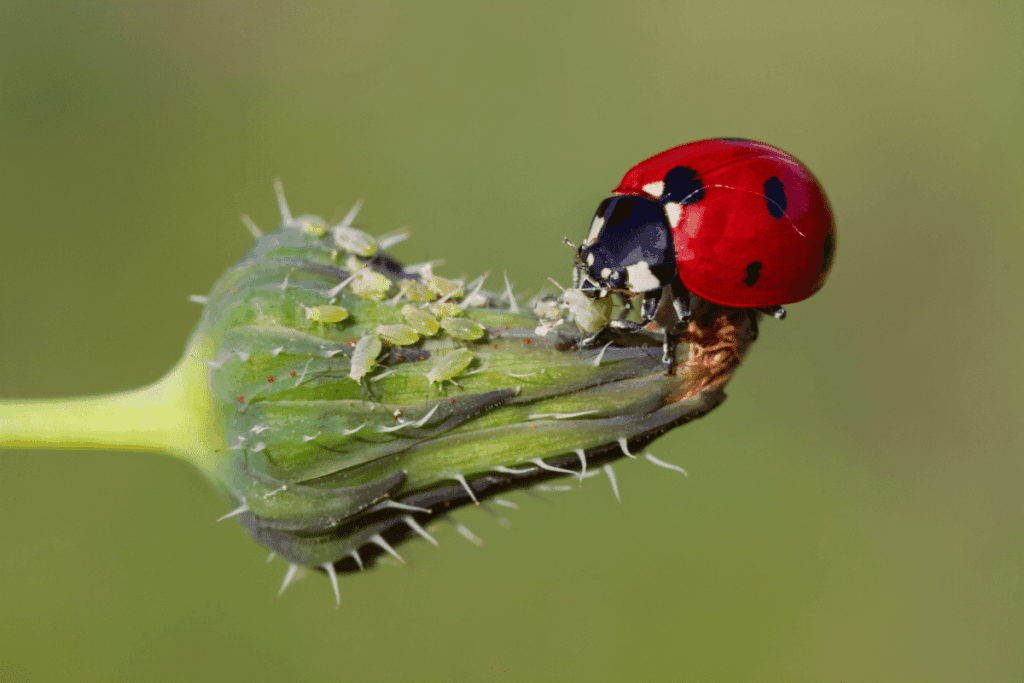
While they enjoy the occasional sip of nectar or nibble of pollen, a large portion of their diet consists of consuming unwanted garden pests. In fact, they can devour up to 5,000 insects throughout their lifetime, proving themselves to be an extremely helpful natural form of pest control.
#2 They Have a Diverse Palate
Like most humans, many species of ladybugs have a preferred food source. Generally, that’s aphids. Mature ladybugs can consume upwards of 25 aphids each day. This is particularly beneficial for farmers and gardeners, as aphids are small insects known for extracting juices from plant leaves, often leading to discoloration and hindering the plants’ growth.
However, ladybugs don’t consume aphids exclusively. Most will gladly rid your garden of several other unwanted pests as well, including mealybugs, mites and fruit flies.
#3 They’re Helpful in All Stages of Life
Like butterflies, ladybugs go through several stages of metamorphosis. They begin as eggs, progress to larvae and eventually pupae before reaching their final stage in the lifecycle as adults.
While it’s true that adult ladybugs can feast on two dozen aphids in a day, it’s during the larval stage that their appetite for aphids truly shines. Ladybugs in this early stage of development consume the most aphids, devouring about 10 times more than their mature counterparts. This makes ladybug larvae incredibly useful to individuals seeking natural pest removal strategies for their plants.
#4 They Attract Other Pollinators
Ladybugs provide an excellent form of pest control, but they’re also an undervalued member of the unofficial Pollinator Society. Sure, they might not be pollinating as many flowers as bees (okay, they definitely aren’t), but ladybugs do what they can to contribute to the health of garden ecosystems.
By flying from flower to flower in search of nectar and pollen, unknowingly transferring pollen grains from one flower to the next, ladybugs aid the pollination process. This dual role as both predator and pollinator makes ladybugs a double threat in the realms of gardening and farming and invaluable contributors to garden biodiversity.
#5 They Indicate a Healthy Ecosystem
If you notice a ladybug in your vicinity, it’s an excellent indicator that the nearby ecosystem is a thriving one. Maybe that’s why they’re associated with positivity: Their presence signals an ecosystem that’s in harmony.
But why does the presence of a few ladybugs reflect so highly on the health of a garden? Ladybugs thrive in areas where conditions are favorable for their reproduction. As such, they often select locations where their prey is plentiful and somewhere that provides a suitable environment for nesting.
Key Takeaways: Ladybugs in the Garden
Q: Are ladybugs just cute garden visitors, or do they serve a purpose?
A: Ladybugs are apex predators of the garden world and important contributors to healthy ecosystems.
Q: How many insects can a single ladybug eat?
A: A single ladybug can consume up to 5,000 insects in its lifetime, making it a valuable ally in pest management.
Q: What do ladybugs eat most often?
A: Their favorite meal is aphids — tiny insects that damage plants. But they’ll also snack on mites, mealybugs, and fruit flies.
Q: Do ladybugs contribute to pollination?
A: While they’re not as efficient as bees, ladybugs help transfer pollen as they move from flower to flower in search of nectar and pollen.
Q: What does it mean if you see ladybugs in your garden?
A: Ladybugs are indicators of a healthy, balanced ecosystem — one that supports both pollinators and predators. If you see them in your garden, it’s a good sign.
Dive Deep Into the World of Insects at the University of Florida
Whether you’re currently working in the pest industry or you’re simply fascinated by natural pest control methods available and want to learn more, the University of Florida offers several online graduate programs centered around landscape and urban pest management:
Graduate Degrees
Our Master of Science is a customizable 30-credit online program, allowing you to earn not only a Master’s Degree in Entomology and Nematology but also a graduate certificate in one of four specializations, including:
Agriculture has a workforce most people never see (and no, it’s not just agronomists or agricultural engineers). It’s insects. Quietly and consistently — without paychecks or benefits — insects pollinate crops, control pest populations and help food systems function. Understanding their role goes beyond appreciation. It’s a reminder that biodiversity in agriculture depends on more than what we plant in the field. …
Insects can’t be trained — at least not in the way you’re thinking of. No pats on the head for fetching a tiny ball or flying to a certain spot on command. But research on hoverflies is challenging what entomologists thought they knew about insect learning. These small, bee-mimicking insects are helping researchers understand how visual information shapes decision-making…
Disaster preparedness planning usually focuses on evacuation routes, emergency supply kits and shelter plans. Insects rarely make the list. But after a hurricane or flood, insect populations aren’t waiting for communities to catch up. Mosquito numbers spike. New breeding sites appear overnight. Disease risks increase. That’s why entomology plays a crucial role in emergency management planning. By monitoring insect populations and identifying potential disease…
It’s no wonder insects are often referred to as pests. Discovering that six-legged intruders have invaded your garden overnight, intent on decimating your carefully cultivated vegetables, is undoubtedly disheartening. The sight of a cockroach scurrying under your refrigerator is equally unsettling.
While you could resort to spraying pesticides in your home and garden to eliminate these pests, the chemicals in pesticides carry potential health risks, from skin conditions to neurological deficiencies. If you’re uncomfortable with having insecticide residue in your home or if the idea of consuming vegetables with pesticide residues roils your stomach, you’re not alone.
Put your pesticides aside as we discuss three natural pest control options to keep those unruly bugs at bay.
#1 Use Natural Repellant Ingredients
It’s easier to create natural pest repellents than you might think. In fact, you might already have some of these ingredients lying around your home. Below, we explore some simple yet effective natural ingredients you can use to make your own eco-friendly pest control creations:
Essential Oils
Essential oils offer health benefits beyond aromatherapy, serving as effective natural pest control agents. When mixed with water in a spray bottle, they can create a potent natural insect repellent tailored to the specific type of insect you wish to repel:
Eucalyptus: This oil is ideal for reducing the number of flies and roaches.
Citronella: Mosquitoes are not fond of the strong smell associated with citronella oil.
Peppermint: If you’re looking to deter ants or spiders, peppermint is highly effective.
Coffee Grounds
In all seriousness, what can’t coffee make better? It helps us greet the day with a smile on our faces, it’s the pick-me-up we all want after a long day and it doubles as eco-friendly pest control.
That’s right, you can reuse this morning’s coffee grounds to fight off unwanted pests, such as ants and destructive garden slugs and snails. Its powerful scent works to mask the smell —and items — insects are really after, and it becomes even more potent if you use burnt coffee grounds.
Here are the steps to crafting the most potent coffee-ground bug repellant:
Step 1: Use the coffee grounds to brew your coffee. If you’re a coffee drinker, take a moment to enjoy your freshly brewed cup. Afterward, add more water to the coffee maker and filter the grounds a second time.
Step 2: Enhance the flavor and aroma by carefully placing the twice-used grounds in a dry pan and cooking them until dry.
Step 3: Allow the grounds to cool, then sprinkle them around areas where you notice ants and slugs. This will help repel them from garden veggies, doorways or cracks.
#2 Incorporate Insect-Repellant Plants
You can have your bug repellant (and eat some of it, too)! Certain plants provide an ideal natural pest control, thanks to their distinct scents that repel many unwanted insects. If you’re dealing with annoying, disease-carrying mosquitoes in the mornings and evenings, try adding a few of these eco-friendly, bug-repellant plants to your landscape to reduce the mosquito population:
Lavender
Marigolds
Citronella grass
Catmint
Rosemary
Basil
Mint
Sage
#3 Incorporate Biological Controls
In the context of natural pest control, biological controls refer to using living organisms to reduce pest populations. Biological controls are useful when you want to remove pests from outside areas, such as gardens or landscaping.
These “natural enemies” of pests come in many forms, including:
Predators: Pest-reducing predators include ladybeetles, predatory mites and ladybugs.
Parasitoids: A parasitoid is an organism that spends much of its life inside or attached to a living host. While they don’t kill their hosts outright, parasitoids forfeit the host’s life as part of their reproductive strategy. Aphelinid wasps and tachinid flies are both examples of parasitoids that may help prevent certain insects from developing and spreading.
Pathogens: Integrated Pest Management (IPM) sometimes incorporates pathogens, such as fungi, nematodes and bacteria, to cause diseases in unwanted pests. For example, Bacillus thuringiensis is a protein-producing bacteria. Its protein is toxic to certain insects, and many IPMs use it to control insects in large batches of crops.
Rid The World of Pests One Natural Remedy at a Time
Despite your efforts to reduce the number of pests in your environment, they often manage to return. Fortunately, pest management professionals possess a comprehensive understanding of these pests and, armed with a toolbox of strategies aimed at reducing their numbers, can effectively keep them at bay.
At the University of Florida, we aim to ignite your passion for pest management. We offer a range of specializations in entomology depending on your areas of interest:
In each of these specializations, you have the option to pursue a 15-credit online graduate certificate focusing on one area. For those seeking a more comprehensive education, we also provide an entirely online 30-credit master’s degree program. This program allows you to select one of the aforementioned specializations while gaining a broad understanding of entomology.
Choose the program that aligns with your future in entomology, and apply today!
Every neighborhood has that one yard: lush lawn, trimmed hedges, wraparound porch. It’s the envy of everyone who drives past, but you know something? Pollinators hate it. Bees, butterflies, birds and other pollinators are essential for biodiversity and pollinating the crops that feed us. But to do their job, they need shelter and reliable food sources. Your yard could…
Spotted lanternflies are destroying crops across the Eastern U.S. These invasive pests have slashed grape harvests by up to 90% and stunted maple tree growth by half. Since arriving in Pennsylvania in 2014, they’ve spread rapidly — and they’re getting harder to kill. The good news? Scientists are fighting back with promising new weapons: parasitic wasps, bug-killing fungi and strategic habitat removal. These biological control methods could…
Grew up in the South? Then you’ve probably been stung by a fire ant. Maybe you accidentally stepped on a mound or learned the hard way not to stand on the grass for too long. However it happened, you walked away with a sting so itchy, you’d swear fate was testing you. Fire ants may…
The hemlock woolly adelgid has a particular palate, feeding exclusively on hemlock trees. First discovered in Virginia, this invasive species has spread throughout the forests of the Appalachian Mountains, where it poses a serious threat to forest ecosystems. Invasive species experts have attempted to prevent the spread of these aphid-like insects, but management tactics, including chemical control, have yet to suppress hemlock woolly adelgid populations.
Hope is not yet lost for the hemlock forests of the Southeastern and Mid-Atlantic states, however. Every day brings entomologists closer to developing more effective integrated pest management (IPM) strategies, and the efforts of individuals can go a long way toward preventing these insects from inadvertently being introduced into new areas.
Let’s take a closer look at the hemlock woolly adelgid and its destructive appetite.
Where Is the Hemlock Wooly Adelgid Originally From?
The hemlock woolly adelgid was first spotted in the Pacific Northwest in 1922, but this is believed to be a case of mistaken identity. The first confirmed sighting in North America was in Richmond, Virginia, in 1951. Native to Japan, the adelgid is believed to have been introduced via infested ornamental Japanese hemlocks. These insects can now be found in over 20 states and Nova Scotia. Without natural predators or hosts with natural resistances, adelgids are free to feed on eastern and Carolina hemlocks.
Why Adelgid Infestations Are So Destructive
Hemlock trees play a vital role in their ecosystem. From a black bear making its den in a tree hollow to a speckled trout swimming in waters cooled by tree shade, all types of animals and plants rely on the habitat provided by hemlock forests. Found on steep slopes, hemlock trees even prevent erosion by stabilizing shallow soil. Losing hemlock trees could mean losing unique plants and wildlife, which is what makes adelgid infestations so concerning.
The Lifespan of the Hemlock Wooly Adelgid Explained
Hemlock woolly adelgids feed by inserting their piercing mouth parts, known as a proboscis, into plant tissues and extracting stored nutrients. Affected hemlock trees shed their needles and lose buds and branch tips necessary for regeneration. Eastern hemlocks are particularly vulnerable to infestation, having fewer defenses against piercing-sucking insects. An herbivore-induced hypersensitive response also results in needles with higher levels of H2O2 (hydrogen peroxide), resulting in tissue death at the feeding site. Infested hemlock trees die within as few as four years, and as many as 80% of hemlocks in the Shenandoah National Park in the Blue Ridge Mountains have died due to infestation.
Winter and Spring Adelgids
Two generations of adelgids emerge during the year: the winter generation and the spring generation. In early summer, winter adelgids hatch only to enter summer dormancy at the bases of hemlock needles. They spend the rest of their lives at this feeding site. Dormancy ends come winter, and winter adelgids progress through four stages of life as wingless nymphs. During this time, they produce a waxy, woolly mass above their bodies, where they will lay their eggs through early spring.
The lifecycle of the spring generation is only three months long and comes to a rather abrupt end. Hatching in early spring, a proportion of adults known as sexuparae develop wings and fly in search of tigertail spruce trees to deposit their eggs. There’s just one problem: There are no tigertail spruce trees native to their area. Having reached a reproductive dead end, the winged adults die, and it’s the non-winged adults that lay the eggs that will become the winter generation.
Current Management Tactics
Hemlock woolly adelgids are miniscule, measuring less than two millimeters. The woolly mass they produce is easy enough to spot, however. Each mass resembles the head of a cotton swab, and an infested tree will have a number on the underside of its branches throughout fall and spring.
Once detected, there a number of potential methods for managing these invasive insects:
Chemical Control Insecticides have been shown to control hemlock woolly adelgid populations, but the cost of applying pesticides to large areas makes this strategy less than desirable.
Silvicultural Control Silvicultural control entails removing infested hemlock trees, which allows more sunlight to reach the forest floor, stimulating regeneration and helping hemlocks survive an infestation. Unfortunately, silviculture can lead to unintended consequences, including the removal of resistant hemlocks.
Host Resistance Attempts to cross the eastern hemlock with the highly resistant Chinese hemlock have been unsuccessful. However, there are over 200 cultivars of eastern hemlock, and the possibility remains that some hemlocks have an innate resistance to the adelgid.
Biocontrol Native and introduced enemies have a substantial impact on the hemlock woolly adelgid, including Laricobius nigrinus, among its most important predators. A six-year study spanning nine field sites across six states revealed that this black beetle had a significant impact on winter generations. Spring generations rebounded, however, resulting in the need for a more comprehensive approach.
Integrated Pest Management IPM uses a combination of the strategies listed above and has been shown to have moderate success in forest and urban settings. IPM is the most promising long-term solution to controlling hemlock woolly adelgid populations.
Here’s What You Can Do
The keen eyes of entomology enthusiasts can help slow the spread of hemlock woolly adelgids. If you’re in a state actively monitoring for adelgids and you spot them in a city where they’ve yet to be identified, you can document their appearance and report it to your local government. However, there is a way to take a more active role in managing this invasive insect.
The University of Florida offers an online entomology master’s degree and graduate certificate, each with four specialization options. Our online courses instill the principles and practices of IPM, helping working professionals like yourself become entomologists, ecologists, biologists, IPM managers, and more. Explore our program and course offerings to find the graduate credential that’s ideal for your career.
Every neighborhood has that one yard: lush lawn, trimmed hedges, wraparound porch. It’s the envy of everyone who drives past, but you know something? Pollinators hate it. Bees, butterflies, birds and other pollinators are essential for biodiversity and pollinating the crops that feed us. But to do their job, they need shelter and reliable food sources. Your yard could…
Spotted lanternflies are destroying crops across the Eastern U.S. These invasive pests have slashed grape harvests by up to 90% and stunted maple tree growth by half. Since arriving in Pennsylvania in 2014, they’ve spread rapidly — and they’re getting harder to kill. The good news? Scientists are fighting back with promising new weapons: parasitic wasps, bug-killing fungi and strategic habitat removal. These biological control methods could…
Grew up in the South? Then you’ve probably been stung by a fire ant. Maybe you accidentally stepped on a mound or learned the hard way not to stand on the grass for too long. However it happened, you walked away with a sting so itchy, you’d swear fate was testing you. Fire ants may…
Florida is synonymous with oranges. It’s the proud home of Orange County, boasts 569,000 acres of orange grovesand offers tourists a special treat with its Florida Citrus Center gas stations filled to the brim with mounds of oranges beckoning you to take a five-pound bag home.
Floridians have every reason to be proud of their knowledge of every kind of orange and grapefruit on the market, but Florida’s citrus industry isn’t what it used to be. During the 1999 to 2000 season, industry output amounted to a whopping $9.13 billion. In the years since, those earnings have dropped significantly, with the industry output totaling only $6.935 billion in the 2020 to 2021 season. So what’s the cause for such a drastic reduction in earnings?
Florida’s wonky weather patterns (a.k.a. hurricanes) have played a small part in the disruption of citrus production, but the real culprit is much smaller — and much more lethal. Its name is the Asian citrus psyllid, and it’s caused complete mayhem in the citrus industry.
Florida Citrus Industry: Then and Now
Oranges are such a Floridian staple that it’s hard to believe citrus isn’t native to the United States. Oranges, grapefruit, lemons and other citrus fruits originated in Asia. They eventually spread westward, and while the first attempts at cultivation failed in the U.S., Florida became prime real estate for the citrus industry in the 1870s.
Eventually, scientists created a special blend of orange juice called frozen concentrated orange juice (FCOJ) to ensure that soldiers received adequate amounts of vitamin C while fighting on the frontlines during World War II. Citrus production increased from 43 million boxes in 1945 to 72 million in 1952, largely due to an increase in demand for FCOJ.
In the 1980s, a series of below-freezing temperatures took a toll on the overall production of citrus. Because of this, many citrus growers began migrating from central and northern regions of Florida to more southern areas that were less likely to freeze. Most growers were able to make a quick comeback and provided large amounts of citrus for processing plants and packing houses. It wasn’t until 2005 that the Asian citrus psyllid invaded thousands of acres of citrus groves, bringing a debilitating, tree-killing disease with it.
The King of all Citrus Insect Pests: The Asian Citrus Psyllid
Like citrus, the Asian citrus psyllid originated from Asia. While scientists don’t know exactly how they found their way to the U.S., some believe that someone brought smuggled tree clippings from Asia to Florida in 2005. Asian citrus psyllids are only three to four millimeters in length, but don’t let their scant size fool you. While their appetite for citrus leaves is voracious, that’s not what’s causing the death of so many Florida citrus trees. Rather, it’s the bacteria, Candidatus Liberibacter asciaticus (CLas), that many of these insects carry. The bacteria CLas causes huanglongbing (HLB), a citrus disease that some scientists have compared to HIV in its severity.
Reducing fruit quality by preventing fruit from ripening (also known as citrus greening).
Creating dry, lopsided fruit.
Decreasing the overall fruit yield.
Leading to tree decline and eventual death.
This disruption of citrus production has caused a major decline in the industry, with statistics that include:
Two-thirds of processing fruit factories shut down.
Approximately 5,000 farmers left the industry since 2004 (with about 2,000 remaining)
Citrus packing plants dropped from 80 to 26.
Approximately 34,000 citrus industry jobs were eliminated from 2006 to 2016.
These invasive pests reproduce so quickly that even insecticides haven’t slowed them down as quickly as farmers had hoped. In addition, Asian citrus psyllids thrive in Florida’s warm weather, so it’s unlikely that they plan on going anywhere anytime soon. And while there’s no cure for trees with HLB, early detection and removal of infected trees is key to preventing its spread.
The University of Florida: Keeping Citrus Around for Years to Come
With a Graduate Certificate in Landscape Pest Management, you can take your own stand against HLB. Our 15-credit program is entirely online and prepares you for a career in pest control, pest management, entomology and more.