Pollination: The Work That Keeps Food Systems Moving
Pollination is one of the clearest ways insects support biodiversity in agriculture. Bees often get the most praise (for good reason), but they’re far from the only pollinators at work. Many other insects contribute to pollination every day, including:
Hoverflies
Butterflies
Moths
Beetles
Wasps
As these insects move pollen from plant to plant, they make reproduction possible, shaping everything from crop yields to food quality and plant diversity.
Plant populations would become less genetically diverse
Food systems would be more vulnerable to environmental stress
Beneficial Insects: Pest Control Without the Chemicals
Pollination isn’t the only way insects support biodiversity in agriculture. Crops also attract other insects — the ones that you don’t want to see munching on leaves, stems and roots. Left unchecked, those pests can quickly damage or destroy plants before they ever flower.
Thankfully, predatory and parasitic insects help keep pest populations in check. These beneficial insects in agriculture feed on species that damage crops.
By keeping pest populations under control, these biological controls (or natural pest control methods) help farmers reduce reliance on chemical pesticides while still protecting crop health. Rather than eliminating pests entirely, they create a balance between predators and prey, preventing any single species from overwhelming the system.
Over time, this natural form of pest control allows plants and insects to coexist more easily, supporting stable agricultural ecosystems.
Why Biodiversity Depends on Insect Diversity
Biodiversity in agriculture depends on insect diversity because different insects do different jobs, and no single species can do all of them.
Different insects:
Pollinate different plants
Are active at different times of day or season
Respond differently to heat, drought and other environmental stressors
Insect diversity adds durability to agriculture. When one population declines, others can step in to support pollination or pest control. It’s a delicate balance, but an essential one.
Where Agricultural Entomology Fits In
Agricultural entomologystudies how insects interact with crops, ecosystems and food production systems. But this field isn’t just about identifying species or tracking life cycles. It connects insect biology to real-world outcomes, including:
Crop productivity, like how pollinator behavior affects yields or how pests limit plant growth
Environmental sustainability, including strategies that reduce pesticide use by relying on natural pest control
Economic decision-making, like weighing the costs of chemical pesticides against long-term ecosystem health
By studying insects in agriculture, researchers and professionals can see how small biological interactions (like a decline in pollinators or a surge in a single pest species) scale into system-wide effects that impact food production and resource use.
Understanding ecological trade-offs can also inform decisions about land use, conservation practices and long-term agricultural planning.
How Do Insects Impact the Economy?
Insects impact the economy by supporting crop production, reducing agricultural costs and helping food systems function more efficiently.
These six-legged workers may be small, but their economic impact is anything but. In the United States, insect pollination contributes more than $34 billion in economic value to crops each year. That’s a sizeable reminder that pollinators aren’t just ecological helpers — they’re economic drivers, too.
Key Takeaways
Insects are essential to biodiversity in agriculture.
Pollination and pest control are ecosystem services driven by insects.
Beneficial insects in agriculture reduce reliance on chemical pesticides.
Agricultural entomology connects insect science to food systems and management.
Ready to Study the Systems Behind Agriculture?
If you’re interested in entomology and how insects shape modern agriculture, the University of Florida offers fully online graduate programs designed to fit a range of career goals — and support a healthy work-life balance.
With multiple areas of specialization, you can tailor your studies to match your interests within the field. UF’s online entomology program specializations include:
Medical Entomology
Landscape Pest Management
Urban Pest Management
Beekeeping
Whether you want to pursue an online master’s degree — with coursework split between core entomology and a focused specialization — or explore a specific area through an online graduate certificate, there’s flexibility to shape your path.
Every neighborhood has that one yard: lush lawn, trimmed hedges, wraparound porch. It’s the envy of everyone who drives past, but you know something? Pollinators hate it. Bees, butterflies, birds and other pollinators are essential for biodiversity and pollinating the crops that feed us. But to do their job, they need shelter and reliable food sources. Your yard could…
Spotted lanternflies are destroying crops across the Eastern U.S. These invasive pests have slashed grape harvests by up to 90% and stunted maple tree growth by half. Since arriving in Pennsylvania in 2014, they’ve spread rapidly — and they’re getting harder to kill. The good news? Scientists are fighting back with promising new weapons: parasitic wasps, bug-killing fungi and strategic habitat removal. These biological control methods could…
Grew up in the South? Then you’ve probably been stung by a fire ant. Maybe you accidentally stepped on a mound or learned the hard way not to stand on the grass for too long. However it happened, you walked away with a sting so itchy, you’d swear fate was testing you. Fire ants may…
Insects can’t be trained — at least not in the way you’re thinking of. No pats on the head for fetching a tiny ball or flying to a certain spot on command.
But research on hoverflies is challenging what entomologists thought they knew about insect learning.
These small, bee-mimicking insects are helping researchers understand how visual information shapes decision-making in animals with very small brains. Rather than being trained, hoverflies adjust their behavior in response to what they see and the conditions around them.
In this article, we’ll explore:
What scientists mean by “insect learning”
How hoverflies use visual information to guide behavior
What researchers can (and can’t) conclude from hoverfly studies
Associative learning: a sensory cue that becomes linked to a reward
Short-term memory: information that’s retained for minutes to hours
Behavioral adjustment: choices that become more efficient with experience
And hoverflies? They’re becoming an increasingly useful subject for entomologists. While they aren’t classic models for reward-based learning, hoverflies help researchers explore how visual information and repeated experience shape behavior in a very small nervous system.
What Makes Hoverflies Useful for Studying Insect Learning?
In entomology, “training” isn’t about teaching insects to perform tasks. It’s about understanding how an insect’s experience and sensory information influence behavior.
Also known as flower flies (family Syrphidae), hoverflies are often mistaken for bees because of their similar coloring and frequent visits to flowers. Unlike bees, they don’t sting, but they do spend much of their adult lives moving between blooms in search of nectar and pollen.
So why are hoverflies especially useful for studying learning and decision-making in insects? From a research standpoint, they offer:
Clear, observable foraging behavior that can be tracked in both lab and field settings
Strong visual processing abilities that enable visual choice experiments
Repeated decision-making in natural environments, which allows patterns to emerge over time
These traits become especially apparent during daily foraging.
How Hoverflies Decide Where to Land
During the day, adult hoverflies move from flower to flower while searching for food. Much like bees, this process is guided by what they see rather than by a fixed route.
As hoverflies fly, they respond to visual information such as color, shape and motion. When conditions change, they adjust their flight paths and landing choices instead of following the same pattern every time.
For example, a hoverfly approaching a cluster of flowers may change course if another insect moves into view or if the visual contrast of the flowers shifts.
What Scientists Learn From Studying Hoverfly Behavior
Instead of training hoverflies the way you’d train a dog, scientists track how insects respond to visual cues across repeated encounters. (Unfortunately for the hoverflies, no one’s handing out treats for good behavior.)
In controlled studies, hoverflies are presented with artificial flowers that differ in features like color or shape. Rather than rewarding one choice over another, scientists track which flowers the insects approach or land on repeatedly across multiple encounters.
Over time, patterns begin to form. Some hoverflies show consistent preferences for certain visual cues, such as particular colors. This suggests that their choices are shaped by visual experience rather than chance.
These studies show that hoverflies can:
Distinguish between different colors, shapes and patterns
Show consistent visual preferences across repeated encounters
Adjust their behavior when visual conditions change
What researchers have not clearly demonstrated is classic reward-based learning, where an insect is taught to associate a specific cue with a sugar reward and remember it over time. In other words, hoverflies aren’t learning tricks for treats.
Instead, the evidence points to flexible decision-making guided by visual information in the moment. That flexibility allows hoverflies to respond effectively to changing environments without needing formal training.
Why Does Insect Learning Matter?
Insect learning has practical implications beyond the lab. Understanding how insects learn helps researchers:
Predict pollinator behavior as environments and food sources change
Design habitats that support pollination by using cues that insects respond to
Understand how insects adapt to change as habitats become smaller or fragmented
These insights about insect learning matter for anyone working in agriculture or conservation — fields where understanding pollinator behavior has never mattered more.
Key Takeaways
Insects can learn from experience, but learning often looks like subtle changes in behavior rather than trained responses.
Hoverflies aren’t trained in the traditional sense, but their behavior reveals how visual information shapes decision-making.
Research shows hoverflies rely on visual cues like color and shape, making consistent, non-random choices when foraging.
Studying hoverfly behavior helps entomologists understand how insects respond to changes in natural and agricultural systems.
Interested in Insect Behavior and Entomology?
Whether you’re drawn to pollinator health, pest management or understanding how insects respond to a changing world, UF’s entirely online entomology graduate programs give you a flexible framework for graduate-level study.
These online programs are designed for professionals who want to study insect behavior in one of four specializations.Learn from anywhere, study on your schedule and build expertise that connects research to real-world impact.
Agriculture has a workforce most people never see (and no, it’s not just agronomists or agricultural engineers). It’s insects. Quietly and consistently — without paychecks or benefits — insects pollinate crops, control pest populations and help food systems function. Understanding their role goes beyond appreciation. It’s a reminder that biodiversity in agriculture depends on more than what we plant in the field. …
Insects can’t be trained — at least not in the way you’re thinking of. No pats on the head for fetching a tiny ball or flying to a certain spot on command. But research on hoverflies is challenging what entomologists thought they knew about insect learning. These small, bee-mimicking insects are helping researchers understand how visual information shapes decision-making…
Disaster preparedness planning usually focuses on evacuation routes, emergency supply kits and shelter plans. Insects rarely make the list. But after a hurricane or flood, insect populations aren’t waiting for communities to catch up. Mosquito numbers spike. New breeding sites appear overnight. Disease risks increase. That’s why entomology plays a crucial role in emergency management planning. By monitoring insect populations and identifying potential disease…
Disaster preparedness planning usually focuses on evacuation routes, emergency supply kits and shelter plans. Insects rarely make the list.
But after a hurricane or flood, insect populations aren’t waiting for communities to catch up.
Mosquito numbers spike. New breeding sites appear overnight. Disease risks increase. That’s why entomology plays a crucial role in emergency management planning.
By monitoring insect populations and identifying potential disease vectors, public health entomologists help officials anticipate risks and respond more quickly when disasters strike.
How Post-Disaster Conditions Affect Insect Populations
Insects respond quickly to environmental change. Standing water, debris and damaged infrastructure can alter insect populations dramatically — sometimes in a matter of days.
After a disaster, several environmental shifts often occur:
Standing water accumulation Flooding and storm runoff create ideal mosquito breeding sites.
Debris and waste buildup Storm damage can attract flies and other nuisance insects.
Disrupted pest control programs Local mosquito control operations may pause during emergencies.
Wildlife displacement Changes in animal movement can alter how insect-borne diseases circulate.
These changes don’t automatically lead to disease outbreaks. But they can increase the likelihood that disease-carrying insects become more common in affected areas. Monitoring these shifts helps emergency planners stay ahead of potential risks.
How Officials Monitor Insect Risks After a Disaster
Tracking insect populations is a key part of public health preparedness after a disaster.
After a major storm or flooding event, public health teams often increase monitoring efforts to understand whether mosquitoes and other disease-carrying insects are multiplying, spreading or appearing in new areas.
These programs typically involve several steps:
Mosquito trapping Scientists deploy traps to measure population size and activity.
Species identification Entomologists determine which mosquito species are present, since disease risk varies by species.
Pathogen testing Collected insects may be tested for diseases such as West Nile virus or dengue.
Breeding site mapping Standing water and other habitats are documented to guide control efforts.
Data sharing Findings are communicated to local health departments and emergency planners.
This information helps officials decide whether mosquito control interventions are necessary and where they’ll have the greatest impact.
In many cases, surveillance data allows communities to respond early rather than reacting after disease transmission increases. That kind of early response depends on the expertise of one key figure: the public health entomologist.
The Role of a Public Health Entomologist
A public health entomologiststudies insects that affect human health and works closely with government agencies during emergency management planning and disaster response. Their work often blends field research, laboratory analysis and collaboration with public health teams.
During disaster preparedness planning and recovery efforts, a public health entomologist contributes in several ways:
Population monitoring
Tracking how mosquito or tick populations change after environmental disruption
Risk assessment
Determining whether insect population shifts could increase disease transmission
Control strategy guidance
Advising agencies on targeted mosquito management methods
Surveillance coordination
Working with local mosquito control districts to collect and analyze data
Public communication
Helping communities understand how to reduce insect exposure after disasters
By translating insect data into practical recommendations, these scientists help emergency teams make faster, more informed decisions.
Real-World Example: Mosquito Surges After Hurricanes
Hurricane Irma offers a strong real-world example of why entomology matters in disaster preparedness planning. In a 2024 study on mosquito populations in Miami-Dade County, researchers found mosquito numbers increased sharply after the storm.
In the weeks that followed, researchers captured roughly seven to eight times more mosquitoes than they did during baseline periods before and after the hurricane. The increase happened quickly, with mosquito numbers rising within about a week as post-storm conditions created new breeding opportunities.
This kind of data lets public health teams move beyond guesswork. With vector surveillance in place, officials can track post-disaster increases in mosquito populations, identify which species are present and determine where targeted control efforts are most needed.
Study Disaster-Related Entomology at the University of Florida
If you’re interested in how insects influence public health, disaster preparedness and environmental systems, the University of Florida’s online entomology graduate programs offer a flexible way to build that expertise.
You can choose between:
Master’s degree: 30-credit online graduate program designed for deeper specialization
Graduate certificate: 15-credit option for professionals looking to gain targeted expertise
Both options allow students to specialize in areas such as:
Medical entomology
Landscape pest management
Urban pest management
Beekeeping
The programs are 100% online, allowing you to find a work-life balance that works for your schedule. Interested in learning more? Check out our Careers in Entomology page to learn what you can do with an entomology degree.
Ticks are tiny. The problems they cause? Not so much. These tiny arachnids — about the size of an apple seed — spread more vector-borne diseases than almost any other insect. Lyme disease alone is diagnosed and treated in roughly 476,000 Americans each year, according to the U.S. Centers for Disease Control and Prevention (CDC). And recently, emergency room…
A squirming larva that screws itself deeper into living flesh as it feeds? Yeah, a screwworm sound like something a horror writer invented after a very bad camping trip. Unfortunately, they’re real. Even more unfortunately, they’re flies. The New World Screwworm (NWS) is a parasitic fly whose larvae (maggots) can infest wounds and feed on…
Traveling exposes you to a lot of new experiences, like stumbling upon the best street food you’ve ever had. That’s part of what makes it worthwhile. But some surprises are worth getting ahead of, and vector-borne diseases are at the top of that list. Sure, you can’t avoid bugs entirely, but you can make yourself a much harder target. That takes preparation and a…
Ants may be only a few millimeters tall, but they’re basically running nature’s infrastructure right under our feet. They improve soil, spread seeds, control pests and recycle nutrients — all without anyone asking them to.
There are around 20 quadrillion ants on Earth: about 2.5 million for every human. Ants first appeared 140 to 168 million years ago alongside the first flowering plants — and long before humans. They’ve been shaping ecosystems ever since.
In this article, we’ll explore the ecological importance of ants, including:
Why ants are important
How they shape our environment
How we can help keep ants thriving
Meet Earth’s Busiest Ecosystem Engineers
An ecosystem engineer is any organism that shapes its environment in ways other species depend on. Ants do this at a staggering scale. As they tunnel through soil, they:
Help water and oxygen reach plant roots
Move nutrients through the ground
Transport seeds
Break down waste
You can see their impact in small moments, too. Sugar cubes, trash, dropped food? No problem. Ants are like tiny logistics teams that dismantle the waste and haul it home piece by piece. You may even spot a scout ant arriving before the rest of the colony, its antennae twitching as it lays a pheromone trail for the team.
The Role of Ants in Our Environment
Many of us spot an ant and immediately think to call pest control, but ants do far more than invade pantries. They make up a considerable portion of Earth’s biomass and live on every continent except Antarctica.
Here are some of the most important ways ants help the environment:
#1 Improving Soil Structure
Ants perform similar functions in the soil as earthworms, and they’re no less important. They dig tunnels and build nests, which loosens the soil. This allows water and oxygen to reach plant roots more easily, so plants grow stronger.
#2 Recycling Nutrients
Ants are natural recyclers. They collect plant material and organic waste, break it down and move it through the soil, returning nutrients back into the ecosystem in the process.
Leafcutter ants, for example, carve out pieces of leaves, carry them back to their colonies and feed them to the fungus they cultivate in their nests. It’s no wonder they’ve mastered this system. These small-but-mighty ants began farming 50 million years ago — long before humans.
#3 Seed Spreading
Many plant species rely on ants to move their seeds. Harvester ants, for example, prefer fat-rich seeds, like those from poppy or chia plants. They carry these seeds underground, eat part of them and then leave the rest in the nutrient-rich soil, helping new plants grow. This process is called myrmecochory.
#4 Natural Pest Control
Ants are fierce insect hunters. Army ants can even perform massive, coordinated raids and consume hundreds of thousands of prey animals a day. These miniature snipers are decimating one insect after another, and it’s all happening beneath your feet.
Healthy ant populations keep pest populations in check, which can reduce the need for chemical pesticides. That makes ants a natural ally for farmers who want to protect their crops through sustainable agriculture.
#5 Shaping Our Environment
Ants are the clean-up crew of our ecosystems. This is especially true in tropical rainforests, where they remove half of all organic material from the forest floor. Their digging influences water drainage and erosion — and over time, how our land forms.
#6 Supporting Wildlife
Birds, reptiles, amphibians and other animals all depend on ants as a food source. Remove them from the equation, and entire food chains start to unravel.
Ants also form a symbiosis with other insects, such as aphids. In exchange for the honeydew that aphids produce, ants act as aggressive bodyguards and protect them from predators like wasps and ladybugs.
How Ant Colonies Make All This Possible
So, how do ant communities do all this with such efficiency? They’re highly social insects with complex, well-structured societies.
Divided Labor
Colonies assign roles to queens, workers and sometimes soldiers. Workers also specialize in tasks like foraging, nest building or caring for the young. This makes the colony highly efficient.
Chemical Communication
Remember the scout ant? Ants lay “pheromone trails” on the ground,which allows thousands of them to coordinate foraging routes and waste-removal systems without a central commander. It’s like an optimized supply chain.
Fun fact: An ant can lift up to 50 times its body weight and withstand forces up to 5,000 times its own weight.
Which Ant Is This? How to Tell Common Ant Species Apart
There are more than 20,000 ant species worldwide, but a handful show up most often in homes, yards and gardens. Knowing which ant you’re dealing with can help you respond to them — and protect them — more effectively.
Here are some of the ant species you’ll encounter most commonly:
Type of Ant 🐜
Where They’re Found 📍
How They Look 🐜
What To Know ⚠️
Carpenter ants
Wood, damp structures
Large, black/red
They can damage wood structures, but they help break down decaying wood.
Harvester ants
Dry soil, yards, sandy areas
Medium-large, red/brown
Their sting is painful, but their colonies disperse seeds and improve soil.
Fire ants
Lawns, fields, disturbed soil
Small, reddish, aggressive
They’re notorious for swarming and painful stings, but they help control pests like ticks and chiggers.
Sugar ants
Indoors
Tiny, brown or black
Though annoying, these are harmless ants that help clean up organic debris (like sugar).
Crazy ants
Around homes, electronics and yards
Small, long legs, erratic movement
They’re hard to control and can infest electronics, but they can also reduce fire ant populations.
Leafcutter ants
Forests, gardens
Medium, usually carry leaf pieces
They can damage plants but play a key role in ecosystem balance through fungus farming.
How to Protect Ants in Your Yard and Home
Ants do a lot of good for the environment, and protecting these tiny engineers can be simple:
Limit broad-spectrum pesticides. These can harm beneficial species alongside the “pest” ants you’re targeting.
Use natural deterrents indoors.Chalk, cinnamon and vinegar can deter ants without harsh chemicals.
Leave parts of your yardwild. Undisturbed soil and leaf litter give ants the space they need to nest and forage.
Avoid disturbing ant mounds. Those small hills are active colonies doing important work underground.
The Big Picture
Ants may be tiny, but they quietly protect and reshape the world beneath our feet by:
Improving soil
Spreading seeds
Keeping ecosystems in balance
So, the next time you see a trail of ants, try not to disturb them. They’re a glimpse into an ancient system that’s been working long before us and will continue long after.
Where Tiny Engineers Inspire Big Careers
The study of ants is called myrmecology, but the broader study of insects is known as entomology. At the University of Florida, you can turn your curiosity about ants into something much more through UF’s nationally top-ranked, fully online entomology programs.
Deepen your expertise with a master’s degree or build skills quickly with a graduate certificate. UF’s flexible, 100% online format lets you study from anywhere and on your own schedule. Along the way, you’ll explore how ants and other insects shape the systems that support life, and how you can help protect them.
Agriculture has a workforce most people never see (and no, it’s not just agronomists or agricultural engineers). It’s insects. Quietly and consistently — without paychecks or benefits — insects pollinate crops, control pest populations and help food systems function. Understanding their role goes beyond appreciation. It’s a reminder that biodiversity in agriculture depends on more than what we plant in the field. …
Insects can’t be trained — at least not in the way you’re thinking of. No pats on the head for fetching a tiny ball or flying to a certain spot on command. But research on hoverflies is challenging what entomologists thought they knew about insect learning. These small, bee-mimicking insects are helping researchers understand how visual information shapes decision-making…
Disaster preparedness planning usually focuses on evacuation routes, emergency supply kits and shelter plans. Insects rarely make the list. But after a hurricane or flood, insect populations aren’t waiting for communities to catch up. Mosquito numbers spike. New breeding sites appear overnight. Disease risks increase. That’s why entomology plays a crucial role in emergency management planning. By monitoring insect populations and identifying potential disease…
“Conservation isn’t just a business of a few people, it’s a matter that concerns all of us.” —Walt Disney
The link between The Walt Disney Company and the natural world runs deep. From Disney’s Animal Kingdom to its acclaimed “Disneynature” documentaries, the company has long worked to inspire a love of nature through storytelling and entertainment.
What may surprise you is just how far that commitment extends. Since 1995, the Disney Conservation Fund (DCF) has provided more than $132 million to protect at-risk animals, including sea turtles, gorillas, elephants and — you guessed it — pollinators.
Disney has quietly become a serious force in addressing pollinator decline. Would we expect anything less from the company that brought us “A Bug’s Life”?
Step inside any Disney theme park and you’ll find that the magic extends well beyond the rides.
Walt Disney World Resort has permanently set aside over 8,000 acres for wildlife conservation, and throughout the property, guests encounter milkweed, passion vines and nectar plants like firebush and wild petunia. These host plants attract butterfly species like:
Disney and Sustainability: A Power Plant for Pollinators
Walt Disney’s original vision for EPCOT — the Experimental Prototype Community of Tomorrow — was nothing short of revolutionary. That spirit lives on in the park’s 48,000-panel, 5-megawatt solar power plant designed in the shape of Mickey Mouse’s head.
But what does a powerplant have to do with pollinator conservation?
Recognizing the potential of the land beneath and around the solar panels, Disney transformed the surrounding area into 160-plus acres of dedicated pollinator habitat. This includes a 10-acre research meadow planted with grasses and forbs — bird’s-foot trefoil, black-eyed Susans and purple love grass — selected to bloom at staggered times throughout the year. No matter the season, bees, butterflies and other pollinators will find resources here.
The project offers a glimpse at a future where energy infrastructure and ecological stewardship coexist.
What Does Disney Do to Rescue Monarch Butterflies?
This kind of hands-in-the-soil commitment is more important than ever. Monarch butterflies have suffered a 90% population decline over the past two decades, driven largely by the destruction of habitats they depend on during their annual migration.
Disney’s all about princesses. They just had to come to the aid of a monarch.
Mouse and Gator: Disney and UF Partner to Save Butterflies
Some of the most impactful conservation work Disney does happens in partnership — specifically with the University of Florida. The DCF has awarded over $5 million to UF conservation programs, and the collaboration goes well beyond writing checks.
“Our relationship extends beyond grants to meaningful engagement in conservation solutions as our teams work together to make an impact for wildlife, people and the planet,” said Kim Sams, former director of strategic philanthropy at Disney Enterprise Social Responsibility.
A $350,000 grant supports conservation of more than 40 critically imperiled butterfly species in Florida and California, led by Jaret Daniels, curator and program director at the Florida Museum of Natural History’s McGuire Center for Lepidoptera and Biodiversity.
Disney isn’t paying us to write this. (Surprise!) We just deeply respect the work the company’s done to protect wild places and wildlife. The lesson is worth sharing: Pollinators are essential for global food security.
You don’t need to be a billion-dollar corporation to make a difference. Planting pollinator-friendly flowers like milkweed in your garden is a genuinely impactful place to start. But if you’re ready to take your passion further, there’s a clear path forward for you at UF.
Key Takeaways
Keep these facts in mind the next time you see a butterfly fluttering in the background of a Disney animated film.
How much has the Disney Conservation Fund provided for animal protection? Since 1995, the Disney Conservation Fund (DCF) has provided more than $132 million to protect at-risk animals, including sea turtles, gorillas, elephants and pollinators.
How many butterfly species have been recorded at Walt Disney World Resort? Over 70 butterfly species have been recorded in pollinator gardens across the resort. These include swallowtails, whites and sulphurs, brush-footed butterflies, skippers and gossamer-winged butterflies.
How does Disney’s solar power plant support pollinators? Disney transformed the 160-plus acres surrounding its 5-megawatt Mickey-shaped solar plant into dedicated pollinator habitats. This includes a 10-acre research meadow with native plants like bird’s-foot trefoil and black-eyed Susans, designed to bloom at staggered times throughout the year.
What’s the partnership between Disney and the University of Florida (UF)? Disney and UF collaborate on butterfly restoration programs. The Disney Conservation Fund has awarded more than $5 million to UF programs, resulting in the successful release of 6,000 Atala, 10,500 Miami blue and 1,000 Schaus’ swallowtail butterflies.
The Magic of Entomology
If you want to turn your passion for bees and butterflies into a career that helps protect them, entomology is worth a serious look. A master’s degree in entomology can lead to careers in beekeeping, insect rearing and environmental conservation — fields where the work genuinely matters.
At UF, we offer four online entomology master’s degree programs. The two best suited to pollinator-focused careers are:
Every neighborhood has that one yard: lush lawn, trimmed hedges, wraparound porch. It’s the envy of everyone who drives past, but you know something? Pollinators hate it. Bees, butterflies, birds and other pollinators are essential for biodiversity and pollinating the crops that feed us. But to do their job, they need shelter and reliable food sources. Your yard could…
“Conservation isn’t just a business of a few people, it’s a matter that concerns all of us.” —Walt Disney The link between The Walt Disney Company and the natural world runs deep. From Disney’s Animal Kingdom to its acclaimed “Disneynature” documentaries, the company has long worked to inspire a love of nature through storytelling and entertainment. What may…
You lift the lid of the hive slowly. The sound changes immediately. A low, steady hum rises as thousands of honey bees adjust to the sudden light. You watch their movement before you touch anything: How they cluster. How they fan their wings. Whether the colony feels calm or off. This is what an apiary…
If you’ve ever lived in an apartment building, you might be familiar with how quickly one tenant’s problem becomes everyone’s problem. One leaking pipe on the fourth floor becomes ceiling stains on the third, a ruined floor on the second (and you don’t even want to know what happens on the first floor).
Urban pests operate the same way. One person’s untreated bed bug or cockroach infestation can ripple through an entire building. Urban entomology is the field dedicated to understanding and managing these tiny tenants. It keeps our cities healthier, safer and far more livable than they’d be without it.
Below are seven reasons urban entomology matters today, especially as cities grow more crowded.
#1 Urban Pests Threaten Public Health
Urban entomology protects public health, both physically and emotionally, especially in places where people live close together.
Cockroaches trigger asthma. Mosquitoes spread diseases. Bed bugs cause stress and insomnia (not to mention how costly they can be to treat). In dense cities where these pests are most abundant, pests aren’t just a nuisance — they’re a public health risk.
Urban entomologists study how pests move, reproduce, spread allergens and transmit pathogens. Their insights guide hospitals, schools and public health agencies in reducing exposure, especially for people who face a higher risk, like:
Children with asthma
Older adults
Individuals living in substandard housing
Urban entomology also seeks to influence our decision on use of both cultural and chemical control. Especially for the latter, improper chemical use can both be wasteful and harmful to human health.
Pest problems don’t hit every neighborhood equally. Older buildings and overcrowded housing amplify infestations.
Urban entomology helps bridge this gap. It gives stakeholders — such as housing authorities and city planners — the data they need to design fair, effective solutions, like:
Affordable integrated pest management (IPM) initiatives
Assistance programs for bed bug remediation
Building code recommendations that limit structural entry points
There is a common misconception that urban pests only seek lower-income housing. These opportunistic pests will infest homes of any income level and thrive, when given the chance. It may simply be more apparent in lower income housing, where families cannot readily afford treatment.
#3 Pests Infiltrate the Places We Rely On
Urban entomology also matters because pests show up where people gather and depend on essential services. They’re not taking up residence in one apartment and saying, “This is nice. Let’s just stay here.” Any opening, such as ventilation tubes, electrical outlets, and cracks between walls are means for these pests to spread elsewhere.
Urban insects also disrupt:
Hospitals
Daycares
Restaurants
Hotels
Transit hubs
Food pantries
Shelters
You might not visit a hospital, hotels, or a restaurant often, but others in the city frequent these locations every day, and urban pests can cause serious problems in a hurry.
For instance, a single introduction of bed bugs in a homeless shelter can spread to dozens of beds within days. Cockroaches can spread to multiple apartment buildings when infested furniture are moved around. Lice can spread among people by sharing products like the hair brush.
Thankfully, urban entomologists help these high-traffic environments stay safe by:
Developing monitoring protocols
Training staff to identify early signs of infestation
Designing treatment plans that align with health and safety guidelines
These tools allow us to detect urban pest problems early, which makes management more efficient and effective. They also provide information important for management decision making, such as where in a building to apply treatment.
#4 Urban Entomologists Make Pest Management Safer and Smarter
For decades, urban pest control relied heavily on widespread chemical spraying. Effective? Sure. But also disruptive to ecosystems, human health and species pest control technicians didn’t mean to target.
Today, many cities and agencies follow integrated pest management, a more strategic approach that relies on:
Prevention
Habitat modification
Monitoring
Minimal, targeted pesticide use that reduces risk while still controlling the problem
Urban entomologists are the masterminds behind these plans. Their research helps determine:
When a treatment is necessary
Where pests are hiding
The least toxic method to eliminate them
Even after we have determined these factors, there are still remaining nuisance to urban pest management:
Presence of chemically sensitive individuals
Presence of children
Presence of pets
Ultimately, we seek to reduce chemical exposure while improving treatment effectiveness. Children and pets may unknowingly reach into a place that has been treated, so extra caution is warranted. Thus, for homeowners, tenants, and urban entomologists, education is a key component to a successful management.
#5 Urban Entomology Helps Cities Adapt to Climate Change
As temperatures continue to rise, pests are behaving differently. Mosquito seasons are lengthening. Termites and mosquitoes are expanding their range. Some insects are producing more generations per year, boosting population numbers in urban spaces.
Urban entomologists monitor how climate change alters pest distribution, helping cities prepare instead of simply reacting. This work influences:
Stormwater planning
Green space management
Public health advisories
Building maintenance schedules
City officials can’t control the weather, but with the right entomological data, they can plan for and control how they respond to it. This is especially important after an environmental disaster, such as hurricanes. These weather events will spread waste and debris that contain pests, and urban pests can quickly grow out of control. For example, after the Fukushima earthquake in Japan, locals have witnessed a river of fly larvae marching through the streets!
If a city is the sum of its buildings, pests are among the small cracks that weaken its framework. Left unchecked, they can turn into major issues that threaten stability. Managed properly, pests remain minor inconveniences rather than building (or neighborhood-wide) crises.
Urban entomology supports resilience by helping municipalities develop long-term strategies that keep pests — and their consequences — under control. That includes everything from rodent-proofing waste systems to designing pest-resistant landscaping around schools and parks.
#7 Urban Entomology Leads to High-Impact Careers
Urban entomologists do more than identify and remove unwanted insects from city buildings. This branch of entomology can lay the foundation for careers in other areas, like:
Professional practice of urban pest management
Educating the public and professionals through extension programs
Researching novel pest management methods
Consulting on public health policy
Designing pest management programs for large institutions
Guiding environmental compliance efforts
Working with vulnerable communities to reduce risk
It’s a field where science meets strategy, and where professionals can see the results of their work in healthier homes, safer classrooms and stronger city systems.
Turn Your Curiosity Into Impact
If the idea of solving building-wide pest problems before they spread appeals to you, urban entomology could be your next step.
At the University of Florida, our entirely online graduate programs in entomology let you explore specializations in areas like urban pest management or landscape pest management, all through flexible online coursework. You’ll learn how to identify, control and prevent pest threats using the same strategies that are shaping modern public health and city planning.
Whether you’re already in pest control, environmental services, public health or simply curious about how cities stay livable, UF’s programs can help you build the knowledge and skills that make a real difference.
They show up uninvited, multiply faster than you’d expect and are remarkably good at avoiding detection until there’s already a problem. (Honestly, how rude.) In some cases, homeowners may not even notice a household pest infestation until it is too late — and by then, the situation is rarely a quick fix. For us to…
If you’ve ever lived in an apartment building, you might be familiar with how quickly one tenant’s problem becomes everyone’s problem. One leaking pipe on the fourth floor becomes ceiling stains on the third, a ruined floor on the second (and you don’t even want to know what happens on the first floor). Urban pests…
If you’ve ever battled a pest that refuses to leave your home, you already know the value of effective pest control. Insect pests are difficult enough to manage in your home, so imagine trying to control pests across entire farms, warehouses or parks—without harming the environment. This is exactly the challenge precision pest management aims…
Don’t let their tiny sizes fool you: Insects are the heavy lifters of our planet. With an estimated five to ten million species worldwide, insects make up more than half of all known life on Earth. They’re also the most diverse animals on the planet, varying widely in shape, behavior and function.
This diversity is critical because different species of insects handle different jobs. Some pollinate specific plants. Others break down certain materials. When one species disappears, the work it did often doesn’t get done, creating gaps that ripple through entire ecosystems.
So what is insect biodiversity, and why is it so important? Let’s take a closer look.
What Are Insects?
Insects belong to a group of animals called arthropods, defined by a few key features:
A hard exoskeleton
A three-part body made up of a head, thorax and abdomen
Three pairs of jointed legs
Antennae used to sense their environment
They’re also the only invertebrates capable of flight. This superpower allows them to thrive in nearly every corner of the world, and it’s made them astonishingly diverse.
What Is Insect Biodiversity?
Insect biodiversity refers to the variety of insect species on Earth, how they differ from one another and the roles they play in ecosystems. There are an estimated five to 10 million species across approximately 30 insect orders, although the exact number is debated.
Just five of these orders make up about 80% of the entire insect population:
True bugs, such as cicadas, leafhoppers and bed bugs
Even within these five dominant orders, the variety is remarkable — from tiny ants to massive beetles.
Why Does Insect Biodiversity Matter?
Insect biodiversity is essential because insects support food production, ecosystem stability and natural balance. For example, more than 300 different crops that we consume are pollinated by insects. And one in every three bites of food you eat depends on their hard work.
When insect populations are thriving and varied, entire systems stay balanced. But when populations decline or certain species disappear, the effects cascade — affecting everything from crop yields to wildlife populations.
Healthy insect populations contribute to:
Stable food systems
Resilient ecosystems
Agricultural productivity
Long-term environmental balance
When it comes to beneficial insects, honey bees often get the spotlight, but they’re just one piece of a much larger ecosystem. Insect biodiversity — and insect ecology, the way insects interact with plants and animals — is essential to keeping ecosystems healthy and functioning.
Here’s why:
1. Insects Support Food Webs
Insects are high in protein, reproduce quickly and are sustainable to raise. They create only small amounts of carbon dioxide, making them an increasingly popular food source. By 2030, experts expect human consumption of insects to grow significantly.
Insects nourish countless species, including mammals, reptiles, amphibians and fish.
In fact:
96% of birds in North America feed insects to their young
Over 2 billion people across the world incorporate insects into their diets.
More than 2,000 insects, in both adult and immature forms are edible, including:
Beetles
Caterpillars
Ants
Grasshoppers
Insects are a primary food source for many animals. When they decline, we decline — and entire food chains get disrupted.
2. Insects Pollinate Plants
Picture this: You’re out in nature. Around you, butterflies flock to bright flowers and bees hum in a hive nearby. Behind that peaceful scene, there’s critical work happening: work that produces much of our food.
Bees, butterflies and moths are examples of pollinators. They move pollen between the male and female parts of plants for reproduction, which produces crops. Crops pollinated by bees account for 75%of the fruits, nuts and vegetables grown in the U.S. Without them, plant reproduction and food production would suffer, and we’d see higher food prices and less variety at the grocery store.
Different pollinators work with different plants. Some flowers can only be pollinated by specific bee species. This specialization means we need diverse pollinator populations to maintain diverse plant life.
3. Insects Recycle Nutrients
Insects like dung beetles are decomposers: nature’s cleanup crew. They break down organic matter and recycle nutrients back into the soil.
Other examples of decomposers include:
Termites
Millipedes
Ants
These insects help break down organic matter, such as fallen leaves, dead plants and animal waste. This process returns nutrients to the soil, which supports healthy plant growth and maintains soil quality.
Different decomposers break down different materials. Termites handle wood, for example, and dung beetles handle waste. Losing even one species means certain materials don’t get recycled efficiently. Without healthy insect populations, entire ecosystems can begin to break down — often faster than people expect.
What Threatens Insect Biodiversity?
Despite their importance, insect declines have reached alarming levels. Nearly 40% of insect species are in decline, and about one third are considered endangered. Scientists point to several major causes:
Habitat loss Urban development, deforestation and agricultural expansion reduce or fragment the habitats insects need to survive. The Xerxes blue butterfly, the first of many species to be recorded extinct, died out over 80 years ago due to habitat destruction.
Climate change Changesin temperature and weather patterns also shift insect populations and behavior. This can disrupt insect life cycles, migration patterns and food availability.
Pesticide use Chemical pesticides target pests but can also harm beneficial insects, including pollinators like honeybees.
Pollution Air, water and soil pollution can negatively affect insect health and reproduction, even at low levels.
Competitive displacement When invasive species are introduced by humans, they can quickly outcompete native species. The Asian tiger mosquito, for example, has spread across the U.S. and displaced many native mosquito species.
How Entomologists Protect Insect Biodiversity
Entomologists study and protect insect populations by monitoring changes in ecosystems and identifying threats to biodiversity. Their work focuses on:
Through field studies, population monitoring, genetic engineering and data analysis, scientists track insect declines and develop strategies to protect ecosystems.
Wondering how you can do your part? Even small changes, like planting pollinator-friendly gardens or supporting conservation initiatives, can make a difference.
The Big Picture
Insect biodiversity represents one of the most important and least visible foundations of life on Earth. These small organisms perform enormous ecological tasks every day, often without our awareness or recognition.
In this article, we learned:
Insects keep ecosystems running (quietly). They pollinate crops, recycle nutrients and support our food webs.
Biodiversity means balance. Healthy insect populations keep ecosystems stable and food systems running.
Insects are under threat. Insect populations are declining worldwide.
Protection starts with knowledge. Entomologists help protect insects and the planet we depend on.
Learning about insect biodiversity helps us protect the systems we all rely on.
So, the next time an insect crosses your path, remember: It has an important job to do.
Explore The Fascinating World of Insects At UF
If you find yourself endlessly curious about bugs, ecosystems and the web of life they support, why not take that curiosity further?
From insect behavior to conservation and pest management, UF’s online programs let you explore the field while learning from leading experts. If the insects around you spark curiosity, UF might be the perfect place to start.
Agriculture has a workforce most people never see (and no, it’s not just agronomists or agricultural engineers). It’s insects. Quietly and consistently — without paychecks or benefits — insects pollinate crops, control pest populations and help food systems function. Understanding their role goes beyond appreciation. It’s a reminder that biodiversity in agriculture depends on more than what we plant in the field. …
Insects can’t be trained — at least not in the way you’re thinking of. No pats on the head for fetching a tiny ball or flying to a certain spot on command. But research on hoverflies is challenging what entomologists thought they knew about insect learning. These small, bee-mimicking insects are helping researchers understand how visual information shapes decision-making…
Disaster preparedness planning usually focuses on evacuation routes, emergency supply kits and shelter plans. Insects rarely make the list. But after a hurricane or flood, insect populations aren’t waiting for communities to catch up. Mosquito numbers spike. New breeding sites appear overnight. Disease risks increase. That’s why entomology plays a crucial role in emergency management planning. By monitoring insect populations and identifying potential disease…
The on-screen text that opens 2007’s “Bee Movie” — a cult classic — nods to an old, persistent myth: the idea that bees shouldn’t be able to fly. It states:
“According to all known laws of aviation, there is no way a bee should be able to fly. Its wings are too small to get its fat little body off the ground. The bee, of course, flies anyway. Because bees don’t care what humans think is impossible.”
Entertaining? Absolutely. Scientifically accurate? Not even close. Bees, like other insects with wings, don’t defy the laws of aviation or physics; they exploit them.
Why, then, do so many people think that bees shouldn’t be able to fly? Let’s unpack that myth and explore the complex forces that help insects take to the skies.
The “Miracle” of Flight
To understand how insects fly, we first need to look at birds and bats — the only other animals capable of true, powered flight.
Birds and bats achieve lift, in part, using cambered wings: curved wings that guide air to move faster over the top, reducing pressure and creating lift. Airplanes use this same basic design principle to get off the ground.
Insect wings, however, are more like flat plates than curved airplane wings. So, how can insects flyif they can’t take advantage of these same smooth, fixed-wing aerodynamics?
Insect Flight Deemed “Impossible”
This question really tripped up early entomologists, who believed insect wings must behave like a miniature version of a plane’s fixed airfoils. In the 1930s, French entomologist Antoine Magnan applied the laws of air resistance to insects and deemed their flight “impossible.” (This is the likely origin of the myth that bees defy the laws of physics.)
The truth: Insects have had roughly 400 million years to fine-tune flight, giving them time to evolve strategies that bats, birds and even airplanes simply don’t use.
How Do Insects Fly?
Simply put, insects fly by flapping their wings. When an insect sweeps its wings back and forth, it accelerates air downward, and by Newton’s third law of motion (every action has an equal and opposite reaction), that downward push on the air creates an upward force called lift.
How Bees Fly With Small Wings
With relatively small wings and heavy bodies, bees are a great example of efficient insect flight. Here’s how they do it:
Rapid wing strokes Bees flap in short, rapid strokes that accelerate air downward at high speed.
Wing rotation At the end of each stroke, bees rotate their wings to create a sharp angle into the airflow.
“Mini-hurricanes” This rotation generates a leading-edge vortex: a swirling pocket of low-pressure air over the wing that lowers the pressure above it and significantly boosts lift.
This type of flight is energy-intensive, which helps explain why bees are constantly foraging for high-energy nectar.
The Secret: Tiny Helicopters Flying on Tiny Hurricanes
So how do small insect wings produce such strong forces?
Because the leading-edge vortex stays attached for much of the stroke, it acts like a lift amplifier, helping insects stay airborne on wings that might otherwise seem too small.
Early researchers like Magnan struggled with insect flight because they believed that insect wings behaved like the fixed wings of an airplane, where high angles of attack usually cause a stall. In reality, flying insects are more like tiny helicopters … flying on tiny hurricanes.
How Insect Muscles Help Them Fly
As you might expect, all this wing-flapping takes some serious muscle. Insects generally need at least 12 to 16% of their body mass in flight muscle just to get off the ground. In high-performance fliers, flight muscles can make up 55 to 65% of total body mass: more than half their entire body weight. The more flight muscle an insect has, the stronger, longer or more agile its flight becomes.
Maintaining that muscle is costly, though. Some insects can partially break down their flight muscles when they no longer need to fly, redirecting energy and resources to other needs in response to environmental conditions like population density or food availability.
Key Takeaways
Here are a few key facts about insect flight to keep in mind:
Is it true that bees shouldn’t be able to fly? No, that’s a myth. While 1930s-era calculations (which treated insect wings like the fixed, rigid wings of an airplane) suggested they couldn’t stay airborne, we now understand that bees flap their wings to create lift, allowing them to fly perfectly well within the laws of physics.
How do bees fly with such small wings? Bees compensate for their small wing size with speed and rotation. They flap their wings in very short, rapid strokes. More importantly, they rotate their wings during each stroke to create a leading-edge vortex: a swirling pocket of low-pressure air that acts like a “lift amplifier” to keep them aloft.
How much of an insect’s body is made of muscle? Flight is incredibly energy intensive. Most insects require at least 12% to 16% of their body mass to be flight muscle just to get off the ground. In high-performance fliers, these muscles can make up a staggering 55% to 65% of their total body mass.
What Entomologists Study Today
Not long ago, mysteries like “how bees fly” seemed unsolvable with the tools scientists had. Today, entomologists use high-speed video, robotic wings and sophisticated computer models to peel back the curtain on how insects operate in the air and on the ground.
Entomologists are a lot like you. They love anything with six or more legs and spend their time learning all about insects and other arthropods. The difference is that they get paid for it.
What’s separating you from them? A formal entomology education.
The University of Florida offers 100% online entomology programs designed to help enthusiasts like you turn a love of insects into a rewarding career. Our online medical entomology master’s degree and graduate certificate programs provide key skills needed to pursue careers in public health, research, academia and other medical-entomology-related areas.
Interested? Explore our 100% online entomology programs to see everything they can offer you, then submit your application when you’re ready. Who knows what you’ll discover once you take flight.
Ticks are tiny. The problems they cause? Not so much. These tiny arachnids — about the size of an apple seed — spread more vector-borne diseases than almost any other insect. Lyme disease alone is diagnosed and treated in roughly 476,000 Americans each year, according to the U.S. Centers for Disease Control and Prevention (CDC). And recently, emergency room…
A squirming larva that screws itself deeper into living flesh as it feeds? Yeah, a screwworm sound like something a horror writer invented after a very bad camping trip. Unfortunately, they’re real. Even more unfortunately, they’re flies. The New World Screwworm (NWS) is a parasitic fly whose larvae (maggots) can infest wounds and feed on…
They show up uninvited, multiply faster than you’d expect and are remarkably good at avoiding detection until there’s already a problem. (Honestly, how rude.) In some cases, homeowners may not even notice a household pest infestation until it is too late — and by then, the situation is rarely a quick fix. For us to…
If you think winter means an icy backyard empty of critters, think again — at least when it comes to insects. Many disappear, but that doesn’t mean they’ve vanished. Some hunker down in hiding, some slow their metabolism and a few even thrive in the cold. Understanding what happens to insects in winter isn’t just interesting. It can help gardeners, homeowners and curious science lovers protect their homes from insects looking to move indoors this winter.
Today, we’re taking a closer look at:
Cold-weather insects
Insects’ winter survival strategies
How to protect your home from pests during the chilly months
Do Insects Like Cold Weather?
Short answer: Most don’t. Insects are ectothermic, meaning they rely on external temperatures to regulate their body heat. When the mercury drops, their metabolism slows.
But cold weather doesn’t always mean death. Many insects have adapted clever strategies to survive. Some dig into the soil, others take shelter under bark and a few species enter a form of dormancy called diapause, or the insect equivalent of hibernation.
So yes, insects can survive cold weather — but they usually prefer to stay out of the frost.
What Kind of Bugs Live in the Cold?
Some species actually thrive when temperatures drop. These insects have unique physiological adaptations that let them tolerate freezing or near-freezing conditions:
Snow fleas (Hypogastrura nivicola) survive on snow surfaces thanks to antifreeze proteins in their bodies. They can stay active at temperatures just above freezing.
Arctic woolly bear moths (Gynaephora groenlandica) spend most of their lives as caterpillars, taking up to 14 years to mature. During the winter, they freeze completely solid. Come spring, they thaw and carry on as if they weren’t just insect popsicles.
Ants and beeshuddle in large colonies or hives, generating warmth collectively. In extreme cold, they scale back activities like foraging and brood care, relying on stored food to survive.
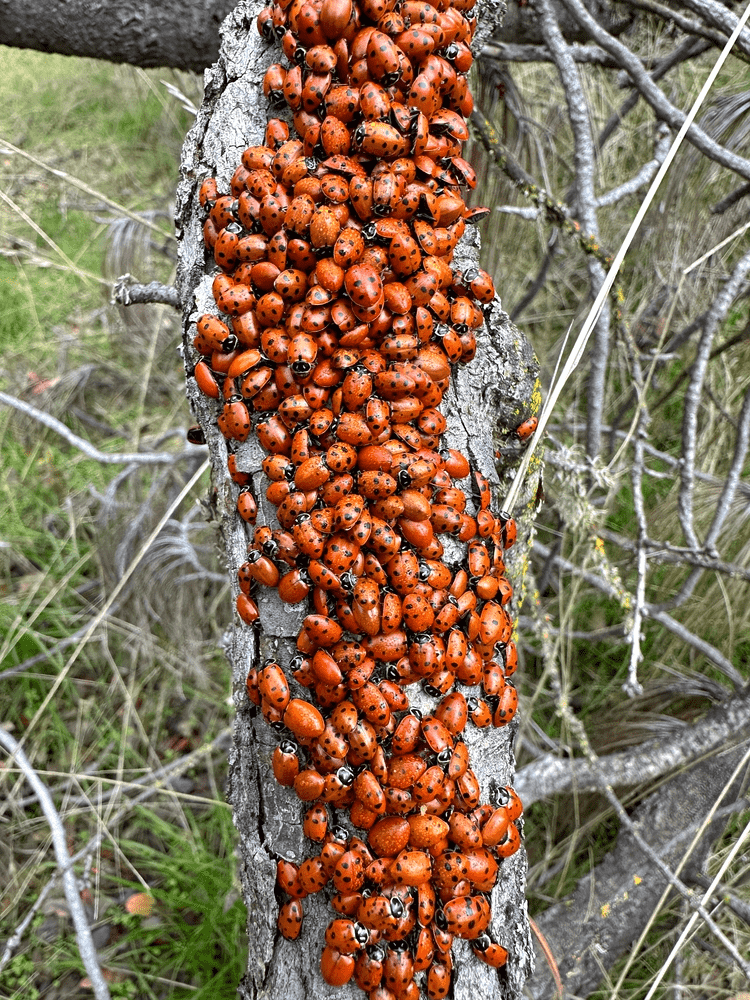
Ladybugs seek shelter in crevices or indoors. They cluster to conserve heat, and while their polka dot exteriors are adorable, seeing dozens huddled together can be quite a surprise.
These strategies illustrate how evolution equips even tiny creatures for survival against harsh winters.
4 Types of Common Winter Pests
Not all winter insects are welcome indoors. In fact, most aren’t. But these four pests really exploit the cold to seek warmth, food and shelter:
Rodent-associated insects: Fleas and carpet beetles often hitch a ride when mice move indoors. Once inside, they can bite, damage fabrics or contaminate food.
Spiders and silverfish: These critters are frequently found in basements, closets and attics. They thrive in dark, damp spaces and may leave webs, damage paper or simply startle you when spotted (possibly the most grievous offense of all).
Cockroaches: Certain species stay active even in cooler indoor climates. They’re hardy, reproduce quickly, are difficult to kill and can carry allergens or bacteria.
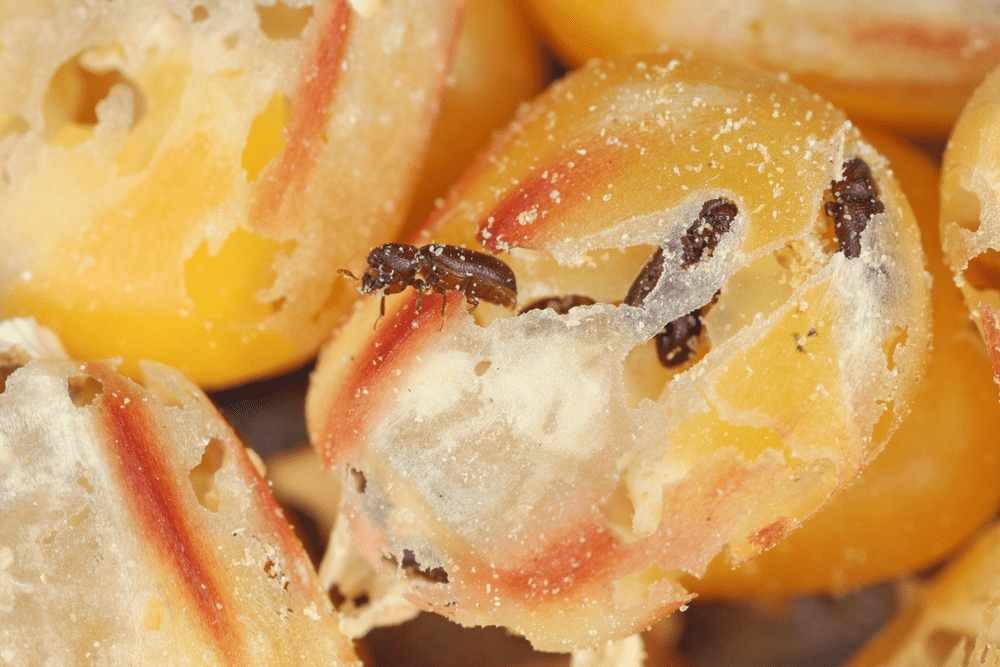
Pantry pests: Moths, weevils and grain beetles may invade stored food when temperatures drop outside, taking advantage of cozy indoor pantries.
Even though these bugs aren’t visible in the snowy garden, they may find your home to be the perfect cozy winter retreat.
Protecting Your Home from Winter Pests
Keeping bugs out during winter is mostly about removing shelter and food opportunities:
Seal cracks and gaps Check windows, doors and foundation cracks to prevent entry. Use safe barriers like weather stripping, door sweeps and window screens.
Store firewood properly Keep it away from walls; stacked wood can harbor beetles and spiders.
Clean regularly Vacuum and wipe down surfaces to remove crumbs, pet food or insect eggs.
Check indoor plants Soil can be a hiding spot for some insects, like snow fleas.
Do Insects Hibernate?
Technically, most insects don’t hibernate like mammals (sorry — they’re not participating in long cave naps like big, fuzzy bears). Instead, they enter diapause, a state of suspended development with slowed metabolism.
During diapause, insects:
Store energy as fat in their bodies
Produce antifreeze chemicals to prevent tissue damage
Seek protected environments like soil, leaf litter or bark
Some bugs, like ladybugs, stay partially active, taking advantage of brief warm periods to feed or move indoors. Others, such as mosquitoes, die off, leaving eggs or larvae that will emerge in spring.
Winter Insects FAQ
Looking for a quick recap? Here are all the details on what really goes on with insects during those cold winter months:
What happens to insects in the winter? Some die off, leaving only eggs or larvae to emerge in spring. Others shelter in soil, leaf litter, bark or indoor crevices, while some remain active in warm microclimates.
How do bugs survive the winter? Most insects don’t truly hibernate. Instead, they enter diapause, slowing development and metabolism. They store energy in fat, produce antifreeze chemicals to protect tissues and seek out protected environments.
Are cold-weather insects dangerous? Most are harmless, but indoor winter pests like spiders or cockroaches can be nuisances.
Explore the Science Behind Insects (and Turn It Into a Career)
Curious about the science behind insect adaptation and survival (and pest management strategies on a larger scale)? The University of Florida, proudly ranked #1 in entomology and nematology worldwide, offers four distinct online entomology graduate programs:
Medical Entomology Study the biology and control of disease-carrying insects, preparing for careers in public health or research.
Beekeeping Explore the science and management of honey bees, pollination and hive health.
Urban Pest Management Learn strategies to manage pests in cities and residential areas, focusing on environmentally responsible solutions.
Landscape Pest Management Gain expertise in identifying and controlling pests that threaten turf, ornamental plants and landscapes.
Depending on your goals, you can pursue a graduate certificate or a master’s degree online in your chosen specialty. You’ll deepen your knowledge in insect biology, ecology and management, gaining the skills to tackle real-world challenges.
Align your passions with the right program and get ready to make an impact wherever your curiosity and skills take you.
Agriculture has a workforce most people never see (and no, it’s not just agronomists or agricultural engineers). It’s insects. Quietly and consistently — without paychecks or benefits — insects pollinate crops, control pest populations and help food systems function. Understanding their role goes beyond appreciation. It’s a reminder that biodiversity in agriculture depends on more than what we plant in the field. …
Insects can’t be trained — at least not in the way you’re thinking of. No pats on the head for fetching a tiny ball or flying to a certain spot on command. But research on hoverflies is challenging what entomologists thought they knew about insect learning. These small, bee-mimicking insects are helping researchers understand how visual information shapes decision-making…
Disaster preparedness planning usually focuses on evacuation routes, emergency supply kits and shelter plans. Insects rarely make the list. But after a hurricane or flood, insect populations aren’t waiting for communities to catch up. Mosquito numbers spike. New breeding sites appear overnight. Disease risks increase. That’s why entomology plays a crucial role in emergency management planning. By monitoring insect populations and identifying potential disease…
Ticks. They’re creepy, they’re crawly — and if you’ve ever gone hiking, you’re probably familiar with the idea of doing a “tick check” afterward. You may have even Googled things like “how to remove a tick” — just in case. Known for carrying and transmitting Lyme disease, these bloodsucking arachnids have earned a notorious reputation.
But how did ticks evolve to rely on blood for survival? And how are these adaptations informing today’s research in entomology and disease ecology?
Let’s find out.
How Have Ticks Evolved?
According to fossil records, Ixodidae—the order today’s hard ticks belong to—emerged during the Cretaceous period, about 100 million years ago. (So yes, they likely fed on feathered dinosaurs.)
And while ticks are arachnids, that doesn’t make them spiders. Sure, they have eight legs like their spider cousins, but their biology, behavior and ecological roles are quite different.
Tick Classification
Ticks are classified into three families: Ixodidae (hard ticks), Argasidae (soft ticks) and Nuttalliellidae (a rare, ancient group with only one species).
The earliest true ticks were already obligate blood-feeders, meaning they needed blood to survive. But before they evolved into the highly specialized parasites we know today, their ancestors (free-living mites), likely led a very different lifestyle.
These ancient relatives probably scavenged organic material or fed on decomposing insects in the soil. Over time, they evolved into blood-feeding ticks, a major shift likely driven by access to a more consistent and nutrient-rich food source: vertebrate blood.
Why Did Ticks Switch from Scavengers to Blood-Feeders?
Ticks transitioned from scavenging to blood-feeding because blood is a more nutrient-rich and reliable food source. This adaptation gave them a powerful survival advantage and supported their evolution into successful parasites.
But it wasn’t just about easy calories. Other evolutionary factors helped hematophagy (blood-feeding) become ticks’ go-to survival strategy:
Access to new hosts Once ticks began feeding on live animals, their dining options expanded. Birds, reptiles and mammals all became mobile food sources.
Greater mobility and survival Ticks that could hitch a ride on their hosts were able to travel farther and settle into new habitats, increasing their chances of survival and global spread.
Gradual specialization This evolutionary transition didn’t happen overnight. Some ancestral mites may have started on fluids from wounds or soft tissue. Over time, natural selection favored traits that made full blood-feeding more effective. Eventually, these adaptations gave rise to the distinct group we now recognize as ticks.
The Evolution of Tick Saliva and Mouthparts
Through years of evolution, ticks have developed characteristics that help them successfully thrive on blood. These specialized changes help them:
Cut through skin
Stay attached to their host
Remain unnoticed while feeding
Prevent blood from clotting
So how do they do it? Mostly, through two major adaptations: piercing mouthparts and anticoagulant saliva.
Piercing Mouth Parts
Ticks may not have sharp vampire-like fangs, but they do have something even more cunning: the ability to stay attached to their prey for hours (or even days) without being noticed.
That’s why their feeding structure evolved into a system called the capitulum, which includes three key components:
Palps: Sensory feelers that help the tick find a feeding site, but don’t pierce the skin
Chelicerae: Tiny, blade-like structures that saw through the host’s skin
Hypostome: A barbed, straw-like structure that anchors the tick and allows it to drink blood
Anticoagulant Saliva
Without the right chemicals on standby, it would be much harder for ticks to efficiently feed every time they find a host. That’s because vertebrates, like humans and other mammals, respond to injuries with clotting, inflammation and the feeling of pain.
So, over millions of years, tick saliva evolved into a complex chemical cocktail designed to quietly counteract those defenses. Inside that saliva, you’ll find:
Anticoagulants, to stop the host’s blood from clotting
Vasodilators, to open blood vessels wider to improve flow
Immunosuppressants, to quiet the immune system so the host doesn’t detect them
Pain blockers, to prevent itching, pain or other sensations around the bite
Turn Curiosity Into Entomology Expertise
Want to keep learning about insects, pests and the science behind how they affect our world? UF has online programs for that.
Ticks are tiny. The problems they cause? Not so much. These tiny arachnids — about the size of an apple seed — spread more vector-borne diseases than almost any other insect. Lyme disease alone is diagnosed and treated in roughly 476,000 Americans each year, according to the U.S. Centers for Disease Control and Prevention (CDC). And recently, emergency room…
A squirming larva that screws itself deeper into living flesh as it feeds? Yeah, a screwworm sound like something a horror writer invented after a very bad camping trip. Unfortunately, they’re real. Even more unfortunately, they’re flies. The New World Screwworm (NWS) is a parasitic fly whose larvae (maggots) can infest wounds and feed on…
Traveling exposes you to a lot of new experiences, like stumbling upon the best street food you’ve ever had. That’s part of what makes it worthwhile. But some surprises are worth getting ahead of, and vector-borne diseases are at the top of that list. Sure, you can’t avoid bugs entirely, but you can make yourself a much harder target. That takes preparation and a…