If you’ve ever battled a pest that refuses to leave your home, you already know the value of effective pest control. Insect pests are difficult enough to manage in your home, so imagine trying to control pests across entire farms, warehouses or parks—without harming the environment.
This is exactly the challenge precision pest management aims to solve.
What Is Precision Pest Management?
Precision pest management(PPM) is unlike traditional pest control methods, where pesticides are sprayed across large areas whether pests are there or not. This ‘area-wide treatment’ involves the use of long-lasting residual chemicals to kill insect pests that travel through a treated area. More strategic and targeted, PPM applies pesticides exactly where and when they’re needed. It’s safer, greener and a whole lot more effective.
Let’s break down the details.
Smart Monitoring: Using AI for Precise Real-Time Tracking
Modern technology has fundamentally changed how experts find and manage pests. Today, AI-powered tools allow farmers and pest specialists to pinpoint where pests are actually causing problems, without compromising healthy crops or ecosystems.
Here’s what that looks like in practice:
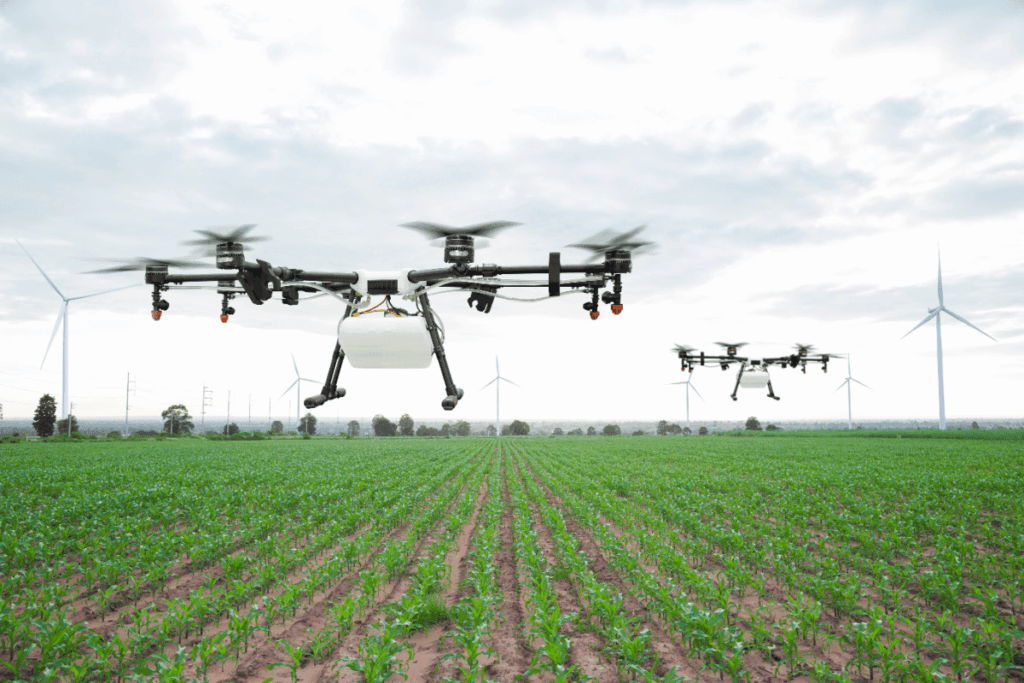
Drones Autonomous drones with advanced sensors can fly over fields and dense or remote vegetation and pick up on signs of plant stress (release of Volatile Organic Compounds), like how a canopy reflects light. This helps identify pest hotspots.
IoT sensors While drones are out in the fields, AI-driven IoT sensors are placed in key areas like crops, warehouses or restaurants—even inside walls! They can detect movement, trap triggers and temperature and humidity changes (higher temperatures can indicate pest breeding grounds).
Smart trap cameras These cameras are powered by IoT sensors and help detect subtle changes—like temperature shifts or sudden movement—and flag them in real-time.
In tandem, these tools create a highly detailed, real-time pest map. Think of it like an interactive map to spot illegal activity (but with pests instead of burglars or robbers) with continuous communication and feedback.
Alongside smart monitoring tools, pest control teams also tap into a technology that many of us use every day: GPS.
GPS (Global Positioning System) is used to find precise problem zones, not just blanket-spray fields. GPS-powered tools allow professionals to map exact infestation patterns and then tie each pesticide treatment to precise coordinates.
This brings real-time efficiency: less downtime driving around, less chemicals wasted and more targeted pest control.
What Tools Are Used in Precision Pest Management Treatment?
Your hotspots are mapped. So, what happens next?
It’s time for targeted treatments. For this step, PPM specialists are using a range of smart technologies, including:
Actuation drones These drones are sent out to precisely release pesticides, beneficial insects or even biocontrol agents into specified zones. Some of them use backpack sprays. Companies like UAV-IQ have developed drones that disperse predator insects to fight pest outbreaks naturally.
GPS-guided tractors and sprayers These smart machines use variable-rate technology to apply pesticides only where needed, which cuts chemical use, fuel and overall costs.
Robots and field robots Who says only drones have all the fun? Robots and field robots—like this agricultural bot—can move through orchards or vineyards and deploy targeted sprays or release biocontrol agents, which reduces reliance on human labor while increasing accuracy.
Feedback Loops: Making Pest Control Smarter and Safer
Feedback loops are processes that use data and technology to continuously monitor and improve pest control efforts. Unlike traditional ‘spray and walk away’ methods, PPM uses sensors and AI to constantly check results and fine-tune treatments. This is done with:
Sensors Sensors are used to monitor how pests and plants react after treatment.
Artificial intelligence AI reviews the data to pinpoint what’s going on (and what’s not).
Real-time adjustments Systems can adjust in real-time, so no area is over- or undertreated.
This real-time feedback allows for constant improvement in treatments and prevention.
What’s Next for PPM?
The global precision pest management market is expected to grow by almost 17% by 2027, and North America is poised to be the largest region of implementation. An increasing demand in pesticide-free food and advancing technology is pushing PPM to replace traditional pest control methods.
Key Takeaways
Let’s recap some of this article’s key points:
Precision pest management (PPM) uses smart technology to treat exactly the right spot at the right time.
Drones, sensors and satellites help spot pest trouble, even before it spreads.
With GPS-guided tools and robots, treatments hit targets without wasting chemicals.
PPM systems learn as they go, adjusting in real time.
PPM is a growing strategy globally, as people push for cleaner, more efficient pest control.
Turn Your Passion for Pest Control Into a Career
Imagine being the person responsible for protecting an entire citrus grove from invasive pests, maneuvering drone technology and field robots. If this kind of work fascinates you, UF’s online entomology programs might just be your next step.
Whether your passion lies in urban pest control, sustainable agriculture or environmental science, you’ll find flexible, fully online options that fit your life — even if you’re already in an established career. There’s no GRE required, and you can start in the spring, summer or fall semester.
You’ll tap into the same innovations used by UF’s Precision Agriculture Engineering team, including developing real-world solutions with NDVI mapping, smart monitoring and biological controls.
Choose our 30-credit, non-thesis master’s degree in entomology with a specialization in landscape pest management or urban pest management. Or hone your skills with one of UF’s 15-credit online graduate certificates. All programs are led by UF’s world-renowned faculty and driven by real-world research.
If you’re ready to make an impact in smart technology and pest control, UF gives you the tools and credibility to lead in the field. You’ll join a passionate community of innovators working on the front lines of smarter and safer pest control.
Ever seen one of these up close? You might not realize it, but this little insect is one of the world’s most successful — and most troublesome — invaders. Meet the Asian Tiger Mosquito (Aedes albopictus) If nature had a supervillain the size of a sesame seed, it would look exactly like the Asian tiger…
Grew up in the South? Then you’ve probably been stung by a fire ant. Maybe you accidentally stepped on a mound or learned the hard way not to stand on the grass for too long. However it happened, you walked away with a sting so itchy, you’d swear fate was testing you. Fire ants may…
Pests account for 20 to 40% of global crop losses each year, according to the U.S. Department of Agriculture. That’s not just an economic issue — it’s a food security crisis that affects millions of people worldwide. Even on a smaller scale, backyard gardeners know the frustration of watching aphids destroy their carefully tended tomatoes…