What do bees contribute to our planet? A lot more than honey. They pollinate about a third of our food crops. Yet many threats to bees threaten our quality of life, too. The good news? You can do something about it in a related career.
Want to see bees flourish? Fascinated by these busy pollinators? The beekeeping specialization in UF’s online entomology graduate program offers a unique opportunity to pursue your passion.
Help bees — and your career — thrive. UF, home of the world’s top-ranked entomology program, lets you align your coursework with your professional and personal goals.
Dr. Chase Kimmel, instructional assistant professor and beekeeping certificate coordinator, helped us break down UF’s online beekeeping programs, possible career paths and clear advantages.
Quick Facts
- 100% online
- No GRE required
- Year-round start dates
- Virtual and at-home labs
What Is Beekeeping?
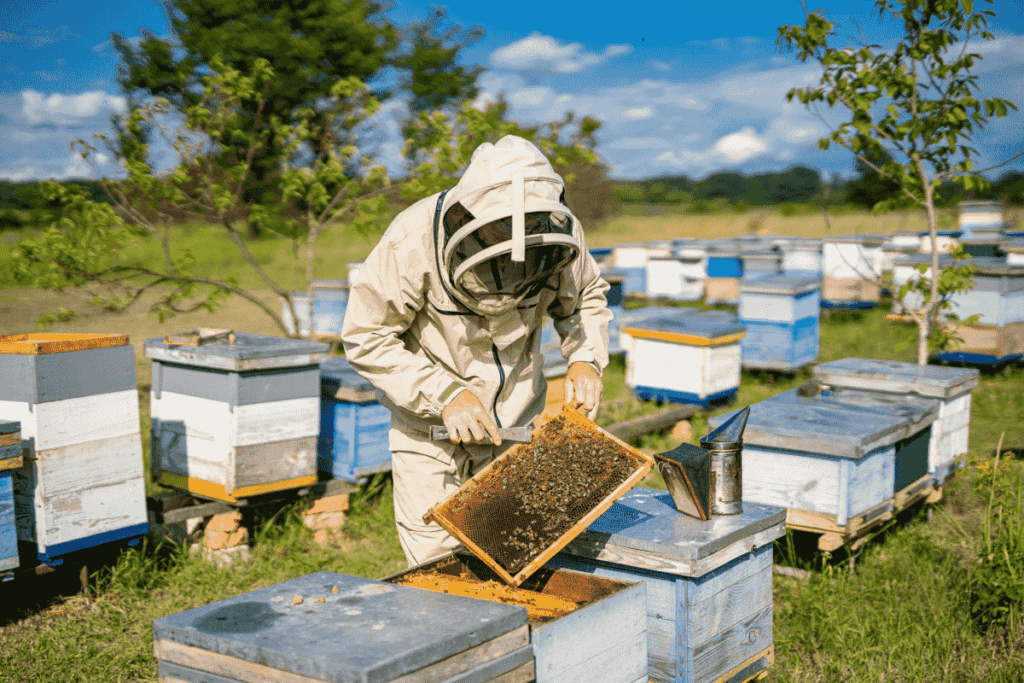
Beekeepers harvest honey, but more importantly, they maintain bee colonies to boost pollination. With bee populations declining due to habitat loss, climate change, pesticides and invasive species, this work is more crucial than ever.
The beekeeping specialization stands out in UF’s entomology program — and not because it focuses on one insect. Dr. Kimmel explains that the program aims to nurture an insect population instead of controlling or reducing it. “Whether we eat the food they pollinate or eat the animals that eat the food they pollinate, we have an interest in bees being healthy,” he said.
Degree and Certificate Options
UF students can make an impact in their choice of online graduate beekeeping programs:
- Graduate Certificate in Beekeeping (15 credits)
- Standalone credential with practical applications for working professionals
- Master’s Degree (30 credits)
- Entomology master’s degree that includes the beekeeping graduate certificate
- Earn both credentials at graduation
In both programs, you’ll explore how to:
- Harvest honey and beeswax
- Manage, protect and profit from honey bees
- Identify honey bee types, teach others about them and interpret research
Who Should Earn a Master’s Degree in Beekeeping?
Dr. Kimmel recommends this master’s degree specialization if you want to:
- Prepare for an advanced role in research or education
- Complete a capstone project as the basis for a Ph.D. program
“Some students who typically get the degree and the specialization are in extension education or mid-career professionals in entomology,” he said. “Some aren’t even in entomology [but] want an advanced degree.”
Dr. Kimmel says many students pursue the master’s for the pay bump — and because they’ll enjoy the work it allows them to do.
Who Should Earn a Graduate Certificate in Beekeeping?
Dr. Kimmel recommends the graduate certificate for those who:
- Don’t want to commit to a full master’s program
- Are undecided about the beekeeping field
“They’re typically more of a hobbyist who wants shorter, flexible credentials that they can complete on the asynchronous schedule,” he said.
While beekeeping master’s degree students automatically receive our graduate certificate upon graduation, certificate students can easily upgrade to earn both credentials. Dr. Kimmel explained:
“Many students start off with the certificate, then realize, ‘Hey, I’m really enjoying this,’ and bump up to the master’s program because those certificate credits carry over into the degree program.”
Why Become a Beekeeper?
Hobbyist beekeepers are elevating honey bee numbers, and it’s clear their work is making a real environmental impact. But can beekeepers also make a living?
Yes, with the right knowledge and an entrepreneurial drive. Beekeepers can sell:
- Honey
- Beeswax
- Live bees
- Pollination services
Don’t want to run your own beekeeping business? UF’s beekeeping programs prepare you for much broader options.
Beekeeping-Related Career Paths
Earn your beekeeping degree or certificate to improve your performance or pursue jobs in:
- Government
- Conservation
- Education
- Private business
You’ll find plenty of students without beekeeping backgrounds in our online programs. Many don’t become beekeepers — but their credentials help them pursue careers related to beekeeping, like:
- Apiary inspector
Keep bee colonies free of disease, pests and invasive species. - Research technician
Perform and support research efforts for honey bee health.
- Ecologist
Study how climate, pollution and other environmental factors impact ecosystems. - Educator
Teach community college-level science or qualify for higher pay as a K-12 science teacher. - Agricultural consultant
Show farmers and agribusinesses how to keep crops and soil healthy. - Pollination consultant
Help growers keep crops thriving by boosting pollination.
Explore more beekeeping careers here.
Why Choose UF’s Online Beekeeping Program?
Dr. Kimmel highlighted our:
- Unique offerings
- Global prestige and reach
- Extensive faculty and resources
A Program You’ll Only Find at UF
“To my knowledge, there aren’t other programs that offer these kinds of credentials,” Dr. Kimmel explained. “There’s not a sole focus and in-depth experience on multiple areas of honeybee biology and their management like there is at UF.”
As Dr. Kimmel described it, most other programs offer one or maybe a couple of beekeeping courses. But UF is different. We have the largest entomology department in the U.S. and possibly the world. UF can reach many students in ways small colleges or universities can’t.
Bringing the Nation’s No. 1 University to the World
Live somewhere without beekeeping resources — like local bee clubs or researchers — nearby? Dr. Kimmel says that’s exactly why UF’s online program matters. Online students in Hawaii and around the world are experiencing all the advantages of UF’s program, even from half a world away.
“They can bring questions that they have for their geographic area, and we can try to help them sort out answers,” Dr. Kimmel said. “There are lots of entomology programs, but given that we’re so large and well respected, we have a lot of opportunities to teach others.”
This includes faculty and resources dedicated to helping students reach their personal and professional goals.
Unmatched Expertise and Resources
Many universities might have one beekeeping specialist handling multiple duties. Not UF.
“We have four dedicated people in the Honey Bee Research and Extension Lab [and] a lot of research, extension and teaching going on,” Dr. Kimmel said. “We cover the gamut for someone who’s coming with some knowledge and wants to learn more, or who has no knowledge and wants to start from the beginning. We can meet students where they are to get them where they want to be.”
Hands-On Project Options Keep Remote Beekeeping Students Engaged
While Dr. Kimmel admits there’s “nothing as amazing in beekeeping as physically getting in the hive,” his program projects keep online students involved. “We try to create experiences,” he explained. Options may include:
- Shadowing local beekeepers
- Conducting at-home experiments
- Observing local bees or other pollinators
- Completing virtual hive management assignments
Do Your Part With an Online UF Beekeeping Program
We’ll always need bees — and professionals who champion them. As Dr. Kimmel showed us, that means many career options. Whether you want to work in an apiary, a classroom or lab, you can support the world’s most important pollinator. Start with a UF beekeeping degree or certificate.
Want to learn more? Check out all four UF entomology specializations to see which program matches your goals. When you’re ready to apply, visit our application page.
Sources:
https://www.wwf.org.uk/learn/fascinating-facts/bees