Flying Thousands of Miles: The Secret Lives of Migrating Insects
During the warmer months, it’s common to spot butterflies serenely gliding from flower to flower or gently flying past during your afternoon walk. But did you know that many of those graceful creatures, including the famed monarch butterfly, only live an average of two to six weeks once they reach adulthood?
This short lifespan begs the question: How do monarchs survive their multi-month migration each year? Remarkably, monarchs aren’t the only insects that undertake cross-continent migrations. Dragonflies, locusts and other insects also spend much of their lives traveling from one location to another.
Join us as we delve into some extraordinary insect migration journeys and explore some of the amazing insects that traverse the globe.
Explaining the Phenomenon of Insect Migration
If you’re not familiar with insect migration, the concept might not sound particularly remarkable. Butterflies and other insects travel from point A to point B — so why the hype?
These insects aren’t merely taking a leisurely flight from one backyard flower bed to the next. Instead, they’re traveling thousands of miles for reasons that vary by species, including:
Escaping the incoming winter weather in favor of a warmer climate.
Finding a hospitable environment to breed.
Seeking more readily available food sources.
Exploring Different Insect Migrations
Numerous insects make the trek south each year before heading back north the following year. Below, we discuss some of the most well-known insect migrations and learn what makes each one so unique.
Monarch Butterfly Migration
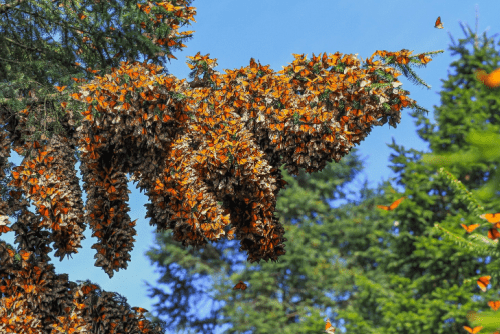
According to the U.S. Department of Agriculture, the monarch butterfly is the only butterfly that undertakes a two-way migration because it can’t survive the frigid winters in northern climates. Monarchs spend the warmer summer months in Eastern North America, where they breed until the temperatures begin to drop. Then they migrate south to the Sierra Madre in Mexico, where they hibernate from October to late March.
With the help of air currents, monarchs can travel between 50 and 100 miles per day. Even with their miraculously quick traveling speed, they still require approximately two months to complete their 2,500-mile journey in either direction.
This raises the question again: If adult monarch butterflies only live two to six weeks, how do they make the eight-week journey south to hibernate? The migrating generations live significantly longer due to a dormancy mechanism. Also known as diapause, it delays their ability to reproduce until the following spring, allowing them to live for six to nine months, completing the migration in the process.
Dragonfly Migration
Like the monarch butterfly, green darner dragonflies also migrate at different times of the year. While their trips are only 500 to 600 miles, completing the journey is no small accomplishment, and they can fly up to 87 miles in a single day. Another trait green darner dragonflies share with monarchs is a multigenerational migration pattern:
First generation The first generation of dragonflies hatch in the Southern U.S. and Mexico from February to May before migrating north. Once they make it to the Midwestern U.S., they lay eggs and die.
Second generation The next generation migrates south from July to October. Following the same pattern as their parents, they lay eggs and die before the final generation emerges.
Third generation Around November, the last generation in the migrational cycle hatches and lives in the south all winter long. Their offspring will migrate northward and begin the entire cycle again in the spring.
Locust Migration
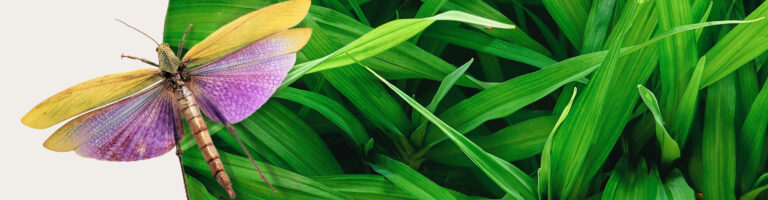
All locusts are grasshoppers, but not all grasshoppers are locusts — wait, what? Let’s break this down a little further. There are thousands of species of grasshoppers, but only a select few of those can transform into locusts.
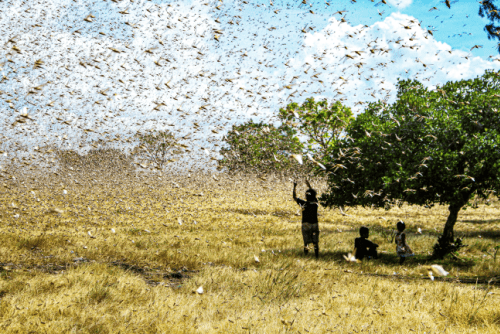
This transformation occurs when grasshoppers are forced to crowd together due to limited vegetation. Under these conditions, solitary grasshoppers start seeking out other insects to form groups. The proximity triggers a surge in serotonin, making them actively seek the company of others. At the same time, they undergo physical changes, developing larger, more muscular bodies suited for the long migrations they undertake in search of food.
Unlike monarch butterflies and green darner dragonflies, locusts are destructive pests. A small swarm can consume as much food in one day as 35,000 people. Many swarms find their way to Africa, destroying large supplies of crops intended for human consumption.
Discover the Secret Life of Insects and Jump-Start Your Career
With four unique specialization options, your online graduate certificate or master’s degree in entomology from the University of Florida can help distinguish you from the competition. As the number-one ranked entomology and nematology program in the world, our renowned professors have developed an innovative curriculum for each of the following four specializations:
Medical Entomology
Landscape Pest Management
Urban Pest Management
Beekeeping
Choose from a 15-credit online graduate certificate or 30-credit online master’s degree in the entomology specialization of your choice, and complete the program at your own pace. We offer competitive tuition rates and accept students year-round. Ready to get started? We look forward to reviewing your application!
Gene-editing tools. Pest-fighting flies. Insect behavior breakthroughs. 2025 kept entomologists on their toes. But 2025 also brought serious setbacks. Insect decline continued, especially for pollinators like honey bees. The stinging Asian needle ant has now spread to at least 20 states, and the spotted lanternfly has invaded Virginia. On the bright side, AI and drones…
If Marvel made a movie about mosquitoes, the villain would be gene editing—and we’d be rooting for it. Invasive pests cost the United States up to $21 billion per year in economic damages and healthcare costs, with bed bugs being among the costliest to eradicate. There are only a few insecticides registered for the control…
Insects, like humans, have a rich microbiome that plays a crucial role in their digestive and overall health. This community of microorganisms, including bacteria, viruses, fungi, archaea and protozoa, are known as “symbionts.” They work together to provide life-saving and species-perpetuating benefits to their hosts. Discovery and Importance While the human gut microbiome was first…
When you hear children talk about what they want to be when they grow up, you often hear responses like “firefighter” or “teacher,” with the occasional “magical princess” thrown in for good measure. What you’re much less likely to hear from a five-year-old is something like, “I want to be a vector control specialist.”
But if you were once a child enamored by the fascinating lives of insects, a career in entomology might have felt like a calling long before you knew what the word meant.
There are a plethora of careers to choose from in this dynamic field, and today we’re exploring five entomology careers you may have not yet considered.
#1 Forensic Entomologist
If you were a fan of the show “CSI: Crime Scene Investigation” or one of its many spin-off series, you may have imagined what it would be like to be part of the forensic crew investigating an active crime scene.
With a background in insect biology, you could play the crucial role of forensic entomologist. In this capacity, one of your primary responsibilities would involve analyzing the insects found at the scene of a homicide, typically on or near the victim, to determine that victim’s estimated time and manner of death.
Other responsibilities of forensic entomologists include:
Photographing victims of homicide scenes and documenting insect-related evidence.
Collecting samples of adult and immature insects from on, inside and beneath the corpse.
Collaborating with law enforcement officials.
Providing expert testimony in criminal investigations.
#2 Medical Entomologist
If you’re an avid hiker, you’re probably familiar with the routine of performing tick checks after a day spent in the woods, meticulously examining exposed skin to ensure no ticks have latched on. This precaution is crucial because ticks can harbor Borrelia bacteria, the culprit behind Lyme disease.
Lyme disease is just one of many conditions that can be transmitted to humans by insects. Mosquitoes, fleas and other insects also carry microbes that can cause potentially harmful diseases in humans.
That’s where medical entomologists come in. They investigate the following three organisms and play a fundamental role in reducing the transmission of vector-borne diseases:
The pathogen Pathogens are disease-causing organisms, such as viruses or bacteria. Understanding the characteristics of various pathogens helps medical entomologists determine how they’re transmitted and how they affect human health.
The insect vector The insect that carries the pathogen, such as ticks or mosquitoes, are insect vectors. Identifying these vectors is essential in controlling the spread of these diseases.
The vertebrate host Humans and other mammals usually become the vertebrate hosts infected with the aforementioned pathogens. One responsibility of medical entomologists is identifying invertebrate hosts involved in the transmission cycle of a disease. This task is paramount in understanding the disease’s epidemiology and developing effective control measures.
#3 Insect Photographer
Could you combine your passion for photography with your fascination with insects and turn it into a career? Quite possibly! Insect photographers capture images of insects and other arthropods for a variety of purposes, including:
research
conservation
education materials
artistic expression
Because insects’ focal points are smaller than your average subject, insect photographers use specialized equipment to highlight the intricate details of an insect’s morphology, its behaviors and its natural habitats. Insect photographers often work as freelancers for magazines, scientific publications, textbooks and more.
#4 Apiary Manager
Some beekeeping hobbyists aspire to turn their leisurely pastime into a career. Those who’ve worked with bees at a larger scale have the potential to become apiary managers, the individuals responsible for overseeing the operation of multiple beekeeping facilities, often for commercial purposes.
Some of their responsibilities include:
Maintaining equipment, such as the hive tools, bee smokers and carpentry tools.
Inspecting colonies for diseases and pests.
Breeding queen bees.
Making sure bees have enough food.
Splitting colonies once a colony becomes too large for one hive.
Collecting honey at the end of each season.
#5 Agricultural Pest Management Specialist
When it comes to growing large quantities of produce, there are a few types of minute menaces with the potential to significantly decrease the crop’s yield. From aphids to crickets, these small but hungry insects have the power to wreak havoc on an upcoming harvest.
Thanks to agricultural pest management specialists, however, there are still plenty of freshly picked in-season fruits and veggies to choose from in your local produce section. This is largely due to the ability of these professionals to control the pests that damage large-scale crops.
But how do agricultural pest management specialists do it?
They implement integrated pest management programs that control pests while minimizing the use of pesticides, primarily by:
Conducting pest surveys.
Monitoring the current and projected insect populations.
Recommending effective pest control strategies.
Your Pathway to Securing a Career in Entomology Begins at UF
Whether you’re a entomology veteran that wants to advance in your current role or you’re new to the industry and want to gain a foundation of knowledge before entering the workforce, the University of Florida offers several online graduate programs tailored to your unique interests and professional goals.
Both our graduate degree and graduate certificate programs offer four optional specialties:
Medical Entomology
Landscape Pest Management
Urban Pest Management
Beekeeping
By choosing any of the above specialties, you’ll earn a 15-credit graduate certificate as part of your 30-credit graduate degree. The graduate certificate program includes specific courses tailored to each specialty, while the graduate degree program expands on these courses with an additional 15 credits, providing you with a broad understanding of entomology.
Secure your spot for next semester and apply today!
Gene-editing tools. Pest-fighting flies. Insect behavior breakthroughs. 2025 kept entomologists on their toes. But 2025 also brought serious setbacks. Insect decline continued, especially for pollinators like honey bees. The stinging Asian needle ant has now spread to at least 20 states, and the spotted lanternfly has invaded Virginia. On the bright side, AI and drones…
If Marvel made a movie about mosquitoes, the villain would be gene editing—and we’d be rooting for it. Invasive pests cost the United States up to $21 billion per year in economic damages and healthcare costs, with bed bugs being among the costliest to eradicate. There are only a few insecticides registered for the control…
Insects, like humans, have a rich microbiome that plays a crucial role in their digestive and overall health. This community of microorganisms, including bacteria, viruses, fungi, archaea and protozoa, are known as “symbionts.” They work together to provide life-saving and species-perpetuating benefits to their hosts. Discovery and Importance While the human gut microbiome was first…
If you’ve traveled to faraway lands, you may have come across a few local delicacies that, at the time, you considered questionable. “No thank you, I’ll pass on the roasted grasshoppers,” you say as you navigate through stalls of colorful trinkets and street snacks.
While eating insects might not be at the top of your culinary bucket list, many communities in Eastern cultures have been enjoying bugs you can eat for thousands of years. With a rapid increase in the global population, the scientific community has begun exploring the potential roles that insects could play in creating a more sustainable world.
Today, we’re dissecting three benefits of eating insects and the positive implications of embracing entomophagy — the practice of eating insects — on a larger scale.
#1 Nutritional Benefits of Eating Insects
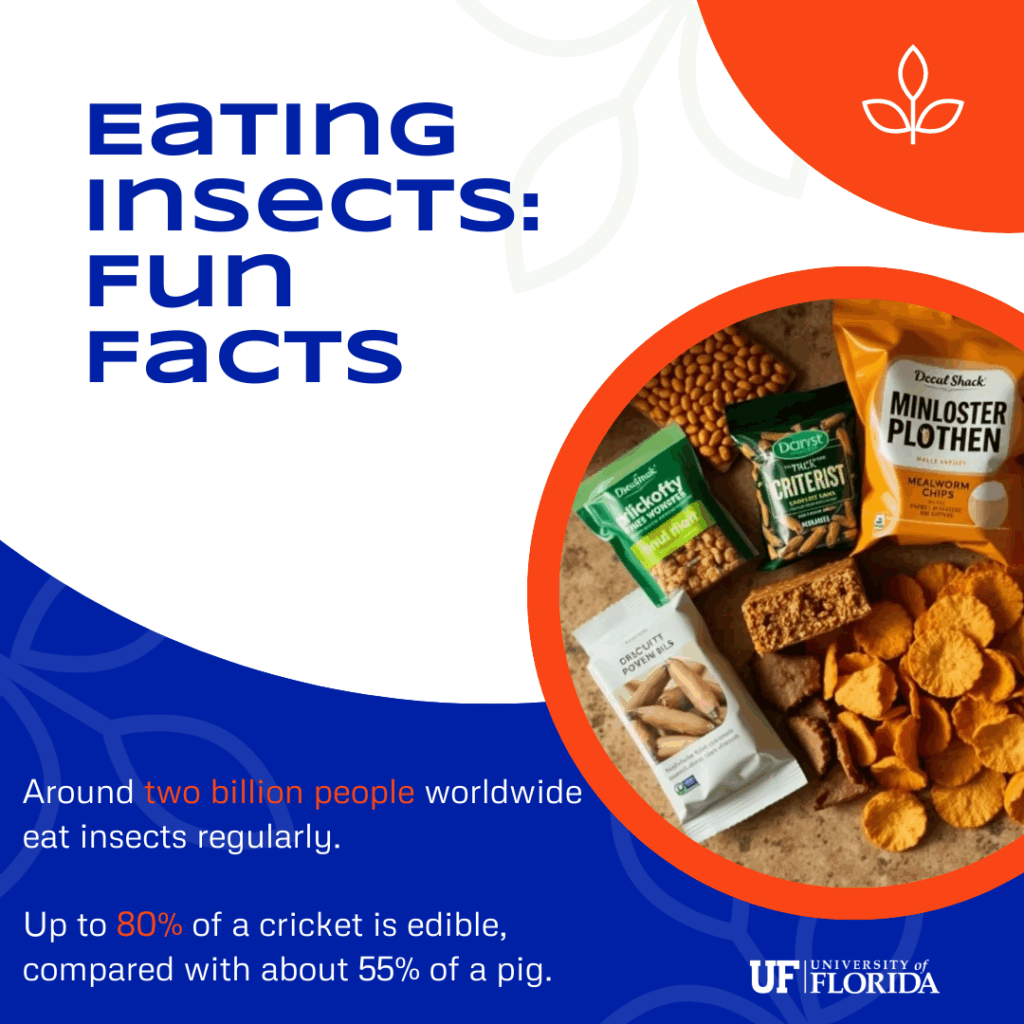
Approximately a quarter of the world’s population, about 2 billion people, consume insects regularly, and many have been doing so for centuries. As a regular part of their diet, you may assume that insects must provide substantial nutritional value — and you’d be correct!
Insects contain a remarkable combination of two essential macronutrients: proteins and fats. There’s a surprising amount of protein in bugs, making them an excellent alternative to traditional animal-based sources.
They also have significant vitamin, fiber and mineral content that our bodies need for optimum functioning. Of course, with such a robust number of insects available for consumption, the nutritional value of each species varies.
If the idea of eating crickets as food (or insects in general) makes you queasy, there’s a less intimidating alternative available. Many insects can be ground into a powder, removing the legs and crunch factor from the equation. This versatile form allows you to mix the powder into a variety of recipes, from cookies to sauces, making it possible for you to have your insects and your protein, too!
#2 Environmental Benefits of Entomophagy
When it comes to providing a more sustainable environment for our future, insects hold remarkable sway. Below, we discuss several reasons they excel in this area.
Consumability
Insects generally boast a higher proportion of consumable body mass than farm animals. For example, up to 80% of a cricket is edible to humans. In contrast, farm animals offer a lower amount of available meat for consumption, with pigs providing only 55% edibility.
Deforestation Reduction
Insects require significantly less space and water to develop and cultivate than their farm animal counterparts. If more people practiced entomophagy, there would be considerably less deforestation due to less land being needed to farm insects.
Reduction of Greenhouse Gas Emissions
Properly raising farm animals for food purposes requires a major outlay of crops. The production of these crops involves clearing more woodland areas and using pesticides, which can contribute to the release of greenhouse gases.
In addition, cows, chickens and pigs produce a lot of manure, releasing methane into the atmosphere as it decomposes. Insects, on the other hand, are a more sustainable option, as they emit much lower amounts of greenhouse gases due to their small size and lower food requirements.
#3 Food Security Advantages of Consuming Insects
The United Nations expects the global human population to reach 9.8 billion by 2050, posing significant challenges for food production to meet the increased demand. However, with limited arable land available worldwide, it will be difficult to keep pace with this growing population using traditional farming methods. Insects offer a promising solution by providing an eco-friendly, land-efficient alternative that still offers a nutritious source of protein.
Experience the Number One-Ranked Entomology and Nematology Program in the World
Eating insects isn’t the only way to contribute to creating a more sustainable planet. If you find yourself fascinated with the world of insects or work in the field of entomology, the University of Florida proudly offers several online programs that will not only quench your thirst for all things bugs but also propel your career in entomology forward.
At UF, we understand the challenges that come with balancing a professional and personal life. That’s why our programs are entirely online, giving you the chance to complete them at a pace that aligns with your busy schedule.
We offer four unique specializations, each of which you can complete as either a graduate certificate or as part of our master’s degree programs:
Medical Entomology
Landscape Pest Management
Urban Pest Management
Beekeeping
With a renowned faculty and multiple programs tailored to complement your current skill set, we’re excited to show you why we’re ranked as the number one entomology and nematology program in the world.
Explore our online programs and discover how you can start advancing your entomology journey on your own schedule.
Gene-editing tools. Pest-fighting flies. Insect behavior breakthroughs. 2025 kept entomologists on their toes. But 2025 also brought serious setbacks. Insect decline continued, especially for pollinators like honey bees. The stinging Asian needle ant has now spread to at least 20 states, and the spotted lanternfly has invaded Virginia. On the bright side, AI and drones…
If Marvel made a movie about mosquitoes, the villain would be gene editing—and we’d be rooting for it. Invasive pests cost the United States up to $21 billion per year in economic damages and healthcare costs, with bed bugs being among the costliest to eradicate. There are only a few insecticides registered for the control…
Insects, like humans, have a rich microbiome that plays a crucial role in their digestive and overall health. This community of microorganisms, including bacteria, viruses, fungi, archaea and protozoa, are known as “symbionts.” They work together to provide life-saving and species-perpetuating benefits to their hosts. Discovery and Importance While the human gut microbiome was first…
Many of us consider ladybugs to be symbols of good luck. Spotting one might evoke feelings of optimism or a sense of protection. (Whether that protection is for you or your garden is debatable.)
However, ladybugs aren’t merely cute, spotted critters that evoke nostalgic childhood memories. They’re also the apex predators of the garden world — and extremely beneficial to those looking for ways to rid their gardens of harmful pests.
Today, we’re exploring five reasons ladybugs have rightfully found themselves in the limelight of our Beneficial Species Spotlight series.
#1 They Have a Voracious Appetite
These ruby red insects may look like dainty aristocrats who take their afternoon cuppa with two sugar cubes and a splash of cream, but don’t let their charming, oval-shaped exterior fool you. Ladybugs love to eat.
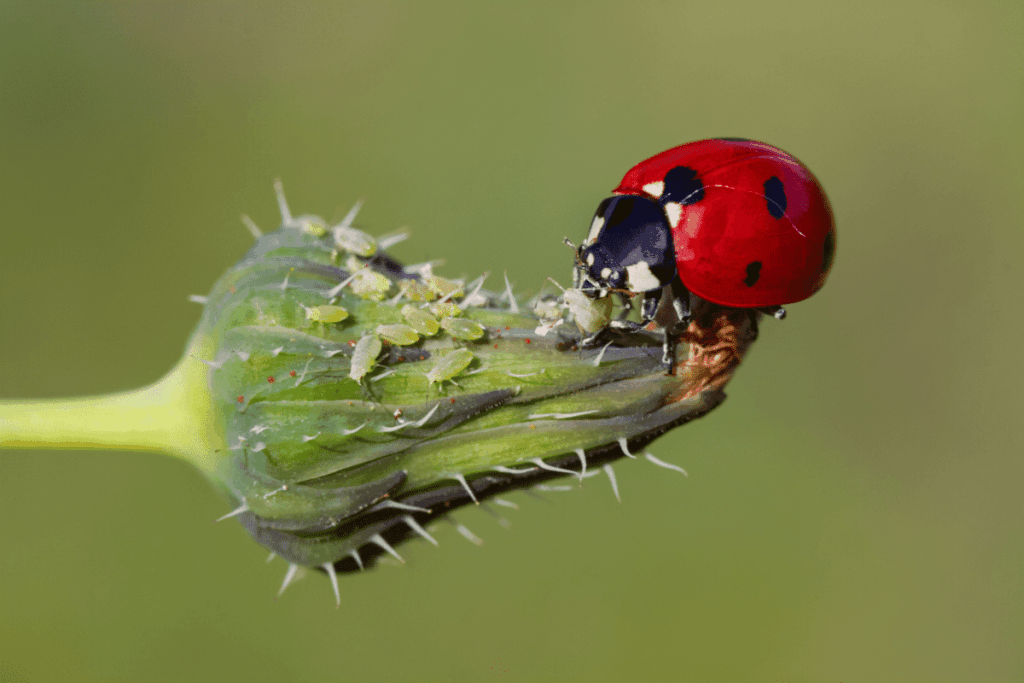
While they enjoy the occasional sip of nectar or nibble of pollen, a large portion of their diet consists of consuming unwanted garden pests. In fact, they can devour up to 5,000 insects throughout their lifetime, proving themselves to be an extremely helpful natural form of pest control.
#2 They Have a Diverse Palate
Like most humans, many species of ladybugs have a preferred food source. Generally, that’s aphids. Mature ladybugs can consume upwards of 25 aphids each day. This is particularly beneficial for farmers and gardeners, as aphids are small insects known for extracting juices from plant leaves, often leading to discoloration and hindering the plants’ growth.
However, ladybugs don’t consume aphids exclusively. Most will gladly rid your garden of several other unwanted pests as well, including mealybugs, mites and fruit flies.
#3 They’re Helpful in All Stages of Life
Like butterflies, ladybugs go through several stages of metamorphosis. They begin as eggs, progress to larvae and eventually pupae before reaching their final stage in the lifecycle as adults.
While it’s true that adult ladybugs can feast on two dozen aphids in a day, it’s during the larval stage that their appetite for aphids truly shines. Ladybugs in this early stage of development consume the most aphids, devouring about 10 times more than their mature counterparts. This makes ladybug larvae incredibly useful to individuals seeking natural pest removal strategies for their plants.
#4 They Attract Other Pollinators
Ladybugs provide an excellent form of pest control, but they’re also an undervalued member of the unofficial Pollinator Society. Sure, they might not be pollinating as many flowers as bees (okay, they definitely aren’t), but ladybugs do what they can to contribute to the health of garden ecosystems.
By flying from flower to flower in search of nectar and pollen, unknowingly transferring pollen grains from one flower to the next, ladybugs aid the pollination process. This dual role as both predator and pollinator makes ladybugs a double threat in the realms of gardening and farming and invaluable contributors to garden biodiversity.
#5 They Indicate a Healthy Ecosystem
If you notice a ladybug in your vicinity, it’s an excellent indicator that the nearby ecosystem is a thriving one. Maybe that’s why they’re associated with positivity: Their presence signals an ecosystem that’s in harmony.
But why does the presence of a few ladybugs reflect so highly on the health of a garden? Ladybugs thrive in areas where conditions are favorable for their reproduction. As such, they often select locations where their prey is plentiful and somewhere that provides a suitable environment for nesting.
Key Takeaways: Ladybugs in the Garden
Q: Are ladybugs just cute garden visitors, or do they serve a purpose?
A: Ladybugs are apex predators of the garden world and important contributors to healthy ecosystems.
Q: How many insects can a single ladybug eat?
A: A single ladybug can consume up to 5,000 insects in its lifetime, making it a valuable ally in pest management.
Q: What do ladybugs eat most often?
A: Their favorite meal is aphids — tiny insects that damage plants. But they’ll also snack on mites, mealybugs, and fruit flies.
Q: Do ladybugs contribute to pollination?
A: While they’re not as efficient as bees, ladybugs help transfer pollen as they move from flower to flower in search of nectar and pollen.
Q: What does it mean if you see ladybugs in your garden?
A: Ladybugs are indicators of a healthy, balanced ecosystem — one that supports both pollinators and predators. If you see them in your garden, it’s a good sign.
Dive Deep Into the World of Insects at the University of Florida
Whether you’re currently working in the pest industry or you’re simply fascinated by natural pest control methods available and want to learn more, the University of Florida offers several online graduate programs centered around landscape and urban pest management:
Graduate Degrees
Our Master of Science is a customizable 30-credit online program, allowing you to earn not only a Master’s Degree in Entomology and Nematology but also a graduate certificate in one of four specializations, including:
Gene-editing tools. Pest-fighting flies. Insect behavior breakthroughs. 2025 kept entomologists on their toes. But 2025 also brought serious setbacks. Insect decline continued, especially for pollinators like honey bees. The stinging Asian needle ant has now spread to at least 20 states, and the spotted lanternfly has invaded Virginia. On the bright side, AI and drones…
If Marvel made a movie about mosquitoes, the villain would be gene editing—and we’d be rooting for it. Invasive pests cost the United States up to $21 billion per year in economic damages and healthcare costs, with bed bugs being among the costliest to eradicate. There are only a few insecticides registered for the control…
Insects, like humans, have a rich microbiome that plays a crucial role in their digestive and overall health. This community of microorganisms, including bacteria, viruses, fungi, archaea and protozoa, are known as “symbionts.” They work together to provide life-saving and species-perpetuating benefits to their hosts. Discovery and Importance While the human gut microbiome was first…
If you’ve never taken the time to delve into the intricately woven lives of ants, you’re missing out on an advanced social structure that could be compared to the Roman Empire. With a highly organized hierarchy, centralized leadership and a defined military, they’re a species of Formicidae worth watching.
Another fascinating aspect of this six-legged insect is ant anatomy and morphology. These pint-sized creatures have distinctive body structures designed for efficiency and survival. Join us as we dive into the morphology and anatomy of ants, giving you more reasons to appreciate their remarkable adaptability and intricate biology.
Ant Morphology Explained
You can determine the meaning of the term morphology by breaking down its components. The prefix “morph-” means form, and the suffix “-ology” means the study of. When you put them together, you get “the study of form.” More specifically, morphology refers to the study of the internal and external form and structure of an organism.
Before we delve into ants’ three primary body segments and all the smaller components in between, we should note that ants wear their skeletons externally. Unlike our internal skeletons, their exoskeletons look like and function as protective shells, providing round-the-clock defense against adversaries. These exoskeletons also prevent dehydration and filter out the sun’s UV rays.
Now, let’s explore the primary external anatomy (and morphology) of an ant.
Ant Head Anatomy: Jaws, Mouth, Eyes and Antennae
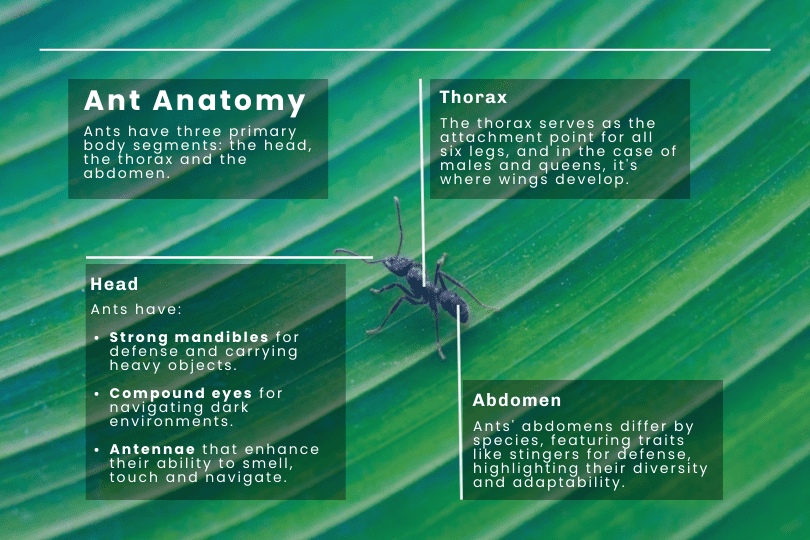
As one might expect, an ant has many essential body parts on its head, including:
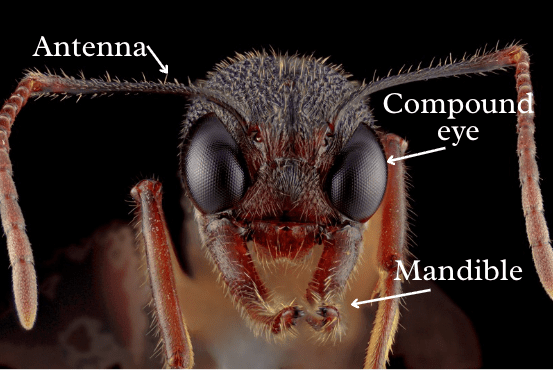
Jaws Ants use their strong jaws, known as mandibles, to lift objects much heavier than their bodies, including food and building materials. They even use their jaws to defend against attacks from other ant colonies. Worker ants also employ their mandibles for gentler tasks like grooming and moving ant larvae within the nest.
Mouth In addition to eating, an ant’s mouth contains a fascinating tongue that works very differently than ours. It uses blood pressure to project its tongue out of its mouth to drink water or clean itself.
Eyes Ant eyes are made of several individual lenses, similar to that of a fly. Different types of ants have different numbers of lenses in each eye, which makes it easier for them to see in dark places, like the tunnels deep inside their ant mounds.
Antennae An ant has two antennae, one on each side of its head. They’re essential sensory organs that help the ant see, hear and taste. While the ant does rely on its eyes for vision, its eyesight is not optimal. In such cases, the antennae become instrumental in enhancing their vision, particularly when navigating underground tunnels.
Ant Thorax: Wings and Legs
The thorax, situated in the middle section of an ant’s body, serves as the attachment point for all six legs. In the case of males and unfertilized queen ants, this region is also where wings develop. Unlike male ants, which retain their wings throughout their lives, queens only require wings during mating season, opting to remove them after completing the mating process.
Ant Abdomen: Stinger and Petiole
The last segment of an ant’s outer body is the abdomen, and its components differ among species. Some ants possess a stinger at the end of their abdomen, which they use for injecting venom into their prey. Notably, stingers are exclusive to female ants; males do not have this feature.
Ants also feature a distinctive body part called the petiole, a characteristic shared with wasps and bees. Found between the thorax and abdomen, the petiole enables ants to maneuver their abdomen from underneath their body, playing a crucial role in the ant’s physical flexibility and movement.
Frequently Asked Questions About Ant Anatomy
Curious about the details of how ants are built? Here are answers to some of the most common questions people ask about ant anatomy and morphology:
Do ants have tongues? Yes. Ants have a narrow tongue-like organ inside their mouth. Unlike human tongues, it isn’t made of muscle. Instead, ants extend it using internal fluid pressure. They use it to drink water, groom themselves and move food.
How many antennae do ants have? Ants have two antennae, one on each side of their head. These serve as vital sensory organs, helping ants detect smells, vibrations and even chemical signals left by other ants.
Do ants have eyes? Most ants do have eyes, but their vision isn’t as strong as humans. Ants’ eyes are compound eyes, made up of many tiny lenses. The number and size of the lenses depend on the species.
Do ants have organs? Yes, ants have internal organs just like other animals. Their organs are contained within the abdomen and include a digestive system, a heart-like vessel that pumps blood (hemolymph) and reproductive organs.
What is the thorax of an ant? The thorax is the middle body section of an ant, located between the head and the abdomen. This is where all six legs attach. In males and young queens, it’s also where wings develop.
What is the gaster in ants? The gaster is the bulbous part at the end of an ant’s abdomen. Depending on the species, it may contain a stinger or glands that release defensive chemicals.
Expand Your Knowledge of Ants, Bees, Wasps and More at UF
While ants are truly captivating insects, entomology offers plenty of other intriguing specimens waiting to be explored. If you’ve ever considered transforming your passion for insects into a fulfilling career or aspire to elevate your current role in entomology, delve into UF’s online graduate programs in entomology.
Choose from our four graduate certificate programs, each designed to provide specialized knowledge:
Medical Entomology includes lectures and labs in entomology and veterinary topics, mosquito biology and identification.
Landscape Pest Management pairs foundational entomology principles with concepts in turf and ornamental entomology.
Urban Pest Management focuses on the biology, identification and management of urban pests along with basic principles of entomology.
Beekeeping is all about honey bees, their biology, their predators and the theory and practice of apiculture.
In addition, we also offer a comprehensive 30-credit online master’s degree in entomology. During your classes, you’ll take 15 credits covering a broad study of entomology and nematology. The remaining 15 credits are electives, allowing you to specialize in one of the areas listed above. Upon graduation, you’ll earn a master’s degree and a graduate certificate tailored to your chosen specialization.
At UF, we recognize the challenges of balancing a career, family and education. Our online programs provide the flexibility for you to complete your studies at your convenience.We accept students year-round, which allows you to start the program when it’s right for you.
Ready to start a journey into the fascinating world of entomology? Apply now and transform your interest into expertise.
Gene-editing tools. Pest-fighting flies. Insect behavior breakthroughs. 2025 kept entomologists on their toes. But 2025 also brought serious setbacks. Insect decline continued, especially for pollinators like honey bees. The stinging Asian needle ant has now spread to at least 20 states, and the spotted lanternfly has invaded Virginia. On the bright side, AI and drones…
If Marvel made a movie about mosquitoes, the villain would be gene editing—and we’d be rooting for it. Invasive pests cost the United States up to $21 billion per year in economic damages and healthcare costs, with bed bugs being among the costliest to eradicate. There are only a few insecticides registered for the control…
Insects, like humans, have a rich microbiome that plays a crucial role in their digestive and overall health. This community of microorganisms, including bacteria, viruses, fungi, archaea and protozoa, are known as “symbionts.” They work together to provide life-saving and species-perpetuating benefits to their hosts. Discovery and Importance While the human gut microbiome was first…
Whether you’re on embarking on a cross-country road trip or crossing state lines for a professional development workshop, you probably haven’t considered checking your vehicle for unwanted guests of the pint-sized, winged variety before crossing state borders. Invasive insects are nothing if not persistent — and sometimes they take creative liberties to get from one place to the next.
While they may not stick out a thumb and ask for a ride, invasive insects do have other methods of transporting themselves from place to place. In this article, we discuss three invasive insects that have hitchhiked their way across the globe and are leaving environmental chaos in their wake.
Shoo, Fly — Don’t Bother Me: The Spotted Lanternfly
The Lycorma delicatula, better known as the spotted lanternfly, is a beautiful sight to behold. They may only be one inch in length, but when they open their wings, they reveal a rainbow of color that rivals a fireworks show. Spotted lanternflies boast a colorful yellow and black abdomen and bright red hind wings and cream-colored front wings both adorned with dalmatian-esque spots.
But behind their elegant exterior lies a very invasive species that has perfected its hitchhiking abilities. While the spotted lanternfly originated in China, it found its way to Pennsylvania in 2014, hitchhiking to 11 other states in the years since. So how did this planthopper find its way so far from home? Camouflaging egg-laying abilities.
Spotted lanternflies lay their eggs in clusters that often appear as a smear of mud and are easily dismissible to most. These adept egg-laying skills have made it challenging for even the most trained eye to spot their eggs on a variety of transportation methods, like railroad boxcars and passenger vehicles.
There are multiple implications of this invasive insect making itself at home in states across the U.S., including:
Feeding on over 100 species of fruit, ornamental and woody trees.
Reducing the health of plants and even causing their death when consumed in large numbers.
Attracting other insects like wasps, yellowjackets and ants by producing honeydew, a sugary liquid waste.
Causing a change in human management strategies, which could disrupt other native insects in affected areas.
The Emerald Ash Borer: Luminous, Yet Lethal
What’s half an inch long, has a metallic green shell and has destroyed over 20 million ash trees in the Midwest? They’re called emerald ash borers, and while their shiny exterior shells might make them appear harmless, the millions of trees they’ve burrowed through — and killed — would beg to differ.
Originating in Asia, emerald ash borers were first spotted in southeastern Michigan in 2002 but probably arrived years earlier. While entomologists don’t know precisely how they found their way to the U.S., they’ve deduced that their hitchhiking method of choice likely involved stowing themselves away in wooden shipment crates or other wooden materials shipped from Asia. Now that this invasive species has arrived, they conveniently catch rides to new locations by burrowing beneath the surface of ash trees that are being transported for the purpose of making firewood or lumber.
The larvae of emerald ash borers feed under the bark of the ash trees and make curved tunnels that alter the flow of water and nutrients throughout the tree. If enough larvae reside in one tree, they can kill it within one to three years.
While it’s unlikely that we’ll be able to completely eradicate the emerald ash borer, there are steps we can take to slow their hitchhiking methods, including:
Using firewood only if it’s native to your state (to avoid bringing any unwanted stowaways).
Planting a variety of trees and shrubs rather than only one species to ensure that these hitchhiking pests don’t destroy an entire community of trees at once.
Not using insecticides as a preventative method, as they can disrupt the native insect and nematode populations.
The Little Spongy Moth That Could
Formerly known as gypsy moths, spongy moths found their way to Massachusetts in 1869 via an amateur entomologist. Since their introduction to the U.S., they’ve decimated millions of acres of trees in forests across approximately 20 states.
Their expansion in areas beyond Massachusetts has been fueled by their ability to lay 600 to 1,000 eggs at once, in places like the sides of houses and the undersides of bark flaps. When spongy moths lay their eggs on wooden materials that are being transported, the larvae from those batches of eggs wind up in entirely new locations.
Spongy moths cause the most damage during the larvae stage of their life cycle, eating the foliage from over 300 unsuspecting species of trees, including oak, maple, birch and more. With enough defoliation, the trees can die, causing ecological impacts, including:
Altering forest tree composition.
Affecting the success of oak tree regeneration.
Reducing the amount of foliage available for other dependent species.
At the University of Florida, we boast the number-one entomology and nematology program in the world. We offer five 30-credit online master’s degree programs and four 15-credit online graduate certificate programs tailored to your specialized interests and professional goals, including:
Medical Entomology Identify biting arthropods and learn their biology, dissect the biology of mosquitoes, develop management options for their diseases and more.
Landscape Pest Management Learn about foundational entomology principles, study management options for landscape pests and integrate pest management practices into landscape maintenance practices.
Urban Pest Management Focus on the biology, identification and management of urban pests using basic principles of entomology.
Beekeeping Dive into the sweet world of honey bees, including their biology, predators and the theory of practice and apiculture.
For the master’s degree program, you can also select the broad program of study in entomology.
Our courses are tailored for working professionals. We provide 100% of our classes entirely online so you can complete them anywhere at a pace that works for you. Take the first step and learn more about our graduate certificate programs or our master’s degree in entomology today.
With eight legs at their disposal, it may come as no surprise that spiders can easily move from place to place. Some species can even travel up to 70 times their body length in a single second.
While they can effortlessly glide from here to there by alternating the gait of all eight legs as they move, walking isn’t a spider’s only method of travel. Aside from hitching a ride on the occasional plane, train and automobile, there are numerous other forms of transportation they take advantage of.
What Is Ballooning and How Do Spiders Use It to Travel?
In 1832, naturalist Charles Darwin noticed something peculiar while aboard the HMS Beagle. Thousands of spiders had taken over the ship’s exterior. Even more peculiar was the fact that the ship was 60 miles offshore the coast of Argentina.
So how exactly did the tiny but mighty arachnids reach a ship that was so far away from land?
By flying, of course.
While spiders may not have wings, they do have versatile silks that not only weave encapsulating webs but also help them take flight and float to distant locations. The act itself is called ballooning, and it occurs when a spider raises its abdomen upward, ejects small strands of silk, and floats into the air toward its next destination.
But could it really be that easy? After conducting further research, scientists have concluded that it’s not as simple as using a breeze to propel them hundreds of miles from their starting point.
Rather, arachnids use their spidey senses via sensory hairs called trichobothria. These sensitive strands help them notice minuscule changes in the earth’s electric fields. When an electric field raises a spider’s trichobothria, it takes note by lifting its spinnerets into the air and releasing its silk. This makeshift floating mechanism picks up a negative charge from the electric field, providing enough force to lift the silk and spider in the air, taking it to a different location.
What Is Cartwheeling?
In addition to ballooning from one place to the next, some species of spinners boast a unique manner of transportation: cartwheeling. While rolling from place to place may not be a conventional method of moving, it’s certainly useful when trying to evade predators.
How Do Golden Rolling Spiders and Flic-Flac Spiders Use Cartwheeling?
Two particular species of somersaulting spiders include:
The Golden Rolling Spider
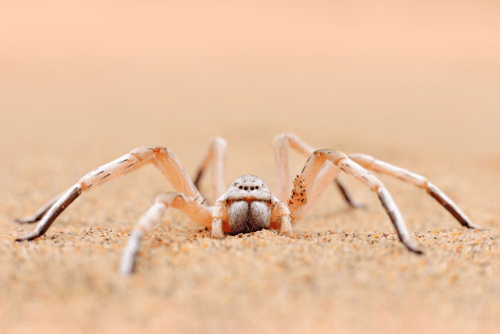
The golden rolling spider resides in the sandy deserts of Namibia. When provoked by predators like spider-hunting wasps, it uses its unique cartwheeling talents (known as flic-flac jumps) to propel itself down the sandy dunes. These flic-flacking rolls are a convenient and quick means of escape, as a golden rolling spider can travel up to one and a half meters per second as it rolls down a dune.
The golden rolling spider.
The Flic-Flac Spider
The flic-flac spider also lives in sandy regions, specifically in the southern sand-filled deserts of Morocco. Recently discovered by spider expert Dr. Peter Jäger, the flic-flac spider (Cebrennus rechenbergi) is known for its gymnast-like agility as it jumps and rolls to expedite its travel time. Unlike its cartwheeling cousin, the flic-flac spider uses extreme flexibility to propel itself off the ground. It takes advantage of its flic-flacking skills to travel downhill, uphill, or on flat ground at two meters per second.
How Do Diving Bell Spiders Live and Travel Underwater?
While you may have spent a small chunk of your childhood boasting your ability to hold your breath for over a minute in the pool, can you imagine what it would be like living your entire life underwater?
Enter the Argyroneta aquatica, more commonly known by its informal name, the diving bell spider. Like humans, this species needs oxygen to breathe — so how is it possible that they can spend up to 24 hours underwater at a time?
Diving bell spiders use their multipurpose silks to create tiny silk-made air tanks (diving bells) that attach to pond weeds or the sides of aquariums. After creating their homemade oxygen chambers, they return to the water’s surface, grab an air bubble, attach it to the bottom of their hairy abdomens, and swim to their diving bell, where they deposit the bubble.
With such an efficient method of living and breathing underwater, diving bell spiders can enjoy an entirely sub-aquatic existence that includes swimming, eating and breeding.
Expand Your Knowledge of Spiders, Insects and More at the University of Florida
Whether you’re interested in diving deeper into the inner workings of spiders or looking for a broader education in insects and other arthropods, the University of Florida offers a wide variety of entirely online programs. Each program is built to expand your knowledge of entomology and point you on a path to help build your career in a variety of fields, including:
Gene-editing tools. Pest-fighting flies. Insect behavior breakthroughs. 2025 kept entomologists on their toes. But 2025 also brought serious setbacks. Insect decline continued, especially for pollinators like honey bees. The stinging Asian needle ant has now spread to at least 20 states, and the spotted lanternfly has invaded Virginia. On the bright side, AI and drones…
If Marvel made a movie about mosquitoes, the villain would be gene editing—and we’d be rooting for it. Invasive pests cost the United States up to $21 billion per year in economic damages and healthcare costs, with bed bugs being among the costliest to eradicate. There are only a few insecticides registered for the control…
Insects, like humans, have a rich microbiome that plays a crucial role in their digestive and overall health. This community of microorganisms, including bacteria, viruses, fungi, archaea and protozoa, are known as “symbionts.” They work together to provide life-saving and species-perpetuating benefits to their hosts. Discovery and Importance While the human gut microbiome was first…
Natural disasters can have consequences beyond displacing people from their homes and threatening their lives and livelihoods. Some types of natural disasters cause insect populations to grow exponentially — often the most undesirable species. Here we’ll examine which types of natural disasters bring the bugs out en masse and why extreme weather is frequently the culprit behind an uptick in insects.
Floating Islands of Venomous Ants
Imagine your neighborhood is flooded. From down the street, an island comes floating your way: one made up entirely of ants. Once they bite you to get a good grip on your flesh, the ants then inject you with a toxin that can cause anything from a stinging sensation to death. Those aggressive ants — fire ants — live in at least 15 states, as well as in Mexico, Australia and several countries in Asia.
Floods, whether caused by heavy seasonal rains, a tropical storm, a hurricane or possibly a tsunami, force subterranean insects such as ants, bees and wasps to seek new homes and food sources. Insects coming to the surface doesn’t necessarily mean there are more of them in the immediate area — they were already there, you just weren’t seeing so many. However, it does mean humans are more likely to encounter them and experience any risks they may pose.
While some insects pack up and leave for drier neighborhoods after a flood, standing water that remains after even a small rainstorm can cause the population of blood-sucking, disease-transmitting mosquitoes to swell. As the Centers for Disease Control (CDC) explains: “All mosquitoes like water because mosquito larvae and pupae live in the water with little or no flow.” Further, the CDC reports that after a hurricane, “eggs laid in the soil by floodwater mosquitoes during previous floods hatch.” Floodwaters, past and present, drastically expand mosquitoes’ breeding grounds.
Rain is of course vital to all living things. It helps grass, trees, shrubs, plants and flowers grow, providing a habitat and nourishment for insects, humans and other species. But substantial amounts of rain can lead to insects breeding in excessive numbers, resulting in greater health risks and discomfort for us and more frequent instances of unwanted visitors such as ants, roaches and spiders appearing inside our homes.
Bone-Dry and Besieged
As big an effect as flooding can have on insect populations, the opposite conditions are also problematic. A drought can disrupt a region’s normal growing seasons and “create conditions that encourage insect and disease infestation in certain crops,” according to the CDC. When water levels drop significantly, lakes and rivers may be reduced to stagnant puddles of water that invite mosquitoes as new breeding areas.
Drought also causes insect-bearing wild animals in search of water to come closer to humans. With water and food sources drying up, insects that are used to drinking and eating outdoors also go looking for new water and food sources indoors. During a drought in California a few years ago, some homeowners found themselves hosting an alarming number of thirsty and hungry cockroaches. Unfortunately, whether conditions are too wet or too dry, roaches are ready to make themselves at home in your home.
Not All Natural Disasters Bring Bugs
While it’s clear that a region having too much or too little water can give rise to an insect invasion, natural disasters do not automatically translate to a boost in bug populations. Many disasters kill hordes of insects, inhibit their migration and/or interfere with their reproduction cycle. High-wind events, wildfires, volcanic eruptions and earthquakes — the latter of which some ants and bees can apparently see coming — can be unforgiving to insects, though a few of these phenomena are rare and occur in limited geographical regions.
We Know a Thing or Two About Insects
If you’re interested in helping limit the spread of harmful insects among our population, there’s no better place to start than the world’s number-one ranked entomology and nematology program — right here at the University of Florida. We offer online master’s degree and graduate certificate programs with specialties in urban and landscape pest management, as well as beekeeping and medical entomology. No matter which program you choose, you’ll enjoy the same advantages:
No GRE requirement.
No thesis requirement.
No campus attendance requirement — courses and labs are presented entirely online.
Wherever you are in the world and in your career, our online programs can help you get where you aspire to be! Review our programs or apply now.
A nuclear war, if it comes, will not be won by the Americans … the Russians … the Chinese. The winner of World War III will be the cockroach. — 1965 advertisement sponsored by the National Committee for a Sane Nuclear Policy
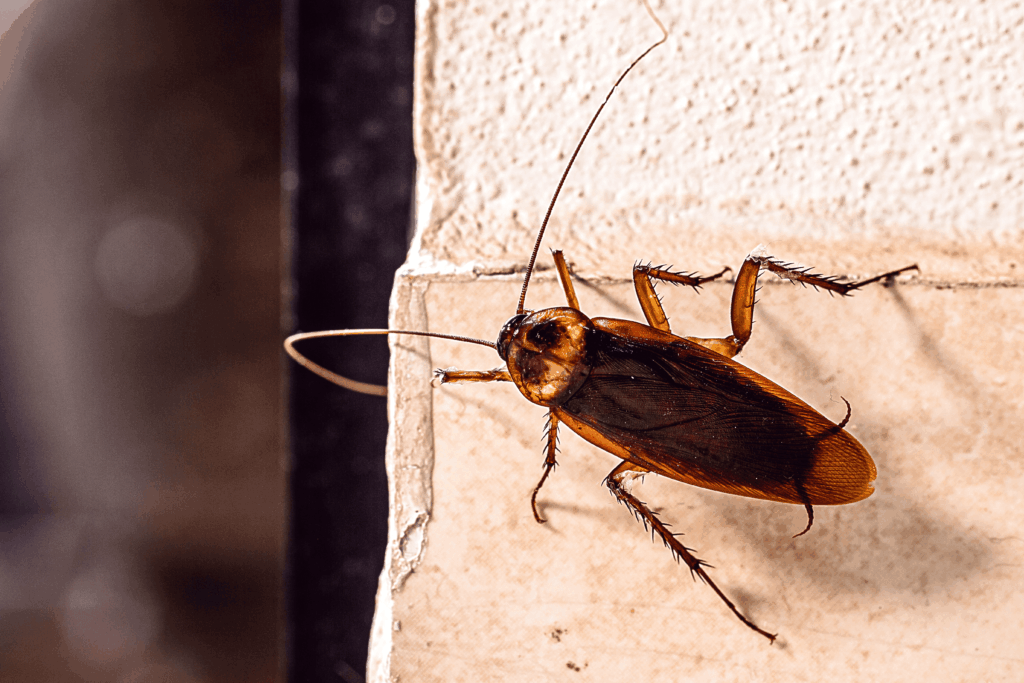
Cockroaches have an impressive win record. The Cretaceous-Paleogene extinction, which eliminated 80% of animal life, wasn’t enough for this arthropod. Neither were the other mass extinction events that culled countless animal and plant species from the Earth. Thundering through ancient forests, the Tyrannosaurs rex ultimately proved less resilient than the cockroaches that scurried underfoot.
The cockroach is known for having Rasputin-esque survivability, capable of withstanding anything from nuclear radiation to decapitation. Yet questions remain regarding how adaptable roaches really are. Will cockroaches really outlive humans?
We’ll be answering that question as well as exploring the evolutionary traits that have helped this species endure so effectively.
Can Roaches Survive a Nuclear Blast?
In short, no. The idea behind this myth likely developed after the bombing of Hiroshima and Nagasaki, when roaches were reportedly seen emerging from the rubble unscathed. However, a cockroach would not survive the intense heat of a nuclear fireball or the crushing pressure of the resulting shockwave.
Can Cockroaches Survive a Nuclear War and Become the Only Lifeform on Earth?
This question was addressed by the Discovery Channel’s “MythBusters.” In the interest of science, the MythBusters team exposed cockroaches, fruit flies and flour beetles to three levels of radiation. Flour beetles were the only insect capable of surviving a 100,000 rad (radiation absorbed dose), and the myth was declared busted.
Cockroaches have low radiation tolerance when compared to other insects. However, they still managed to survive after being exposed to 10,000 rad, which is 10 times the lethal dose for humans. The world may be inherited by flour beetles, but cockroaches would still likely outlive humans after a radioactive fallout.
Insects like the cockroach are resistant to the damaging effects of radiation because of their slow cell division. The cells of a living organism are able to repair damage caused by radiation, but they are more susceptible to damage while in the process of dividing. Insects only go through cell division prior to molting, so unless a cockroach is ready to shed its exoskeleton, it’s unlikely to be heavily affected by radiation.
How Does Cockroach Reproduction Increase Their Ability to Survive?
Humans may have been blessed with opposable thumbs, but roaches have several evolutionary advantages. According to George Beccaloni, zoologist and former curator at London’s Natural History Museum, “Cockroaches as a group are one of the most if not the most varied of all insect groups, in terms of their reproductive biology.”
A few species are parthenogenetic, meaning that they reproduce asexually. Others produce egg sacks, and others have abandoned egg cases in favor of nurturing eggs in their brood pouch.
Females of certain species literally take their offspring under their wing — their forewing, to be exact. With these diverse means of reproduction at their disposal, the cockroach is well equipped to rebound after a cataclysmic event.
Does a Cockroach’s Sense of Taste Contribute to Its Survival?
Yes — a cockroach’s sense of taste is a key part of its survival. American cockroaches are built to handle tough environments. They have 522 taste receptors, which let them tell which foods are safe and which could be harmful. On top of that, their bodies can break down toxic chemicals, even some found in insecticides. These abilities help cockroaches survive in places where other animals might not.
Can Cockroaches Survive Without Their Heads?
Yes, cockroaches can survive for weeks even after losing their heads. Their open circulatory system allows blood to clot around the neck, forming a seal that helps them stay alive. They breathe through spiracles, small openings on their bodies, and can still move and perform simple actions while headless. (We’re not going to dwell on how scientists arrived at these findings.)
What Role Do Cockroaches Play in the Ecosystem?
Will cockroaches outlive humans? Undoubtedly.
They may not be as resistant to radiation as once claimed, but roaches are hardy survivors capable of existing in extreme conditions. The cockroach species Eupolyphaga everestiana can even be found on the slopes of Mount Everest. Roaches have crawled, scurried and flown across the Earth for about 300 million years, and it stands to reason that they’ll continue to do so.
There are nearly 5,000 species of roaches, and only around 30 are known to be pests. Rarely venturing into households, these insects are a food source for a number of animals, including birds and rats. More importantly, they play an important role in the nitrogen cycle, feeding on dead and decaying matter and recycling nitrogen back into the soil. Entire ecosystems depend on decomposers like the cockroach.
Key Takeaways
Will cockroaches outlive humans? Undoubtedly. Roaches have crawled, scurried and flown across the Earth for about 300 million years, and it stands to reason that they’ll continue to do so.
Can cockroaches survive a nuclear blast? No, a roach would not survive the intense heat of a nuclear fireball or the crushing pressure of the resulting shockwave.
Why are cockroaches resistant to radiation? Cockroaches are resistant to the damaging effects of radiation because of their slow cell division. The cells of a living organism are more susceptible to damage while in the process of dividing. Insects only go through cell division prior to molting, so unless a cockroach is ready to shed its exoskeleton, it’s unlikely to be heavily affected by radiation.
Can cockroaches survive without their heads? Cockroaches can survive decapitation, due to their open circulatory systems. Headless roaches can survive weeks without food.
What role do cockroaches play in the ecosystem?
Roaches are a food source for a number of animals, including birds and rats. More importantly, they play an important role in the nitrogen cycle, feeding on dead and decaying matter and recycling nitrogen back into the soil.
Keeping Urban Pests in Check
The question of which species will remain standing post-nuclear fallout will, hopefully, remain unanswered. What’s known is that the qualities that make roaches a successful species also make them a difficult pest to control, especially their resistance to ingredients found in insecticides. By implementing integrated pest management (IPM) strategies, however, professionals in the field of entomology can prevent and exclude these pests in places where they have the most impact on human health and wellness.
The University of Florida offers an online entomology master’s degree and an online entomology graduate certificate, each with four specialization options, one of which is urban pest management. Courses like Principles of Urban Pest Management empower students with the knowledge needed to manage cockroaches and other urban pests, including blood-sucking insects and stored food pests. Apply to one of our online entomology programs to help ensure that insects like the cockroach wait their turn before inheriting the planet.
Gene-editing tools. Pest-fighting flies. Insect behavior breakthroughs. 2025 kept entomologists on their toes. But 2025 also brought serious setbacks. Insect decline continued, especially for pollinators like honey bees. The stinging Asian needle ant has now spread to at least 20 states, and the spotted lanternfly has invaded Virginia. On the bright side, AI and drones…
If Marvel made a movie about mosquitoes, the villain would be gene editing—and we’d be rooting for it. Invasive pests cost the United States up to $21 billion per year in economic damages and healthcare costs, with bed bugs being among the costliest to eradicate. There are only a few insecticides registered for the control…
Insects, like humans, have a rich microbiome that plays a crucial role in their digestive and overall health. This community of microorganisms, including bacteria, viruses, fungi, archaea and protozoa, are known as “symbionts.” They work together to provide life-saving and species-perpetuating benefits to their hosts. Discovery and Importance While the human gut microbiome was first…
With sightings of the Asian giant hornet (popularly called the murder hornet in the media) popping up across the northwest, we thought we’d take a look at some of America’s most notorious invasive insects. Unlike Asian giant hornets, these invertebrates already have a strong foothold in the United States and are responsible for millions of dollars in damages every year. It’s all entomologists can do to keep these invasive species in check with biological and chemical controls.
As you’ll soon read, the entomology field is in desperate need of professionals educated in responsible and effective control measures, including integrated pest management. If a career managing native and invasive insects interests you, apply to one of our entomology and nematology programs. You may one day help prevent an invasive species from making this list.
1. Africanized Honey Bees
The Africanized honey bee, sometimes referred to as the killer bee in the media, may be the most well-known entry on this list. Native to sub-Saharan Africa, African honey bees were first brought to Brazil in 1956 by Dr. Warwick Kerr. He believed that through selective breeding, African honey bees could be a more viable option for Brazilian beekeepers than underperforming European bee races, which were struggling in the country’s tropical/subtropical climate. Murphy’s law intervened and the bees escaped, beginning their spread throughout the Americas. Today, these bees are actually the result of African bee hybridization with European honey bees.
Since first being spotted in Texas in 1990, Africanized honey bees have slowly spread throughout the southern United States. More defensive than western honey bees, Africanized bees have been known to chase a person for a quarter of a mile, which means they can pose a specific threat to those who are not able to quickly seek shelter, such as the elderly, young children or caged animals.
2. Emerald Ash Borer
Native to Asia, the emerald ash borer likely found its way to the United States hidden in ash wood used to stabilize cargo ships or crate consumer products. Since being discovered in Michigan in 2002, this aptly named insect has destroyed tens of millions of ash trees across 35 states and the District of Columbia. The process begins when an emerald ash borer deposits its eggs in the bark of an ash tree. Hatched larvae create and feed in curved galleries in the phloem, an inner layer essential for transporting nutrients throughout trees. Nutrient-starved ash trees lose their branches and die within just three to four years of being infested.
According to the United States Department of Agriculture (USDA), all 16 species of ash trees found in the United States are at risk for emerald ash borer infestation. A domestic quarantine to limit the spread of the insect is currently in effect but proving ineffective. The USDA is instead turning to biological controls, such as stingless wasps that prey on emerald ash borer brood. Emerald ash borers have yet to be spotted in Florida, and it may be the efforts of pest management professionals that are keeping them out.
3. Asian Longhorned Beetle
The Asian longhorned beetle has a lot in common with our previous entry. Like the emerald ash borer, the Asian longhorned beetle was most likely introduced to the United States on untreated wood pallets from Asia. Both insects also share a taste for destroying trees from the inside out. Newly hatched Asian longhorned beetle larvae feed on the phloem — and eventually the sapwood — of a tree, creating large tunnels called pupal chambers as they mature. Infested trees die within 10 to 15 years.
Far less picky than the emerald ash borer, the Asian longhorned beetle has been devastating hardwood trees in urban environments, including maple, birch and elm trees. This black and white beetle now threatens billions of dollars’ worth of recreation and forest resources. Although the Asian longhorned beetle is so far only in New York, Massachusetts and Ohio, all 50 states are at risk.
4. Asian Citrus Psyllid
You may not be familiar with the Asian citrus psyllid, but you’ve likely heard of their impact on Florida’s citrus industry. This mottled brown insect is a vector for Huanglongbing, also known as citrus greening, one of the most serious citrus diseases in the world. Infected plants produce green, misshapen and bitter-tasting fruit, which makes them unmarketable. An adult psyllid can transmit the disease to a citrus plant in as little as 15 minutes. Asian citrus psyllids have already devastated citrus industries in Asia and Africa, and they’re starting to do the same here in the United States, where they can be found in all citrus-producing states and territories.
Since being discovered on Florida’s east coast in 1998, the Asian citrus psyllid has cost Florida millions of acres of citrus crops and billions of dollars in lost citrus production. The Sunshine State has gone from producing 80 percent of the nation’s non-tangerine citrus fruits to producing a little over half as a result of citrus greening. Chemical controls have kept the Asian citrus psyllid in check; however, this strategy is proving increasingly ineffective. Scientists and growers are searching for ways to mitigate losses due to citrus greening and continuing to research novel control methods for the Asian citrus psyllid.
5. Brown Marmorated Stink Bug
Since being discovered in Pennsylvania in 2001, the brown marmorated stink bug has spread throughout the United States and established a strong presence on both coasts. This rapid spread is thanks in part to this stink bug’s penchant for hitching rides on vehicles and cargo containers. There have been numerous sightings of the brown marmorated stink bug in Florida, and evidence suggests that it may have established itself near a peach orchard in Lake County. The brown marmorated stink bug is the perfect example of how an unsuspecting insect can cause widespread damage.
Brown marmorated stink bugs present a threat on multiple fronts. Not only is this invasive species a nuisance to homeowners, but it’s also a major threat to farmers. Being a polyphagous pest, the brown marmorated stink bug can feed on numerous sources of food, including fruits, vegetables, nuts and row crops. Further complicating matters is the fact that the brown marmorated stink bug has disrupted integrated pest management (IPM) techniques, forcing growers to rely heavily on insecticides. Scientists are currently experimenting with pheromones and lights to attract and trap this invasive species.