With sightings of the Asian giant hornet (popularly called the murder hornet in the media) popping up across the northwest, we thought we’d take a look at some of America’s most notorious invasive insects. Unlike Asian giant hornets, these invertebrates already have a strong foothold in the United States and are responsible for millions of dollars in damages every year. It’s all entomologists can do to keep these invasive species in check with biological and chemical controls.
As you’ll soon read, the entomology field is in desperate need of professionals educated in responsible and effective control measures, including integrated pest management. If a career managing native and invasive insects interests you, apply to one of our entomology and nematology programs. You may one day help prevent an invasive species from making this list.
1. Africanized Honey Bees
The Africanized honey bee, sometimes referred to as the killer bee in the media, may be the most well-known entry on this list. Native to sub-Saharan Africa, African honey bees were first brought to Brazil in 1956 by Dr. Warwick Kerr. He believed that through selective breeding, African honey bees could be a more viable option for Brazilian beekeepers than underperforming European bee races, which were struggling in the country’s tropical/subtropical climate. Murphy’s law intervened and the bees escaped, beginning their spread throughout the Americas. Today, these bees are actually the result of African bee hybridization with European honey bees.
Since first being spotted in Texas in 1990, Africanized honey bees have slowly spread throughout the southern United States. More defensive than western honey bees, Africanized bees have been known to chase a person for a quarter of a mile, which means they can pose a specific threat to those who are not able to quickly seek shelter, such as the elderly, young children or caged animals.
2. Emerald Ash Borer
Native to Asia, the emerald ash borer likely found its way to the United States hidden in ash wood used to stabilize cargo ships or crate consumer products. Since being discovered in Michigan in 2002, this aptly named insect has destroyed tens of millions of ash trees across 35 states and the District of Columbia. The process begins when an emerald ash borer deposits its eggs in the bark of an ash tree. Hatched larvae create and feed in curved galleries in the phloem, an inner layer essential for transporting nutrients throughout trees. Nutrient-starved ash trees lose their branches and die within just three to four years of being infested.
According to the United States Department of Agriculture (USDA), all 16 species of ash trees found in the United States are at risk for emerald ash borer infestation. A domestic quarantine to limit the spread of the insect is currently in effect but proving ineffective. The USDA is instead turning to biological controls, such as stingless wasps that prey on emerald ash borer brood. Emerald ash borers have yet to be spotted in Florida, and it may be the efforts of pest management professionals that are keeping them out.
3. Asian Longhorned Beetle
The Asian longhorned beetle has a lot in common with our previous entry. Like the emerald ash borer, the Asian longhorned beetle was most likely introduced to the United States on untreated wood pallets from Asia. Both insects also share a taste for destroying trees from the inside out. Newly hatched Asian longhorned beetle larvae feed on the phloem — and eventually the sapwood — of a tree, creating large tunnels called pupal chambers as they mature. Infested trees die within 10 to 15 years.
Far less picky than the emerald ash borer, the Asian longhorned beetle has been devastating hardwood trees in urban environments, including maple, birch and elm trees. This black and white beetle now threatens billions of dollars’ worth of recreation and forest resources. Although the Asian longhorned beetle is so far only in New York, Massachusetts and Ohio, all 50 states are at risk.
4. Asian Citrus Psyllid
You may not be familiar with the Asian citrus psyllid, but you’ve likely heard of their impact on Florida’s citrus industry. This mottled brown insect is a vector for Huanglongbing, also known as citrus greening, one of the most serious citrus diseases in the world. Infected plants produce green, misshapen and bitter-tasting fruit, which makes them unmarketable. An adult psyllid can transmit the disease to a citrus plant in as little as 15 minutes. Asian citrus psyllids have already devastated citrus industries in Asia and Africa, and they’re starting to do the same here in the United States, where they can be found in all citrus-producing states and territories.
Since being discovered on Florida’s east coast in 1998, the Asian citrus psyllid has cost Florida millions of acres of citrus crops and billions of dollars in lost citrus production. The Sunshine State has gone from producing 80 percent of the nation’s non-tangerine citrus fruits to producing a little over half as a result of citrus greening. Chemical controls have kept the Asian citrus psyllid in check; however, this strategy is proving increasingly ineffective. Scientists and growers are searching for ways to mitigate losses due to citrus greening and continuing to research novel control methods for the Asian citrus psyllid.
5. Brown Marmorated Stink Bug
Since being discovered in Pennsylvania in 2001, the brown marmorated stink bug has spread throughout the United States and established a strong presence on both coasts. This rapid spread is thanks in part to this stink bug’s penchant for hitching rides on vehicles and cargo containers. There have been numerous sightings of the brown marmorated stink bug in Florida, and evidence suggests that it may have established itself near a peach orchard in Lake County. The brown marmorated stink bug is the perfect example of how an unsuspecting insect can cause widespread damage.
Brown marmorated stink bugs present a threat on multiple fronts. Not only is this invasive species a nuisance to homeowners, but it’s also a major threat to farmers. Being a polyphagous pest, the brown marmorated stink bug can feed on numerous sources of food, including fruits, vegetables, nuts and row crops. Further complicating matters is the fact that the brown marmorated stink bug has disrupted integrated pest management (IPM) techniques, forcing growers to rely heavily on insecticides. Scientists are currently experimenting with pheromones and lights to attract and trap this invasive species.
Insects are an important part of our world’s ecosystems. Almost all insects serve specific functions, including pollinating our crops, providing food for other animals and recycling nutrients. There are a reported 1.4 billion insects per person on the planet. While most insects aren’t considered dangerous, there are some that can cause significant harm to humans — and even kill them. In this article, we explore three unsuspecting killers in the world of insects and exactly what makes them so lethal.
#1 Triatomine Bug
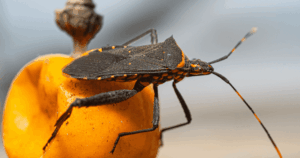
Triatomine bugs, or “kissing bugs” as they’re more commonly known, get their nickname from their tendency to bite people around the mouth and other areas of their face. These blood-sucking arthropods are members of a group known as assassin bugs and are predominantly found in the Southern U.S., Mexico, Central America and South America.
Where, specifically, can you find them, you may ask? They’re often found in the cracks and holes of walls and doors inside a home, beneath porches, in rock and wood brush piles, and in outdoor kennels and chicken coops.
Triatomine bugs are considered a killer insect because they carry the Trypanosoma cruzi parasite, which is responsible for causing Chagas disease. When the triatomine bug bites, it defecates in the wound, leaving the parasite behind. Once Chagas disease is transmitted to a human, it presents itself in two phases:
Phase one introduces flu-like symptoms that go away in a few weeks or months.
Phase two is especially troublesome and can cause serious health issues and death, including intestinal problems, blood clots, heart failure and sudden cardiac arrest.
#2 Anopheles Mosquito
The Anopheles mosquito has the privilege of being the primary vector for malaria, a disease that causes over 400,000 global deaths each year. There are 430 species of Anopheles mosquito and 30-40 of them are carriers of malaria.
This mosquito is dark brown with a stomach that points upwards and can be found almost anywhere in the world. It’s even responsible for re-infecting areas where malaria was eliminated.
Female mosquitos infect humans by carrying the disease from one human to another, without being infected themselves. Once transmitted, the parasite:
Travels to the liver
Enters the bloodstream
Infects red blood cells
As a result, it can cause many life-threatening complications, including swelling of the blood vessels in the brain, pulmonary edema, organ failure, anemia and low blood sugar.
#3 Asian Giant Hornets
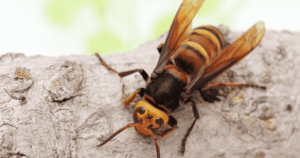
Asian giant hornets are one of the deadliest insects on the planet. Rather than killing via a disease or pathogen, they inject their victims with potent venom. Twice the size of regular hornets, with black, brown, yellow and orange coloring and dark wings, these fast, strategic attackers are highly defensive and territorial, with a reputation for killing 20-40 people each year. Often found in East and Southeast Asia, they were also recently discovered in Washington state, Canada and the UK. They tend to thrive in forests and low-elevation mountain regions.
The specific venom Asian giant hornets use is mandaratoxin, which is a neurotoxin that can eat through human tissue and destroy red blood cells. Even if a human were to survive a swarm of Asian giant hornets, they may still find themselves with ongoing kidney problems and may require dialysis to rid their kidneys of the toxins. Perhaps even more frightening, if you’re stung, the puncture can widen and become necrotic, which can lead to organ failure and death.
Explore More Deadly Insects with an Online Education from the University of Florida
This list is just a small sample of the killer insects found around the world. You can gain further insight into the insects listed above, as well as many others playing essential roles in our ecosystem, by continuing your graduate studies with one of the University of Florida’s graduate programs in entomology.
Imagine a killer slipping through a cracked window and landing on your arm without you noticing. By the time you swat, it’s already vanished. Some species will strike again quickly if disturbed, while others pause before their next bite. Now imagine that this tiny assassin has a million similarly sneaky relatives that cause more than…
Have you ever felt pulled in two very different career directions — like wanting to be both a hair stylist and a lab technician? Okay, that’s a far-fetched example, but humor us. At first glance, the pairing might seem impossible. But careers that appear unrelated can sometimes overlap, especially when science is involved. Here’s a…
Ticks. They’re creepy, they’re crawly—and if you’ve ever gone hiking, you’re probably familiar with the idea of doing a “tick check” afterward. You may have even Googled things like “how to remove a tick” — just in case. Known for carrying and transmitting Lyme disease, these bloodsucking arachnids have earned a notorious reputation. But how…